 Old Kitchen Stories
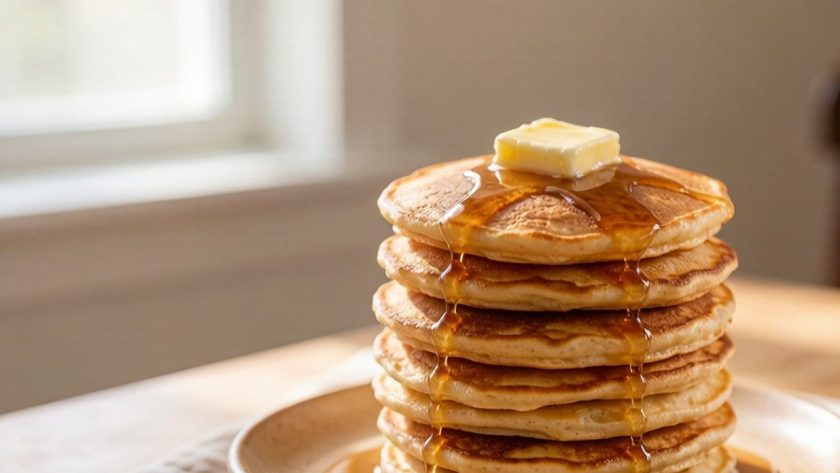
Quick answer: Whisk 2 cups flour with 2 tbsp sugar, 2 tsp baking powder, 1/2 tsp baking soda, and 1/2 tsp salt. In a second bowl beat 2 cups buttermilk, 2 eggs, and 4 tbsp melted butter. Fold wet into dry with about ten strokes, leaving lumps. Rest 10 minutes, then cook in 1/4-cup portions on a buttered griddle over medium-low heat, flipping when bubbles cover the surface.
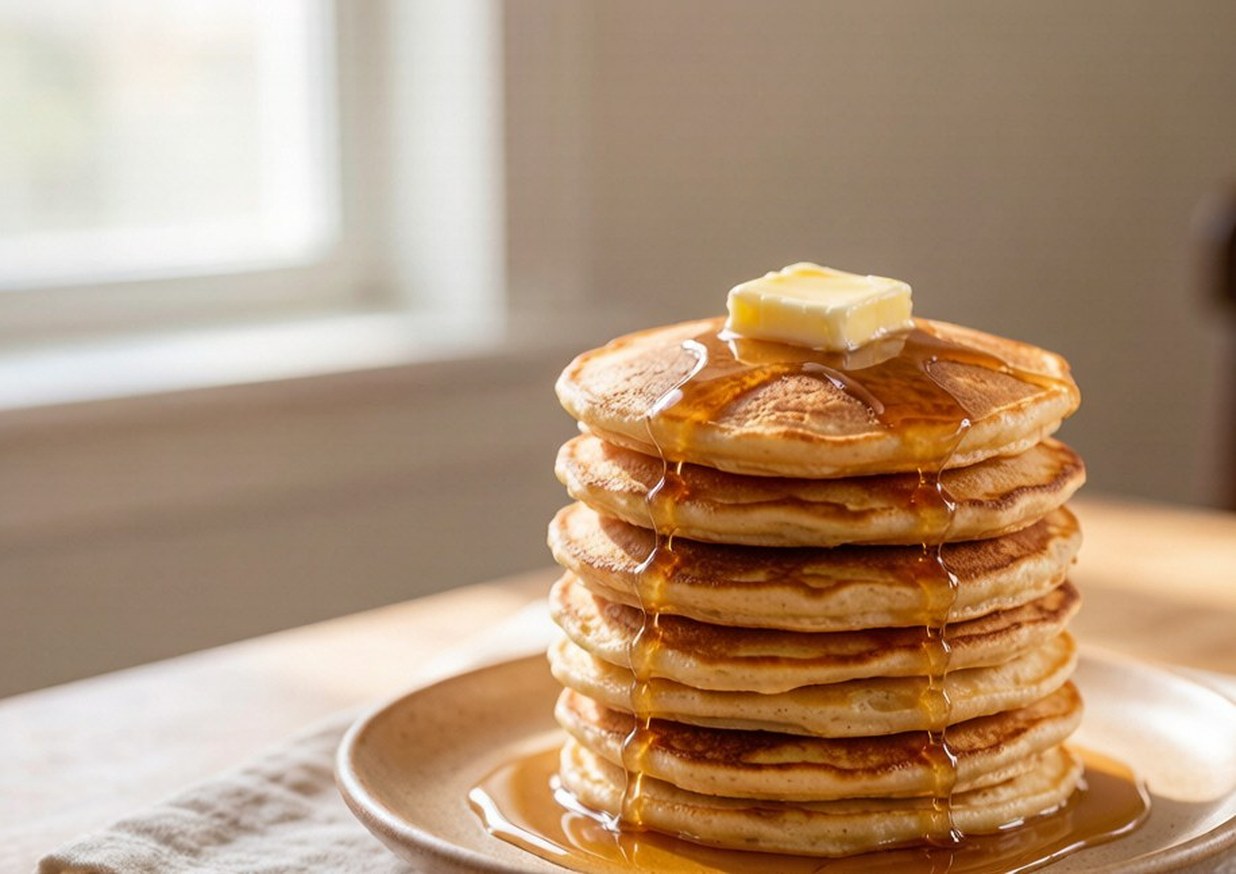
- Prep time: 10 minutes
- Cook time: 20 minutes
- Total time: 30 minutes
- Servings: 4 (about 12 pancakes)
- Cuisine: American
- Course: Breakfast & Brunch
- Difficulty: Easy
Why this recipe works
Three levers produce a tall pancake instead of a flat one, and only one of them is the recipe. The first is acid: buttermilk reacts with baking soda to make carbon dioxide immediately, and that reaction is why the batter should go on the griddle soon after mixing rather than an hour later. The second is gluten: ten strokes of a whisk, no more. Every extra stroke builds the network that makes a pancake tough and rubbery, and lumps in the batter are the visible sign you have stopped in time. The third is heat. Medium-low gives the leavening time to work before the outside sets; a hot pan gives you a dark crust around a raw centre. Our ratio and the rest step follow the baking science published by King Arthur, adapted to a standard flat griddle.
Our method follows the technique guidance published by King Arthur Baking Company — Baking Resources and is adapted for a standard home kitchen.
Ingredients
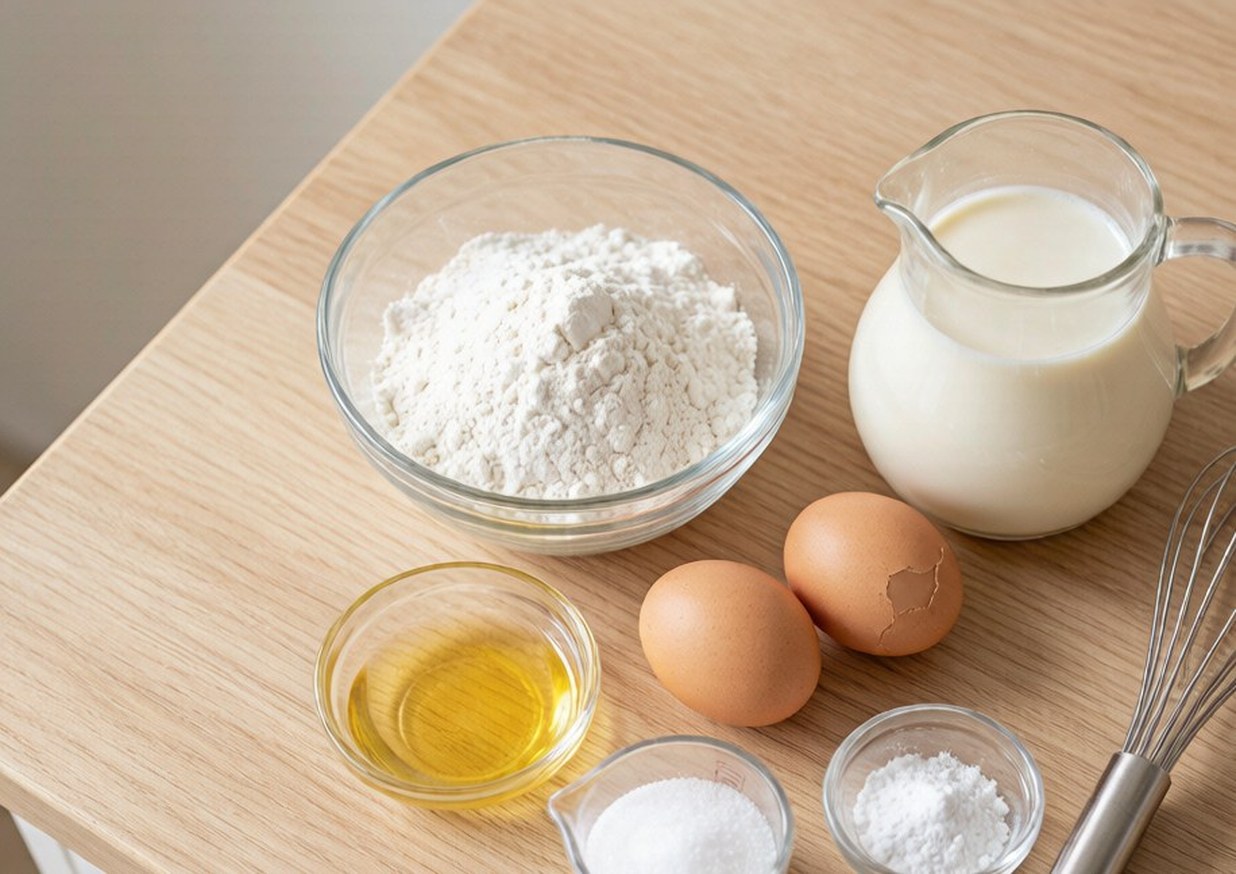
- 2 cups / 250 g all-purpose flour
- 2 tbsp granulated sugar
- 2 tsp baking powder
- 1/2 tsp baking soda
- 1/2 tsp fine sea salt
- 2 cups / 480 ml buttermilk, well shaken
- 2 large eggs
- 4 tbsp / 56 g unsalted butter, melted and cooled, plus more for the pan
- 1 tsp vanilla extract (optional)
- Butter and warm maple syrup, for serving
Equipment
- A flat griddle or a heavy cast-iron skillet — cast iron holds an even heat across the whole surface, which is what gives uniform colour
- A 1/4-cup measure or a small ladle, so every pancake is the same size
- Two mixing bowls and a balloon whisk
- A thin flexible spatula for flipping in one confident movement
- A wire rack set in a warm oven, if you are cooking for more than two
How to make buttermilk pancakes step by step
- Mix the dry. Whisk the flour, sugar, baking powder, baking soda, and salt in a large bowl until there are no streaks. This replaces sifting.
- Mix the wet. In a second bowl, beat the buttermilk and eggs, then whisk in the melted butter and vanilla. The butter must be cooled or it will scramble the eggs.
- Combine with restraint. Pour the wet into the dry and fold with a spatula or whisk for about ten strokes. Stop while it still looks lumpy and a few dry patches remain. Overmixing is the most common mistake.
- Rest. Let the batter sit for 10 minutes at room temperature. The flour hydrates, the baking powder starts working, and the bubbles you see forming are exactly what you want.
- Heat the griddle. Set a griddle or cast-iron pan over medium-low heat and let it come up for a full 5 minutes. Flick a drop of water on it: it should skitter and evaporate in about two seconds.
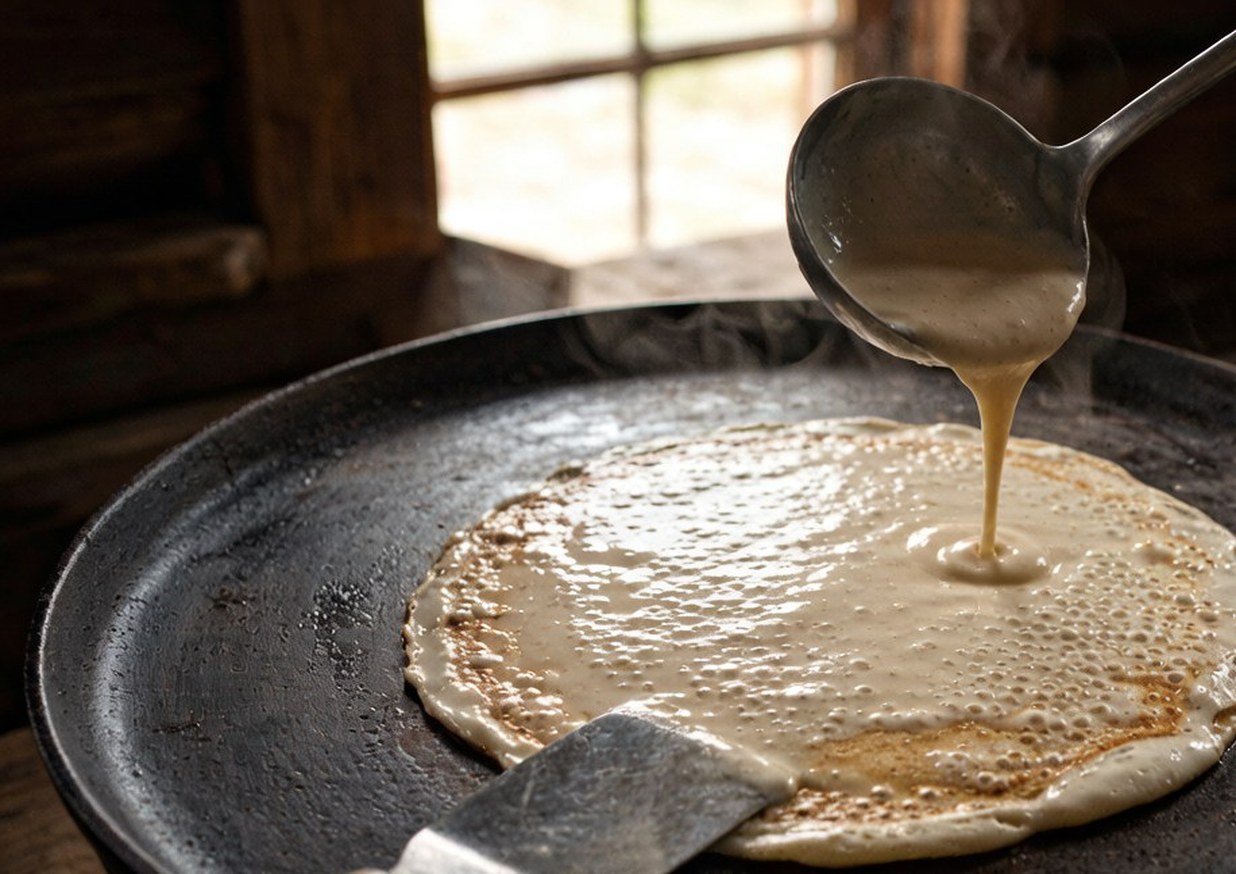
- Butter and portion. Melt a little butter on the surface and wipe it thin with a paper towel. Ladle 1/4 cup of batter per pancake, leaving 5 cm between them.
- Flip once. When bubbles cover the whole surface and the edges look dry and matte, about 2 to 3 minutes, flip. Cook the second side for 1 to 2 minutes, until springy in the centre.
- Hold and serve. Keep finished pancakes on a rack in a 95°C / 200°F oven while you cook the rest. Stacking them directly on a plate steams the bottoms soft.
What we learned testing this buttermilk pancakes recipe
We cooked this recipe three times before publishing it. These are the things that only showed up in the kitchen, not on paper.
- We counted strokes. At ten strokes the batter was lumpy and the pancakes rose tall with an open, tender crumb. At thirty the batter was smooth and the pancakes were noticeably chewier and flatter. Lumps are the sign you are doing it right.
- The first batch went onto a pan we had only heated for a minute. The bottoms were pale, the pancakes spread thin, and they took twice as long. Five minutes of preheating on a cast-iron griddle fixed the colour and the lift.
- We tested baking powder from a tin that had been open for about a year. It failed the hot water test outright, and the pancakes made with it were flat and slightly dense. Fresh leavening matters more than any other variable here.
- A batch made with cold butter straight from the fridge scrambled small bits of egg when it hit the mixture. Letting the melted butter cool for a few minutes before combining solved it.
- Stacking finished pancakes directly on a plate steamed the undersides soft within five minutes. A wire rack in a low oven keeps them crisp while you cook the rest of the batch.
Expert tips
- The first pancake is a test. Use it to judge heat and adjust, and do not serve it to anyone.
- If the batter thickens as it sits, thin it with a tablespoon of buttermilk at a time rather than water, which costs you flavour.
- Wipe the pan between batches. Burnt butter solids from the first batch will speckle the second.
- For taller pancakes, add an extra 1/2 tsp baking powder and use a ring mould. For thinner, add 1/4 cup more buttermilk and spread the batter with the back of a ladle.
Variations and substitutions
- Blueberry: scatter a small handful of berries onto each pancake as soon as it hits the griddle, rather than folding them into the batter.
- Whole wheat: replace up to half the flour with white whole wheat and add 2 tbsp extra buttermilk.
- Buttermilk substitute: stir 2 tbsp of lemon juice into 2 cups of whole milk and let it stand for 10 minutes before using.
- Savoury: drop the sugar and vanilla and fold in 1/2 cup of grated cheddar and 2 sliced spring onions.
Troubleshooting
| What went wrong | Why it happens | How to fix it |
|---|---|---|
| Pancakes are flat | Baking powder is past its prime, or the batter was overmixed. | Test the baking powder in hot water; if it does not fizz hard, replace it. Mix the batter in about ten strokes and leave it lumpy. |
| Outside dark, middle raw | The griddle is too hot. | Drop to medium-low and give the pan a full five minutes to preheat so the heat is even. |
| Pancakes are tough and rubbery | Too much gluten developed from overmixing. | Fold until just combined and rest the batter; there is no fix once the batter is overworked, so make a fresh batch. |
| Pancakes stick to the pan | The surface is not seasoned or has not been buttered. | Use a well-seasoned cast-iron pan or a non-stick griddle, and wipe a thin film of butter over it between batches. |
Storage, food safety and make-ahead
Cooked pancakes keep for 2 days in the fridge and freeze well for up to 2 months: layer them with parchment, wrap tightly, and reheat straight from frozen in a toaster or a 150°C / 300°F oven for 8 minutes. Batter keeps overnight in the fridge but loses about a third of its lift, so add 1/4 tsp of baking powder the next morning.
For safe cooling, storage times, and reheating, follow the USDA FSIS food safety guidance.
Nutrition information
Per serving of 3 pancakes, without syrup: approximately 405 kcal, 12 g protein, 15 g fat, 55 g carbohydrates, 2 g fibre, 780 mg sodium. Values are estimates derived from USDA FoodData Central and will vary with brands and portion size.
Figures are calculated from the USDA FoodData Central database and are estimates only. Values vary with ingredient brands and portion size.
Frequently asked questions
Why are my pancakes flat?
Either the baking powder is old or the batter was overmixed. Baking powder loses strength about six months after opening; test it by stirring 1/2 tsp into hot water, which should fizz hard.
Can I make the batter the night before?
Yes, but with a caveat: the acid in the buttermilk is largely spent by morning. Stir in an extra 1/4 tsp of baking powder and let the batter come back to room temperature before cooking.
Why is the outside dark before the middle is cooked?
The pan is too hot. Drop to medium-low and give the griddle longer to preheat so the heat is even, rather than turning it up to catch up.
Can I use a blender?
Yes, but pulse rather than blend, and stop the moment the flour disappears. A blender develops gluten faster than a whisk does.
Sources and further reading
- USDA FoodData Central
- King Arthur Baking Company — Baking Resources
- Serious Eats — The Food Lab
- Epicurious — Recipe Archive & Technique Guides
Nutrition figures on this page are calculated from the USDA FoodData Central database and are estimates only. They are not a substitute for advice from a qualified dietitian or physician.
Last updated: September 7, 2026. Recipe tested three times in a standard home kitchen by the named author above. Corrections are welcome and are noted on the page when published.