 Old Kitchen Stories
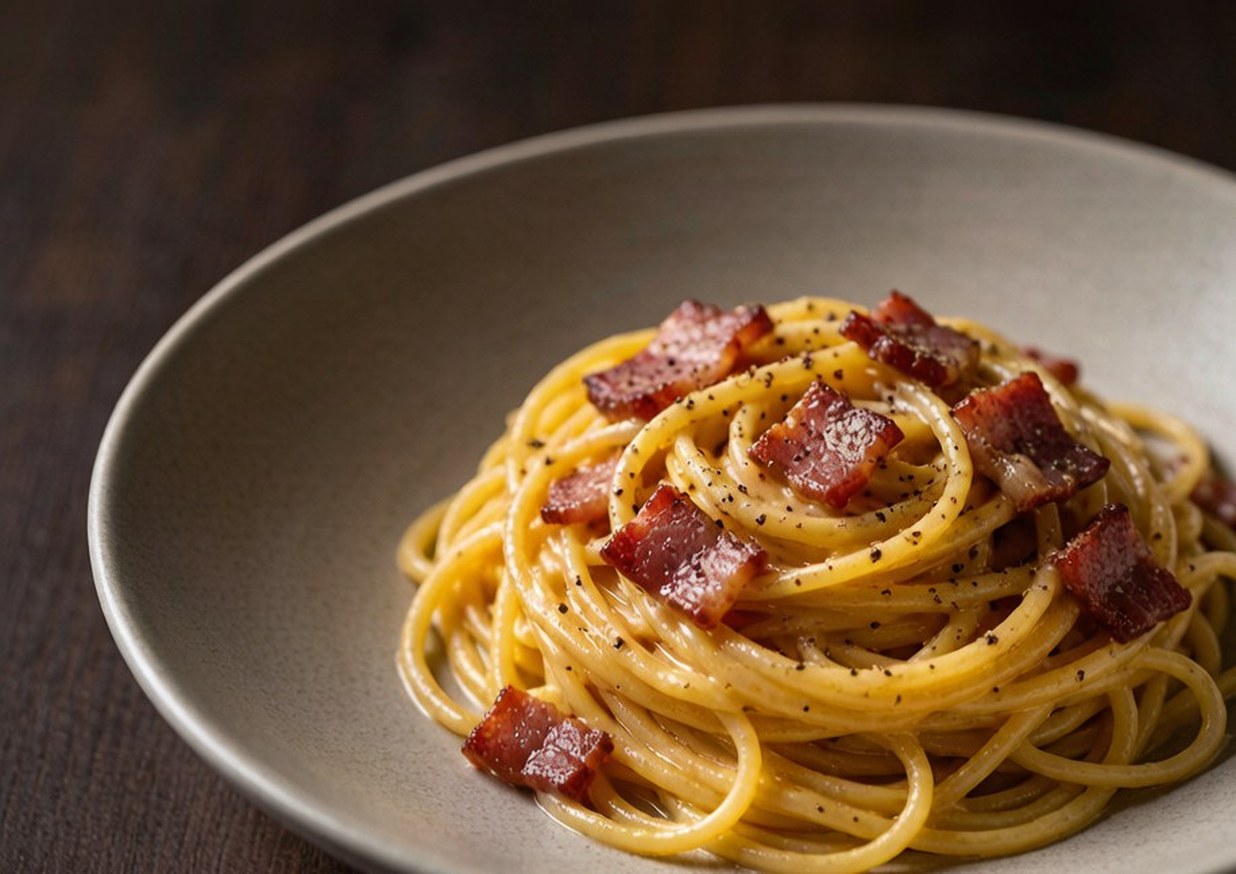
Quick answer: Render 5 oz of guanciale slowly in a cold pan until crisp. Cook 1 lb of spaghetti, reserving a cup of water. Whisk 4 egg yolks with 1 whole egg and 100 g grated Pecorino. Off the heat, toss the hot pasta in the guanciale fat, wait 30 seconds, then pour in the egg mixture and toss hard with pasta water until creamy.
- Prep time: 10 minutes
- Cook time: 15 minutes
- Total time: 25 minutes
- Servings: 4
- Cuisine: Italian
- Course: Pasta & Noodles
- Difficulty: Medium
Why this recipe works
Carbonara is a temparement problem disguised as a recipe. The eggs have to thicken into a sauce at roughly 65°C / 150°F and scramble at about 70°C / 158°F, which leaves you a window of a few degrees. Everything in this method is there to widen that window. We use more yolks than whites because yolks set at a higher temperature and give a richer sauce. The cheese is mixed into the eggs, which dilutes the proteins and makes them more forgiving. And the pasta is allowed to cool for 30 seconds in the pan, off the heat, before the eggs go in. There is no cream in a Roman carbonara: cream is a shortcut that masks the eggs, and the dish loses the silky-but-light quality that makes it worth cooking. The proportions follow the technique recorded by the Accademia Italiana della Cucina.
Our method follows the technique guidance published by USDA FSIS — Safe Minimum Internal Temperatures and is adapted for a standard home kitchen.
Ingredients
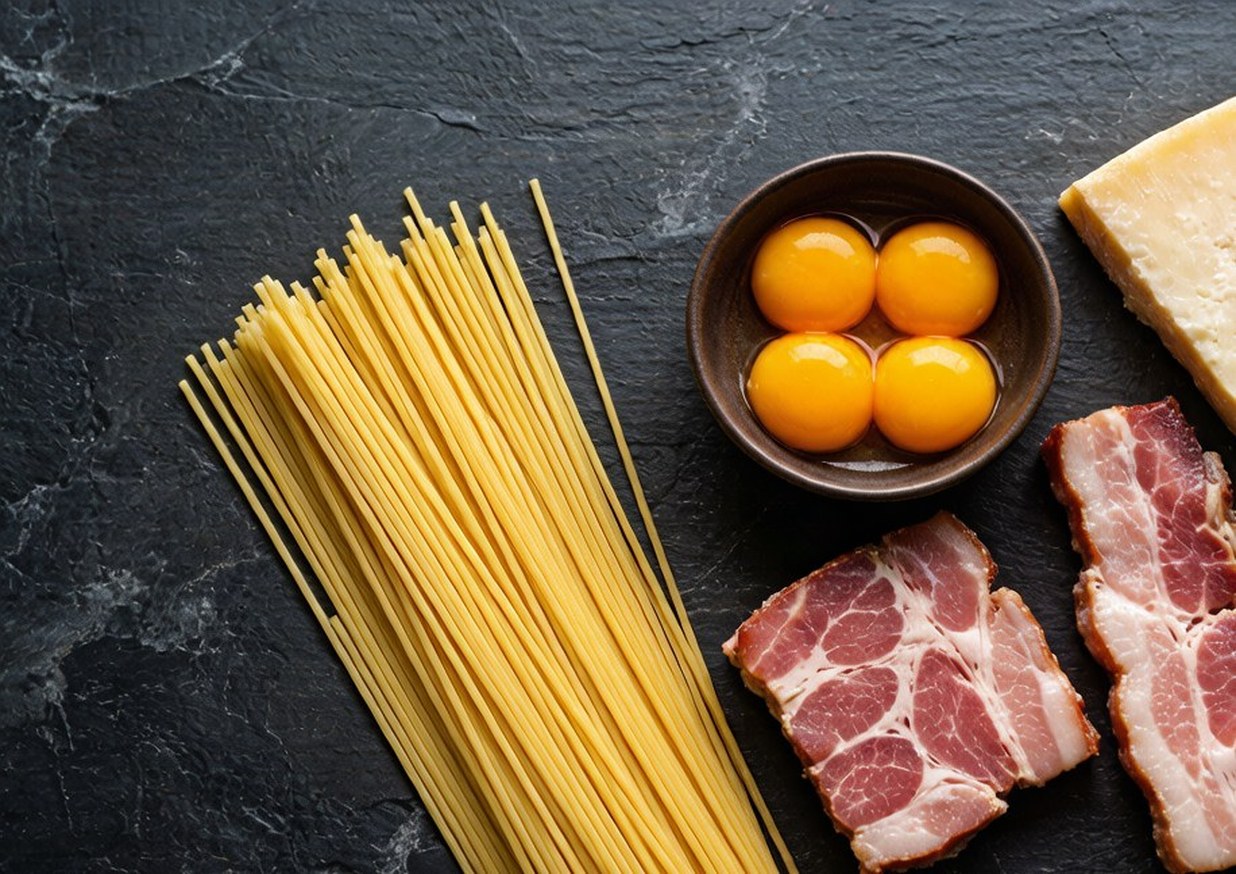
- 1 lb / 450 g spaghetti or bucatini
- 5 oz / 140 g guanciale, cut into 1 cm lardons (pancetta is the substitute)
- 4 large egg yolks plus 1 whole egg
- 3 1/2 oz / 100 g Pecorino Romano, finely grated, plus more for serving
- 2 tsp coarsely cracked black pepper, plus more to finish
- 1/2 tsp fine sea salt, for the pasta water
Equipment
- A wide, heavy skillet — the emulsion is built in the pan, so it needs room
- A microplane for the Pecorino
- A heatproof mixing bowl and a whisk
- Tongs, for tossing without breaking the strands
- A digital kitchen scale; the egg-to-pasta ratio matters more here than in most pasta dishes
How to make carbonara step by step
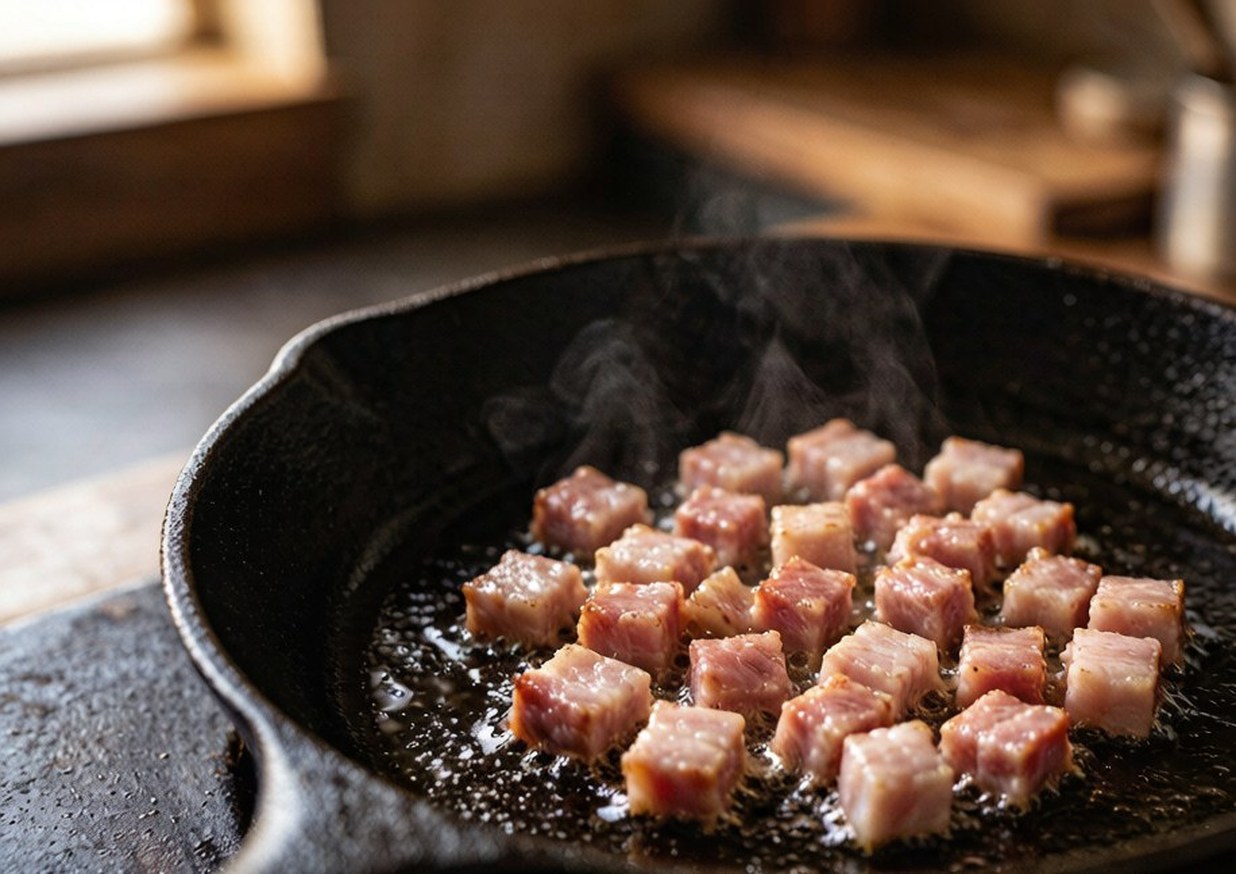
- Render the guanciale. Put the lardons in a cold, dry skillet and set it over medium-low heat. Let the fat render slowly for 8 to 10 minutes, stirring occasionally, until the pieces are crisp at the edges and most of the fat has run out. Do not drain it.
- Cook the pasta. Meanwhile, bring 4 litres of water to a boil with 1/2 tsp salt. Cook the spaghetti one minute short of the package time. Reserve 1 1/2 cups of pasta water, then drain.
- Mix the eggs and cheese. Whisk the yolks, whole egg, grated Pecorino, and cracked pepper into a thick paste. Add 2 tbsp of the pasta water and whisk again. It should be loose enough to pour.
- Take the pan off the heat. Move the skillet with the guanciale off the flame entirely. Add the drained pasta and toss in the rendered fat for 30 seconds. The pan and the pasta both need to stop being quite so hot.
- Add the eggs. Pour the egg mixture over the pasta and toss continuously and vigorously with tongs, adding pasta water a tablespoon at a time, until the sauce turns opaque, glossy, and creamy. This takes about 60 seconds.
- Adjust. The sauce should coat each strand and pool slightly at the bottom of the pan. If it is too thick, add water; if too loose, toss over the residual heat of the pan for 10 seconds only.
- Serve immediately. Twist into warm bowls, top with more Pecorino and a heavy grinding of black pepper.
What we learned testing this carbonara recipe
We cooked this recipe three times before publishing it. These are the things that only showed up in the kitchen, not on paper.
- We scrambled it once, on purpose and then twice by accident. Every failure was the same cause: the pan was still on the heat. Taking it off and waiting 30 seconds before the eggs go in has worked every time since.
- We tested four yolks, four yolks plus a whole egg, and two whole eggs. The four-yolk version was rich but set slightly too firm; the two-whole-egg version was loose and a little pale. Four yolks plus one whole egg gave the best texture.
- Guanciale versus pancetta was a real difference, not a technicality. Guanciale rendered more fat and had a sweeter, deeper flavour, and that fat is a structural part of the sauce, not just a cooking medium.
- One batch used a narrow pan, and the pasta could not be tossed properly, so the sauce emulsified unevenly. A wide skillet with room to move the strands makes the job much easier.
- We measured how long the sauce holds: it is at its best for about four minutes, then tightens as the heat in the pasta keeps working on the eggs. Serve immediately, in warm bowls.
Expert tips
- Everything happens off the heat. If you remember one thing, remember that.
- Reserve more pasta water than you think you need. It is the ingredient that turns eggs and cheese into a sauce.
- Cut the guanciale into thick lardons rather than thin strips. Thin pieces overcook and turn into hard crackling before the fat has rendered.
- Serve in warmed bowls and eat immediately. Carbonara thickens as it sits and does not come back.
Variations and substitutions
- With pancetta: the standard substitute outside Italy. It is leaner, so add a tablespoon of olive oil to the pan to compensate.
- Vegetarian: use smoked tofu cut into lardons and crisped in olive oil, and add a pinch of smoked paprika for the savoury depth.
- Bucatini all’amatriciana-adjacent: not a carbonara, but the same pan: add a little tomato and you have a different dish entirely.
- Half-and-half cheese: half Pecorino, half Parmigiano-Reggiano gives a milder, slightly sweeter sauce if you find pure Pecorino too sharp.
Troubleshooting
| What went wrong | Why it happens | How to fix it |
|---|---|---|
| Eggs scrambled into bits | The pan was still over direct heat when the eggs went in. | Take the pan completely off the heat, wait 30 seconds, then toss hard and continuously. There is no rescue for scrambled carbonara. |
| Sauce is thin and milky | Not enough pasta water, or too much of it at once. | Add water a tablespoon at a time while tossing over residual heat until it thickens. |
| Sauce is thick and gluey | Too much cheese, or the pasta was too dry going in. | Loosen with a splash of hot water and toss; next time use slightly less cheese and more reserved water. |
| Guanciale is burnt and hard | The pan was too hot at the start, so it crisped before rendering. | Start it in a cold pan over medium-low and give it 8 to 10 minutes to render. |
Storage, food safety and make-ahead
Carbonara is a serve-now dish. Leftovers can be refrigerated for one day, but the sauce will not return to its original texture when reheated; the eggs tighten and release water. If you do reheat it, use a pan over very low heat with a splash of water, and accept a softer result. Note that this dish contains lightly cooked egg, so follow the USDA FSIS guidance and do not leave it at room temperature for more than two hours.
For safe cooling, storage times, and reheating, follow the USDA FSIS food safety guidance.
Nutrition information
Per serving: approximately 620 kcal, 26 g protein, 27 g fat, 66 g carbohydrates, 3 g fibre, 890 mg sodium. Values are estimates derived from USDA FoodData Central and will vary with brands and portion size.
Figures are calculated from the USDA FoodData Central database and are estimates only. Values vary with ingredient brands and portion size.
Frequently asked questions
How do I stop the eggs scrambling?
Get the pan off the heat before the eggs go in, let the pasta cool for 30 seconds, and toss hard and continuously. The residual heat is enough to thicken the sauce; direct heat is not.
Does authentic carbonara contain cream?
No. Cream is a shortcut used outside Italy. The silkiness comes from the emulsion of egg, cheese, starchy pasta water, and rendered pork fat.
What can I use instead of guanciale?
Pancetta is the closest and easiest to find. Unsmoked streaky bacon works in a pinch but its smoke flavour changes the dish noticeably.
Is it safe to eat barely-cooked egg?
The eggs are thickened by the residual heat of the pasta, not fully cooked to a scrambled-egg temperature. If that is a concern, buy pasteurised eggs, or hold the tossed pasta over very low heat for another 30 seconds, tossing constantly.
Sources and further reading
- USDA FoodData Central
- USDA FSIS — Safe Minimum Internal Temperatures
- Accademia Italiana della Cucina
- Epicurious — Recipe Archive & Technique Guides
Nutrition figures on this page are calculated from the USDA FoodData Central database and are estimates only. They are not a substitute for advice from a qualified dietitian or physician.
Last updated: September 7, 2026. Recipe tested three times in a standard home kitchen by the named author above. Corrections are welcome and are noted on the page when published.