 Old Kitchen Stories
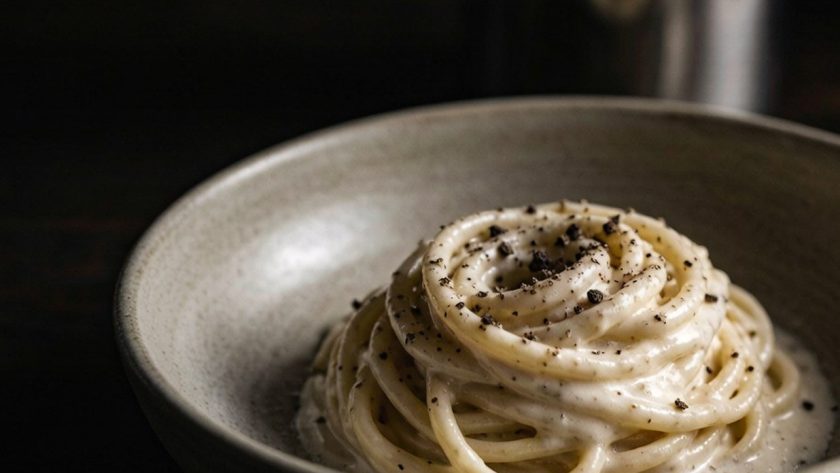
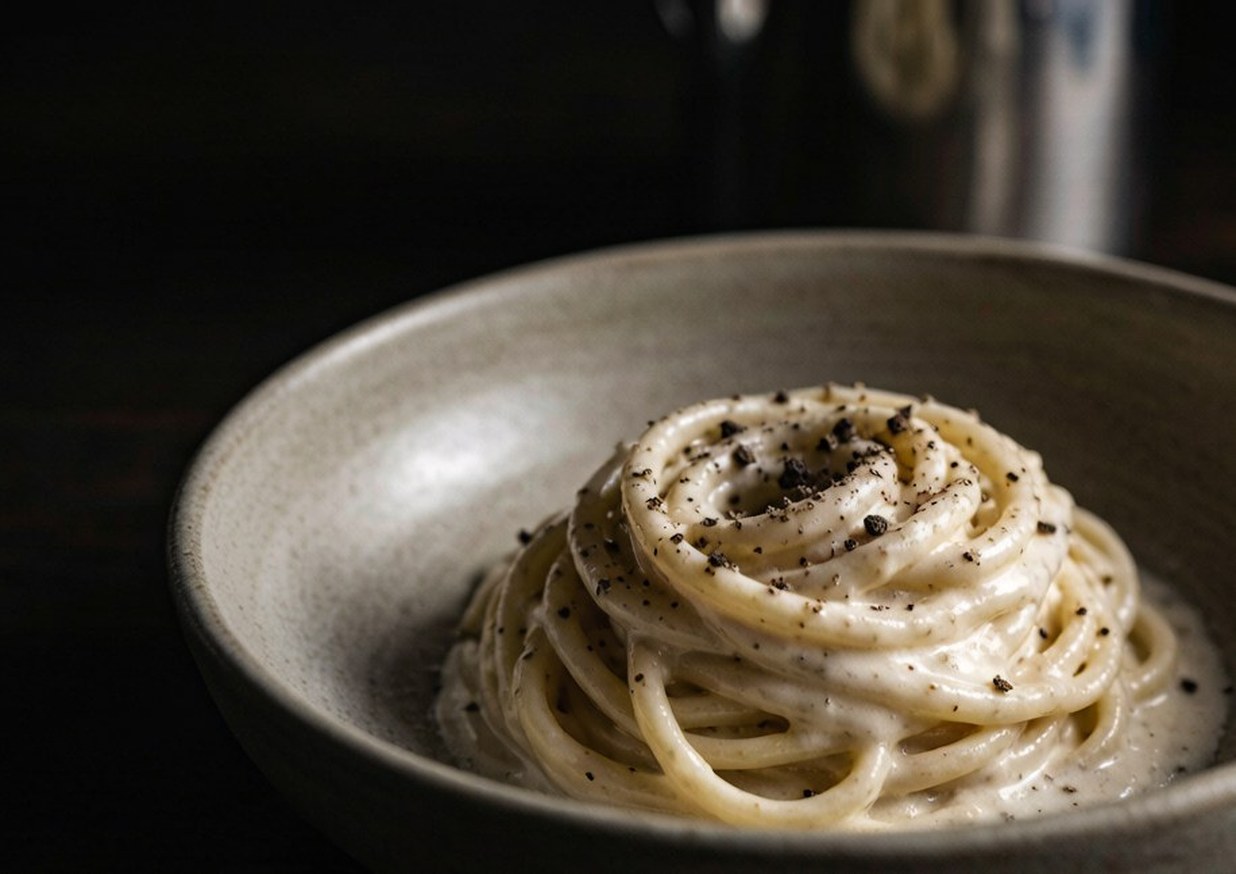
Quick answer: Toast 2 tsp of coarsely cracked black pepper in a dry pan for 30 seconds. Cook 200 g of tonnarelli in lightly salted water. Meanwhile whisk 120 g finely grated Pecorino Romano with 3 tbsp of hot pasta water into a smooth cream. Toss the drained pasta in the pan with the pepper and a splash of water, then fold in the cheese cream off the heat until glossy.
- Prep time: 5 minutes
- Cook time: 15 minutes
- Total time: 20 minutes
- Servings: 2 to 3
- Cuisine: Italian
- Course: Pasta & Noodles
- Difficulty: Medium
Why this recipe works
Cacio e pepe has four ingredients and one technique, and the technique is an emulsion. Pecorino Romano is a hard, salty sheep’s-milk cheese that will not melt smoothly: heat it too far and the proteins seize into stringy clumps, which is why almost every failed plate of cacio e pepe is a bowl of pasta with cheese lumps at the bottom. We solve it in three ways. The cheese is grated on a microplane so the particles are small enough to stay suspended. It is mixed with hot water into a cream before it meets the pasta, so every grain is already hydrated. And it goes in off the heat, never over the flame. The starch in the cooking water does the rest, binding the fat and the water together. Salt the water lightly: Pecorino is much saltier than most cheeses. The method follows the technique for the dish recorded by the Accademia Italiana della Cucina.
Our method follows the technique guidance published by Accademia Italiana della Cucina and is adapted for a standard home kitchen.
Ingredients
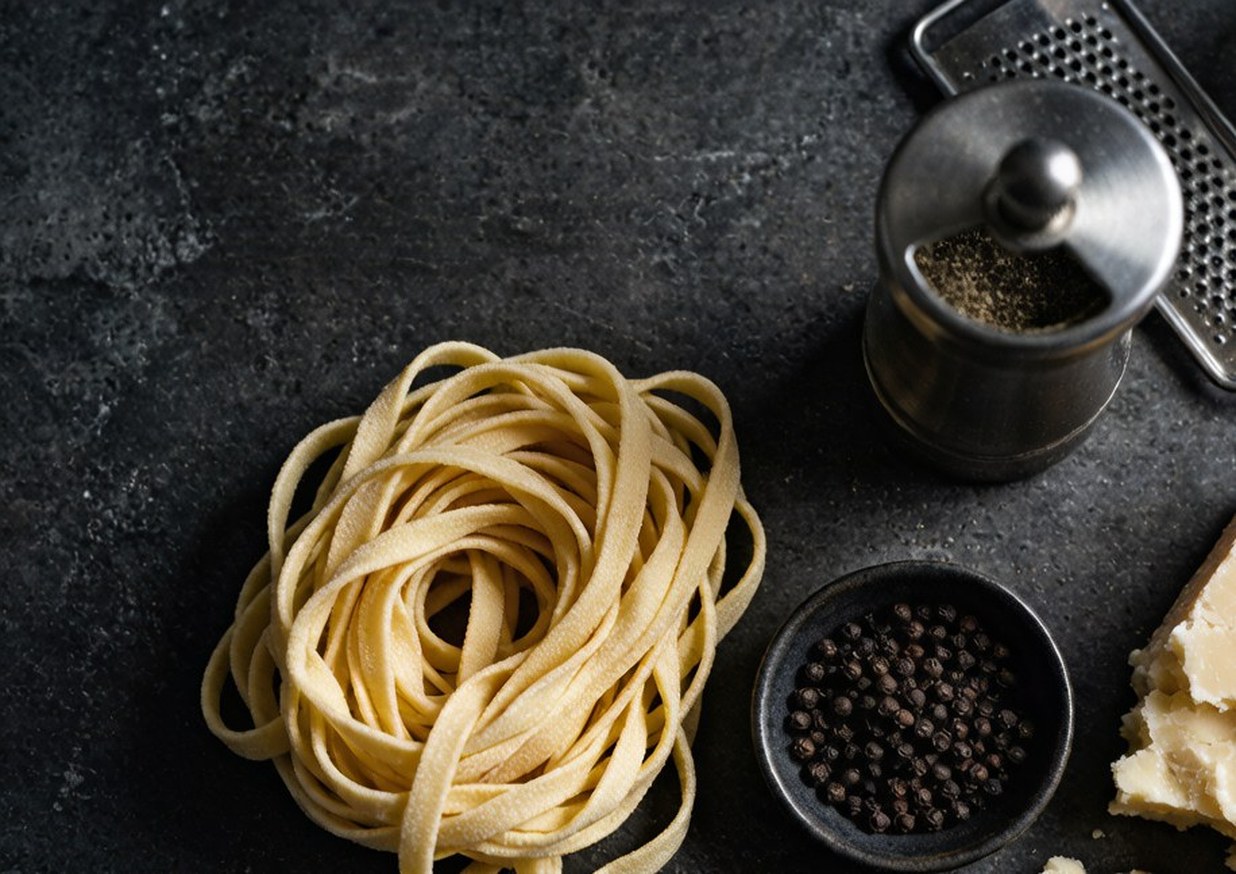
- 7 oz / 200 g tonnarelli, spaghetti, or bucatini
- 4 oz / 120 g Pecorino Romano DOP, finely grated
- 2 tsp whole black peppercorns, coarsely cracked
- 1/2 tsp fine sea salt, for the pasta water (less than usual)
- Extra-virgin olive oil, only if needed to loosen
Equipment
- A microplane or the finest holes of a box grater — powdery cheese is the difference between a cream and a clump
- A mortar and pestle, or a heavy pan and a rolling pin, for cracking the pepper coarsely
- A wide skillet large enough to toss the pasta without crowding
- A heatproof bowl big enough to toss everything in
- Tongs, for lifting the pasta straight from the water into the pan
How to make cacio e pepe step by step
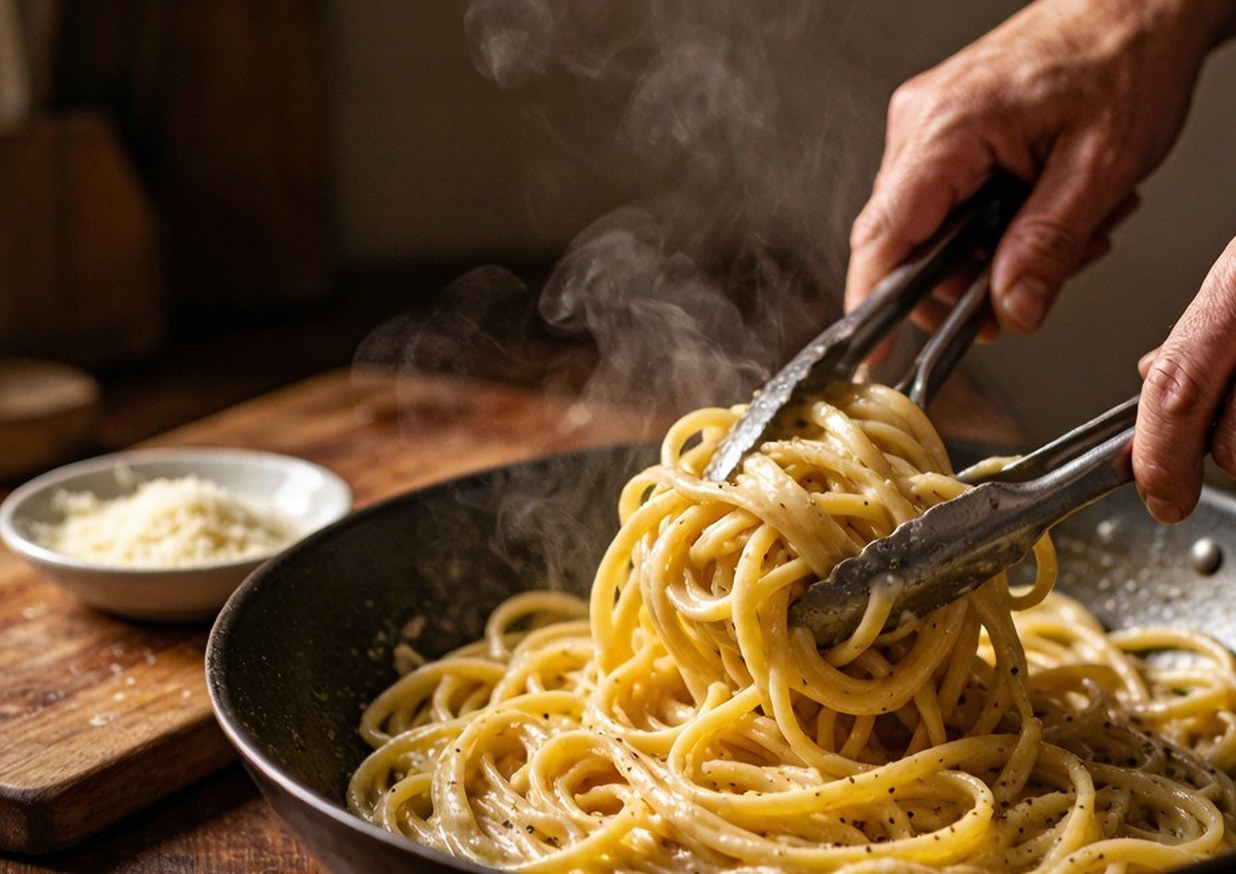
- Crack the pepper. Crush the peppercorns coarsely in a mortar or under a pan. You want fragments and some dust, not a fine grind: the dust perfumes the sauce, the fragments give you the bite.
- Toast it. Put the cracked pepper in a dry skillet over medium heat for about 30 seconds, until it smells sharp and warm. Remove from the heat.
- Boil the pasta. Bring 2 litres of water to a boil and add only 1/2 tsp of salt. Cook the pasta one minute short of the package time, and reserve at least 1 cup of the cooking water before draining.
- Make the cheese cream. While the pasta cooks, put the grated Pecorino in a bowl and add 3 tbsp of the hot pasta water a spoonful at a time, stirring constantly with a fork, until you have a smooth, thick paste with no dry patches.
- Marry the pasta and pepper. Lift the pasta into the skillet with the pepper, add 2 tbsp of pasta water, and toss over low heat for 30 seconds so the starch starts to release.
- Off the heat, add the cheese. Take the pan completely off the heat. Wait 30 seconds, then add the cheese cream and toss continuously, adding pasta water a tablespoon at a time, until the sauce is glossy and coats each strand.
- Serve at once. Twist into warm bowls with tongs and finish with another grinding of pepper. Cacio e pepe waits for nobody; it tightens as it cools.
What we learned testing this cacio e pepe recipe
We cooked this recipe three times before publishing it. These are the things that only showed up in the kitchen, not on paper.
- This is the recipe we got wrong the most times. Our first attempt went straight into a hot pan and produced pasta with a solid mass of elastic cheese at the bottom of the bowl. Making the cheese cream separately and adding it off the heat is the fix.
- We tested box-grated and microplane-grated Pecorino. The coarser grating never fully hydrated and left a sandy texture. On a microplane the cheese is almost a powder and turns into a cream immediately.
- Pre-grated supermarket cheese failed outright. The cellulose coating kept it from dissolving, and no amount of tossing or pasta water helped. That batch was inedible.
- Salting the pasta water as heavily as we normally do made the finished dish too salty, because Pecorino is far saltier than Parmigiano. We cut the water salt by about half.
- Toasting the cracked pepper for 30 seconds before it meets anything was the change that made the dish smell right. Raw cracked pepper tastes dusty by comparison.
Expert tips
- Take the pan off the heat before the cheese goes in. This is not a detail; it is the whole technique.
- Use Pecorino Romano, not Parmigiano. The sharpness of sheep’s-milk cheese is what balances the pepper.
- If the sauce tightens before you serve, loosen it with a tablespoon of hot water and toss hard. Do not reheat it on the flame.
- Serve in warmed bowls. A cold bowl brings the temperature down fast enough to break the emulsion.
Variations and substitutions
- Cacio e pepe with bucatini: the hollow centre catches the sauce and is the most common choice in Rome after tonnarelli.
- With a little butter: not traditional, but 1 tsp of cold butter stirred in at the end makes the sauce more forgiving for a first attempt.
- Pepper-forward: increase to 1 tbsp of cracked pepper if you like the heat; toast it lightly to take the raw edge off.
- Gluten-free: use a corn and rice pasta, and reserve extra cooking water, since these pastas release less starch.
Troubleshooting
| What went wrong | Why it happens | How to fix it |
|---|---|---|
| Cheese formed stringy clumps | The pan was too hot when the cheese went in, or the cheese was added dry. | Make the cheese cream with hot pasta water first, and always toss off the heat. Once it has clumped it will not come back. |
| Sauce is watery and will not coat | Not enough starch in the water, or too much water added at once. | Use less cooking water so it is starchier, and add it a tablespoon at a time while tossing. |
| Gritty, sandy texture | Pre-grated cheese, or too coarse a grate. | Grate Pecorino yourself on a microplane, to a powder. |
| Too salty | The pasta water was salted as heavily as usual. | Cut the water salt by half, since Pecorino is much saltier than most hard cheeses. |
Storage, food safety and make-ahead
Cacio e pepe does not keep. It is made to be eaten within about five minutes of finishing, and reheated leftovers separate into pasta and a solid cheese mass. If you must, reheat gently in a pan with a splash of water over very low heat, tossing constantly, but expect a different texture.
For safe cooling, storage times, and reheating, follow the USDA FSIS food safety guidance.
Nutrition information
Per serving (one of three): approximately 480 kcal, 21 g protein, 18 g fat, 57 g carbohydrates, 3 g fibre, 1,020 mg sodium. Values are estimates derived from USDA FoodData Central and will vary with brands and portion size.
Figures are calculated from the USDA FoodData Central database and are estimates only. Values vary with ingredient brands and portion size.
Frequently asked questions
Why did my cheese clump?
The pan was too hot, or the cheese went in dry. Pecorino seizes above roughly 65°C / 150°F. Make the cheese cream with hot water first and always add it off the heat.
Can I use Parmigiano-Reggiano?
You can, but the dish becomes milder and less distinctively Roman. If you do, add a little more salt. A half-and-half blend is a reasonable compromise.
Can I use pre-grated cheese?
No. Pre-grated hard cheese is coated with cellulose to stop it caking, and that coating prevents it from melting into a cream. It will stay gritty.
Do I need tonnarelli?
No. Fresh tonnarelli is the classic, but good dried spaghetti or bucatini works well. Choose a rough, bronze-cut pasta; the sauce clings to the texture.
Sources and further reading
- USDA FoodData Central
- Accademia Italiana della Cucina
- Serious Eats — The Food Lab
- Epicurious — Recipe Archive & Technique Guides
Nutrition figures on this page are calculated from the USDA FoodData Central database and are estimates only. They are not a substitute for advice from a qualified dietitian or physician.
Last updated: September 7, 2026. Recipe tested three times in a standard home kitchen by the named author above. Corrections are welcome and are noted on the page when published.