 Old Kitchen Stories
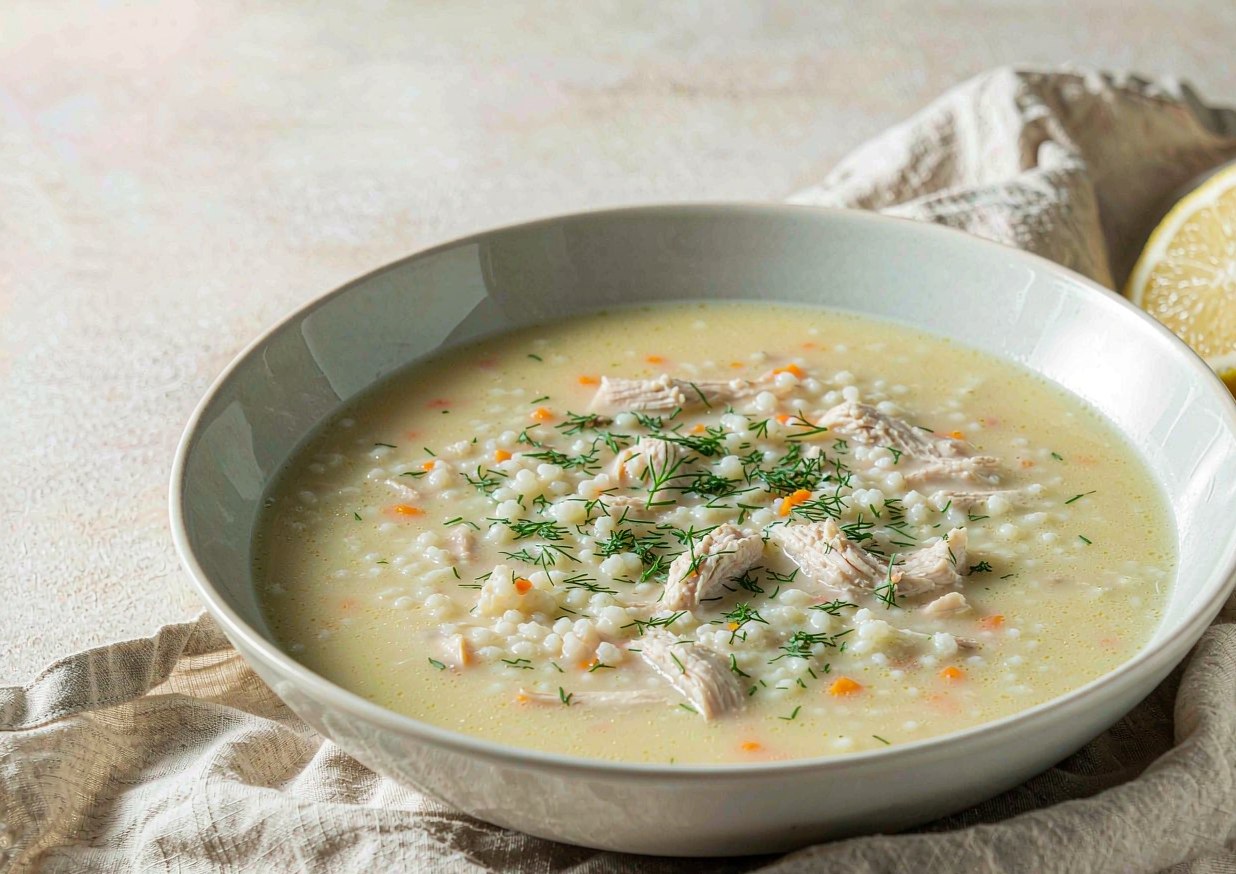
Quick answer: Simmer 1.5 lb / 700 g of chicken thighs in 8 cups / 2 litres of stock with diced onion, carrot, celery, and a bay leaf for 20 minutes, then lift the chicken out and shred it. Cook 2/3 cup of rice in the same broth for 12 to 14 minutes. Whisk 3 eggs with 1/3 cup of lemon juice, then ladle about 2 cups of hot broth into them a little at a time while whisking constantly. Take the pot off the heat, pour the tempered mixture back in, and stir for a minute. It thickens into a silky, opaque soup without ever boiling again.
- Prep time: 15 minutes
- Cook time: 40 minutes
- Total time: 55 minutes
- Servings: 4
- Cuisine: Greek
- Course: Soups & Stews
- Difficulty: Medium
Why this recipe works
Avgolemono is a sauce before it is a soup: an emulsion of egg protein and lemon juice suspended in hot stock. The egg thickens because its proteins unwind and set between roughly 62°C and 70°C / 145°F and 160°F. Below that the soup stays thin; above it the proteins tighten, squeeze out water, and you get lemony scrambled egg in broth. That window is why the pot comes off the heat before the eggs go in, and why tempering — raising the eggs to temperature with hot broth before they meet the whole pot — is not a fussy step but the actual technique. Lemon does two jobs: its acid makes the emulsion more forgiving, and its aroma is the character of the dish. Use fresh juice; bottled juice tastes flat once warmed. We cook the chicken to the USDA safe minimum of 74°C / 165°F, and the cooling steps follow USDA FSIS guidance.
Our method follows the technique guidance published by Epicurious — Recipe Archive & Technique Guides and is adapted for a standard home kitchen.
Ingredients
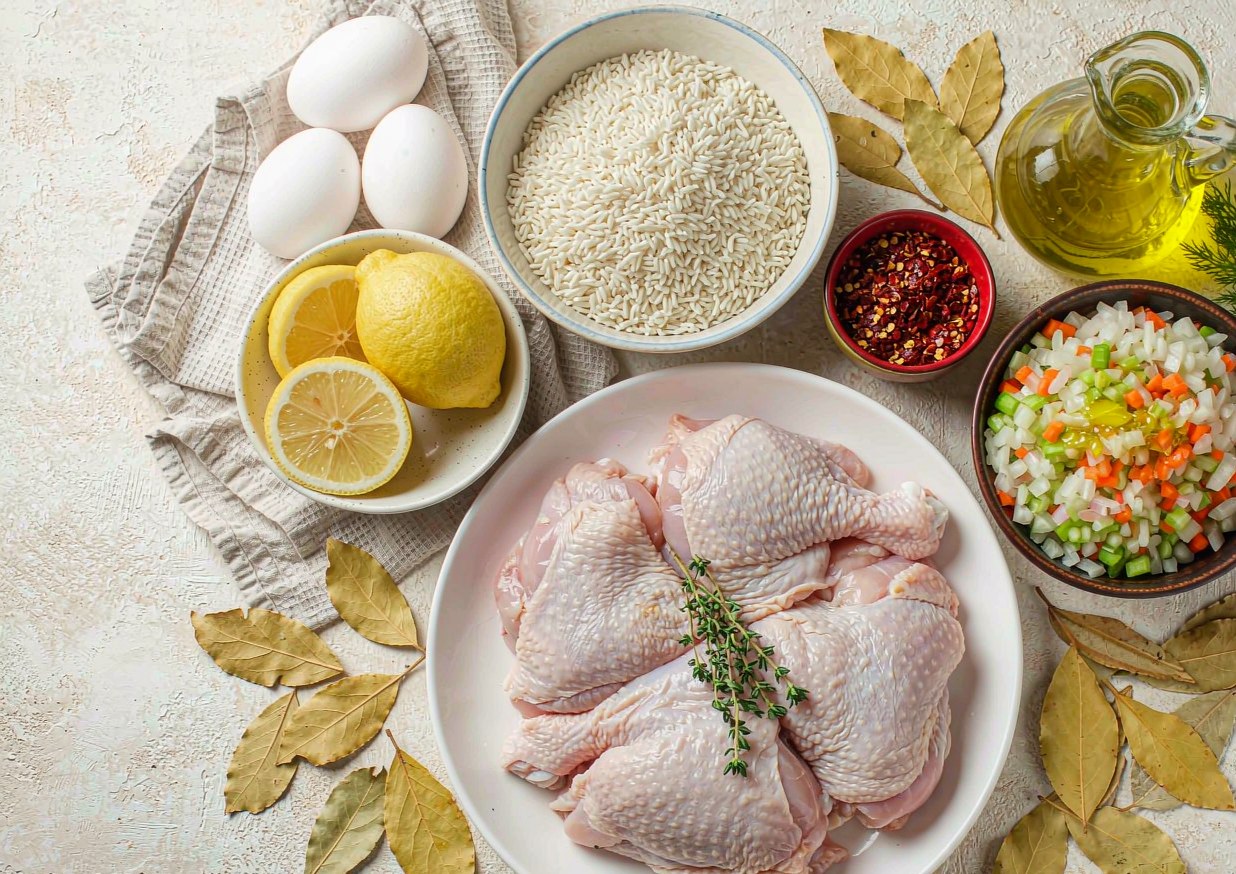
- 1.5 lb / 700 g boneless, skinless chicken thighs (or 2 lb / 900 g bone-in for a richer broth)
- 8 cups / 2 litres low-sodium chicken stock
- 2 tbsp extra-virgin olive oil
- 1 small onion, finely diced
- 2 medium carrots, diced small
- 2 celery stalks, diced small
- 1 bay leaf
- 1 tsp kosher salt, plus more to taste
- 1/2 tsp white pepper
- 2/3 cup / 130 g long-grain white rice, or orzo
- 3 large eggs, at room temperature
- 1/3 cup / 80 ml fresh lemon juice, from 2 to 3 lemons
- 1 tsp finely grated lemon zest
- 2 tbsp chopped fresh dill or flat-leaf parsley
- Lemon wedges, for serving
Equipment
- A heavy 5-quart / 4.5 litre Dutch oven, which holds heat evenly and keeps the broth at a steady simmer
- A balloon whisk. A fork does not move fast enough to stop the eggs setting
- A ladle and a heatproof jug for tempering
- An instant-read digital thermometer, to confirm the chicken has reached 74°C / 165°F
- A microplane zester and a citrus juicer for the lemons
- A wide, shallow serving bowl — the soup thickens as it stands and holds better in a wide bowl
How to make avgolemono soup step by step
- Sweat the aromatics. Heat the olive oil in the Dutch oven over medium heat. Add the onion, carrot, and celery with a pinch of salt and cook for 6 to 8 minutes until soft but not browned. Browning here would push the broth toward a roasted stock, and avgolemono wants a clean, pale base.
- Add the stock and chicken. Pour in the stock, add the bay leaf, salt, and white pepper, and bring it to a bare simmer. Slide the thighs in. You want lazy bubbles at the edge of the pot, not a rolling boil — a hard boil shreds the meat and clouds the broth.
- Poach the chicken. Simmer for 18 to 20 minutes, until the thickest thigh reads 74°C / 165°F. Lift the chicken onto a plate, leave the broth on the heat, and skim any foam from the surface.
- Cook the rice in the broth. Add the rice and cook for 12 to 14 minutes, stirring occasionally so it does not stick, until tender. The starch it releases is part of what gives the soup body, so do not rinse it first.
- Shred the chicken. While the rice cooks, pull the chicken apart with two forks into bite-sized pieces. Set it aside; it goes back in at the end so it does not overcook.
- Whisk the eggs with lemon. Whisk the eggs in a large heatproof bowl until uniform, then whisk in the lemon juice and zest. Room-temperature eggs temper more safely than fridge-cold ones, so take them out while the rice cooks.
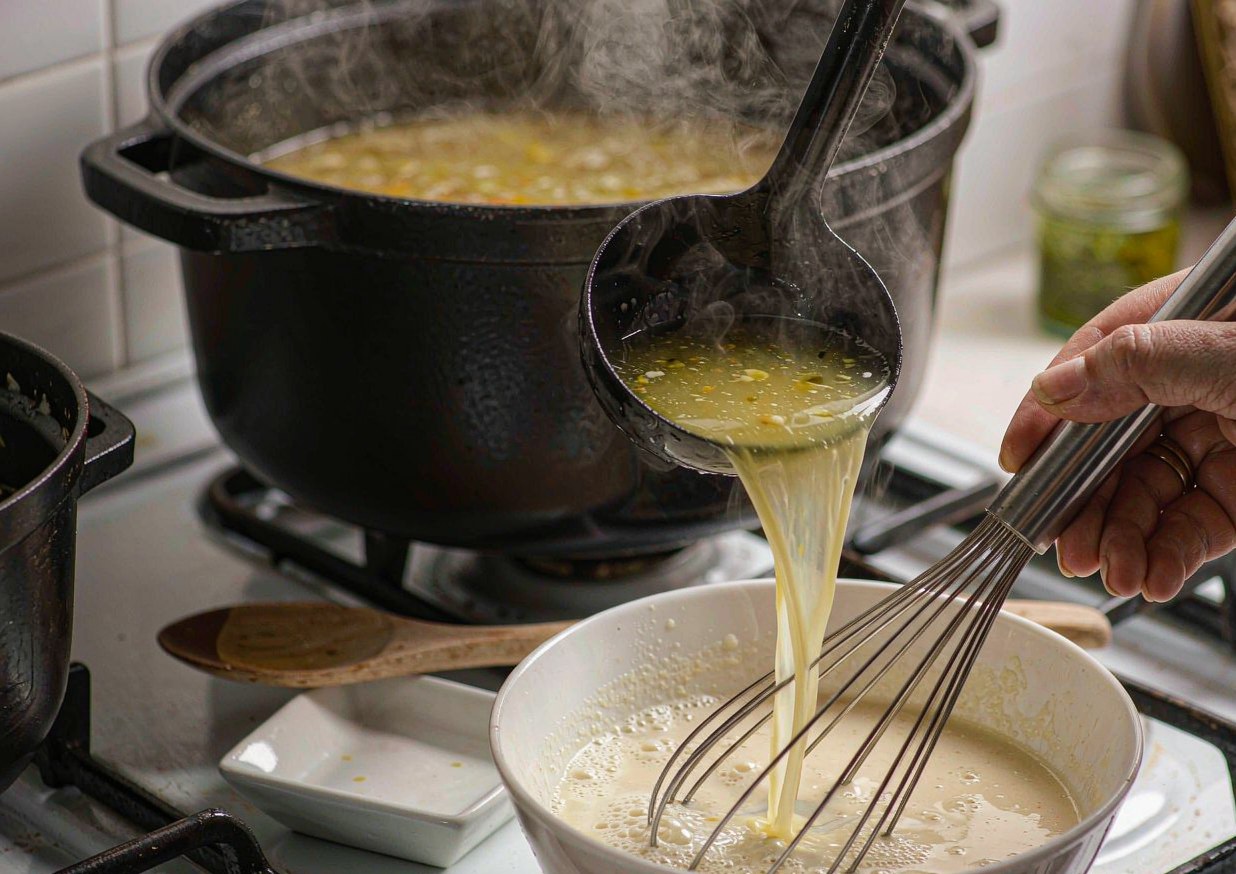
- Temper. Ladle about 2 cups / 480 ml of hot broth out of the pot. Pour it into the eggs in a thin stream — a couple of tablespoons at a time for the first half — while whisking without stopping. Keep going until the bowl is warm to the touch and the eggs no longer smell raw.
- Take the pot off the heat. This is the step people skip. Move the pot off the burner entirely and let the bubbling stop for 30 seconds. The residual heat in a heavy pot is more than enough to set the eggs; direct heat takes them past the setting window.
- Combine. Pour the tempered mixture into the pot in a slow stream while stirring constantly. The broth turns pale gold and opaque within about a minute and will coat the back of a spoon. Do not let it boil.
- Finish. Stir the shredded chicken and dill back in and let the soup sit for 2 minutes so the meat warms through. Taste and add salt, pepper, and more lemon juice a teaspoon at a time, until it tastes bright rather than sour.
- Serve immediately. Ladle into wide bowls with lemon wedges. The soup thickens as it stands; thin it with a splash of hot stock, not water.
What we learned testing this avgolemono soup recipe
We cooked this recipe three times before publishing it. These are the things that only showed up in the kitchen, not on paper.
- Our first pot curdled, and it is worth saying exactly how. We took the pot off the heat but left it on the warm element, and poured the tempered eggs in before the bubbling stopped. Within a minute there were soft yellow threads in thin broth. The fix is in the method now: take the pot right off the heat and count 30 seconds.
- We tested tempering speed deliberately. Pouring all 2 cups of hot broth into the eggs at once set about a fifth of the egg however fast we whisked. Adding the first half a few tablespoons at a time, then the rest in a thin stream, gave a smooth liaison.
- Rice versus orzo: rice kept its shape after an overnight reheat, while orzo swelled and turned the leftovers into a thick stew. Both are traditional; we wrote it with rice because it survives the fridge.
- We tried bottled lemon juice against fresh in two otherwise identical pots. The bottled version read as sour rather than fragrant, and it gave none of the aroma you get from zest, because there is no zest to take.
- Thighs against breast: breast was ready 8 minutes sooner but turned fibrous when it went back into the hot broth. Thighs stayed tender through the poach, the shred, and the return to the pot.
Expert tips
- Use a heavy pot. Thin aluminium loses heat fast, which tempts you to put the soup back on the flame after the eggs go in, and that is what makes it curdle.
- Whisk the lemon into the eggs, not the other way round. Lemon added to whole eggs starts firming the proteins at once; whisked in gradually, the mixture stays easy to temper.
- Taste for salt after the eggs, not before. Egg and lemon both mute seasoning, and a soup that tasted right before the liaison will taste under-seasoned after it.
Variations and substitutions
- With meatballs: mix 1 lb / 450 g of ground pork or chicken with an egg white, breadcrumbs, dill, and salt, roll into small balls, and poach them in the broth instead of the thighs.
- With orzo: swap the rice for 2/3 cup of orzo and cook it for 8 minutes. Orzo releases more starch, so the soup ends up thicker and closer to a stew.
- Fish or vegetable: the same liaison works over a broth of poached white fish, or of leeks and potatoes. Reduce the lemon slightly for fish.
- As a pouring sauce: use 4 eggs and 6 cups of stock, for the sauce that is spooned over stuffed vegetables.
Troubleshooting
| What went wrong | Why it happens | How to fix it |
|---|---|---|
| Soup is grainy, with soft yellow bits in it | The egg proteins set too fast and squeezed out water — either the pot was still on the heat, or the eggs were not tempered enough. | Take the pot fully off the heat before adding the tempered mixture, and add hot broth to the eggs a couple of tablespoons at a time for the first half. To rescue a grainy pot, whisk it hard off the heat with hot stock. |
| Soup stayed thin and watery | Not enough egg for the volume of broth, or the broth was not hot enough when the liaison went in. | Use 3 eggs for 8 cups of stock and make sure the pot is at a full simmer when you ladle broth out for tempering. If it is still thin, temper one more egg and stir it in off the heat. |
| It tastes sour rather than bright | Too much lemon for the fat and starch in the pot, or bottled juice. | Add lemon gradually and taste as you go; a splash more stock rounds off an oversoured pot. Fresh juice and zest next time — bottled juice reads as sour, not fragrant. |
| Leftovers separated after reheating | It was reheated too hard. The egg emulsion tightens again above about 70°C / 160°F. | Reheat over low heat, stirring, and stop before it bubbles. If it looks grainy, pull it off and whisk in hot stock. |
Storage, food safety and make-ahead
Cool the soup quickly — divide it into shallow containers and refrigerate within 2 hours — then keep it for up to 2 days. An egg-thickened soup does not reheat well at a boil: the proteins tighten again and it separates. Reheat it over low heat, stirring, and stop before it bubbles. Rice keeps absorbing liquid overnight, so expect leftovers to be thicker and loosen them with hot stock. Freezing the finished soup is not recommended, but you can freeze the broth-and-rice base for up to 3 months and finish it fresh.
For safe cooling, storage times, and reheating, follow the USDA FSIS food safety guidance.
Nutrition information
Per serving (about 1½ cups / 360 ml, one of four): approximately 335 kcal, 28 g protein, 12 g fat, 28 g carbohydrates, 2 g fibre, 780 mg sodium. Values are estimates derived from USDA FoodData Central and will vary with the cut of chicken, whether the stock is homemade or bought, and how much salt you add at the end.
Figures are calculated from the USDA FoodData Central database and are estimates only. Values vary with ingredient brands and portion size.
Frequently asked questions
Why did my avgolemono curdle?
Almost always because the soup boiled after the eggs went in, or because the eggs were added without enough tempering. Egg proteins set between about 62°C and 70°C / 145°F and 160°F and then squeeze out water, which is what graininess is. Take the pot off the heat, add hot broth to the eggs a little at a time, and never bring it back to a boil.
Can I use bottled lemon juice?
You can, but the difference shows once the juice is warm: it tastes flat and reads as sour rather than fragrant. Fresh lemons also give you zest, which is where most of the aroma sits. Two to three lemons give the 1/3 cup this recipe needs.
Which rice works best?
Long-grain white rice, because it holds its shape through the simmer and the reheat. Short-grain rice releases far more starch and turns the soup gluey as it stands. Orzo is the traditional alternative and behaves somewhere in between.
Can I make it ahead?
Partly. Cook the broth, chicken, and rice up to 2 days ahead and refrigerate them. On the day, bring the base back to a simmer, then temper and finish off the heat. A finished soup reheats acceptably but never as smoothly as a fresh one.
Sources and further reading
- USDA FoodData Central
- Epicurious — Recipe Archive & Technique Guides
- USDA FSIS — Safe Minimum Internal Temperatures
- Serious Eats — The Food Lab
Nutrition figures on this page are calculated from the USDA FoodData Central database and are estimates only. They are not a substitute for advice from a qualified dietitian or physician.
Last updated: September 7, 2026. Recipe tested three times in a standard home kitchen by the named author above. Corrections are welcome and are noted on the page when published.