 Old Kitchen Stories
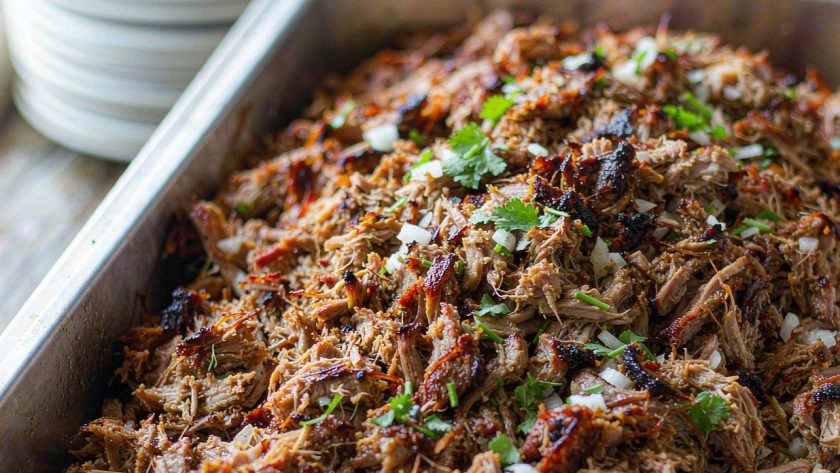
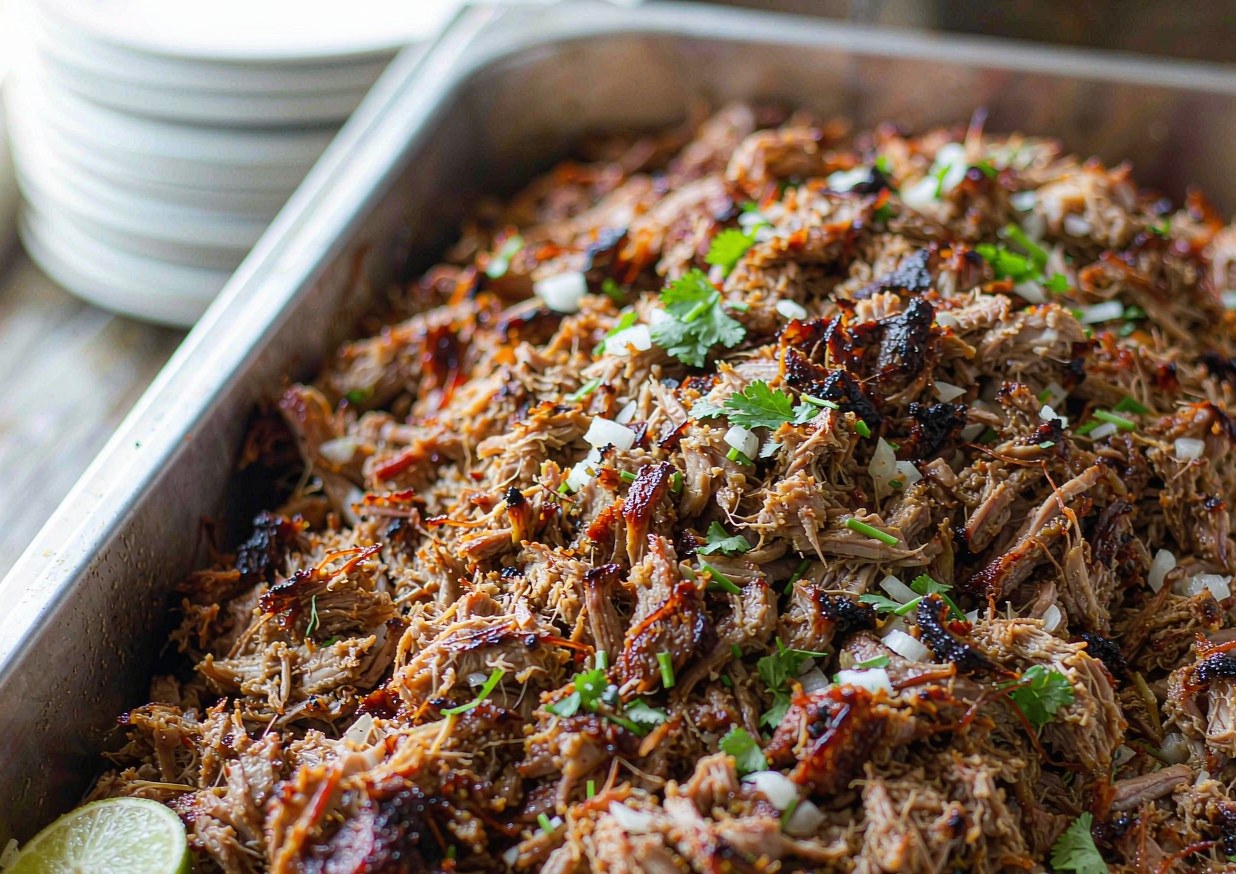
Quick answer: Cut 4 lb / 1.8 kg of boneless pork shoulder into 2-inch chunks and season them with salt, cumin, Mexican oregano, and pepper. Brown the pieces in batches in a heavy pot, then add smashed garlic, sliced onion, orange zest, orange juice, lime juice, and two bay leaves. Cover and braise at 150°C / 300°F for 3 to 3½ hours, until a fork meets no resistance. Shred the meat onto a sheet pan, spoon the strained pan fat over it, and broil 4 inches from the element for 6 to 10 minutes until the edges are crisp.
- Prep time: 20 minutes
- Cook time: 215 minutes
- Total time: 235 minutes
- Servings: 8
- Cuisine: Mexican
- Course: Main Dishes
- Difficulty: Easy
Why this recipe works
Carnitas is a confit, not a stew, and that one distinction explains most of the versions that go wrong online. In Michoacán the pork cooks submerged in its own rendered fat in a copper cazo, with nothing added beyond seasoning and a little citrus. There is no stock, because water braises meat while fat confits it, and only one of those gives you the texture you want. We keep that idea in a home oven by starting the shoulder in a covered pot with just what it gives off plus the juice of two oranges. The second decision is time: shoulder is loaded with collagen, which only turns to gelatine slowly, well above about 80°C / 175°F. Pull the meat early and it stays chewy, because the conversion has not happened yet. The third is the broiler. Braised pork on its own is soft and pale; what makes carnitas worth eating is the contrast when shredded meat goes back under hard heat with its own fat until the thin edges go lacy.
Our method follows the technique guidance published by Serious Eats — The Food Lab and is adapted for a standard home kitchen.
Ingredients
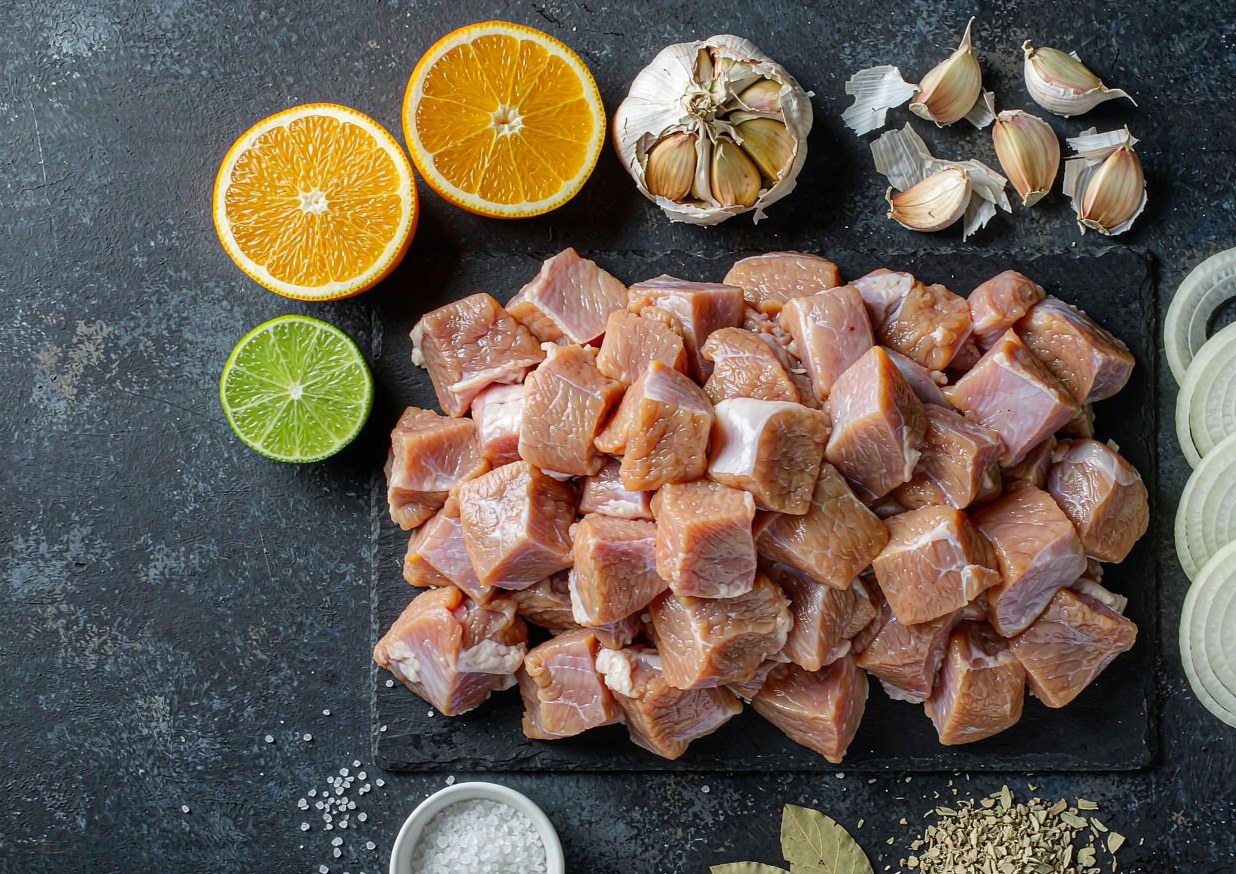
- 4 lb / 1.8 kg boneless pork shoulder (Boston butt), cut into 2-inch / 5 cm chunks
- 2 tsp kosher salt
- 2 tsp ground cumin
- 2 tsp dried Mexican oregano
- 1 tsp freshly ground black pepper
- 2 tbsp lard, or a neutral oil such as sunflower
- 1 large white onion, sliced
- 6 cloves garlic, smashed and peeled
- 2 strips orange zest, plus 1/2 cup / 120 ml fresh orange juice (about 2 oranges)
- 3 tbsp fresh lime juice
- 2 bay leaves
- 1/2 cup / 120 ml water
- 2 tbsp chopped fresh cilantro, for serving
- Warm corn tortillas, diced white onion, and lime wedges, for serving
Equipment
- A heavy 5 to 6 quart Dutch oven with a tight lid — cast iron holds heat evenly at 150°C / 300°F, and a loose lid lets out the moisture the braise depends on
- A heavy rimmed baking sheet, which is what goes under the broiler for the crisping stage; thin trays buckle and dump rendered fat
- An instant-read digital thermometer, the only way to know the braise reached temperature before you left it alone for three hours
- Sturdy stainless steel tongs, faster than two forks for turning and shredding a full pan of hot pork
- A microplane or fine grater for the orange zest
- A fine-mesh strainer, for separating the rendered fat from the pan juices before they go back over the meat
How to make carnitas step by step
- Season the pork first. Toss the chunks with the salt, cumin, oregano, and pepper in a large bowl until every piece is coated, then leave them to sit for 20 minutes while the oven heats.
- Preheat the oven. Bring it to 150°C / 300°F with a rack in the lower-middle position. Low and steady is the whole point; check it with an oven thermometer if your oven runs hot.
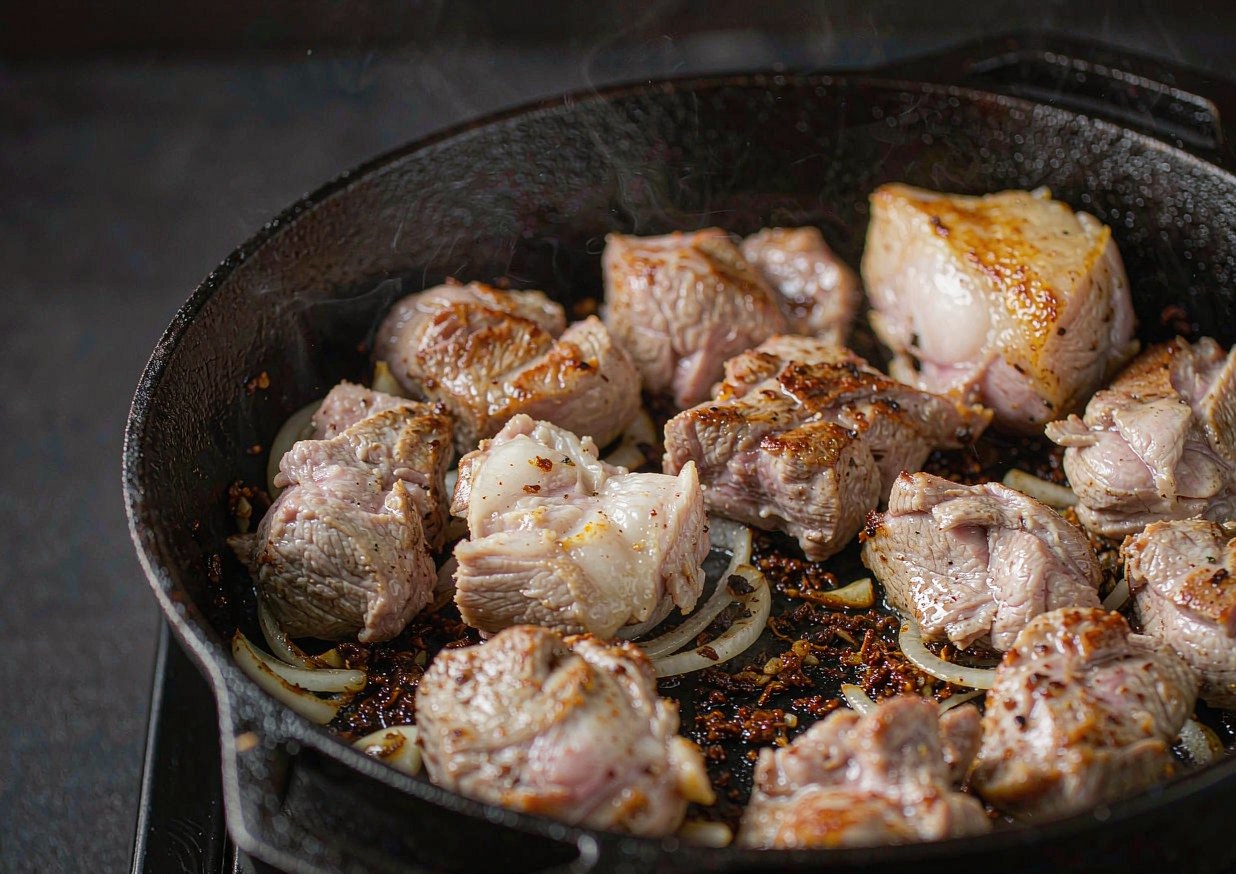
- Brown in batches. Melt the lard over medium-high heat. Add a single layer of pork with space between the pieces and leave it alone until the underside is deeply browned, about 4 minutes. Turn, brown the second side, and move it to a bowl; repeat with the rest.
- Soften the aromatics. Lower the heat to medium. Add the onion and garlic to the fat left in the pot and cook for 3 minutes, scraping the base as the onion releases liquid.
- Deglaze with the citrus. Pour in the orange and lime juice and scrape the base clean with a wooden spoon. Let it bubble for 1 minute; those browned bits carry most of the savoury depth in the finished dish.
- Return the meat. Put the pork and any resting juices back into the pot with the orange zest, bay leaves, and the water. The liquid should come only about a third of the way up the meat — never cover it.
- Check before it goes in. Put the lid on, bring the pot to a simmer on the hob, and check with a thermometer. The liquid should read around 95°C / 200°F before the pot goes into the oven.
- Braise covered. Cook for 2½ hours without lifting the lid. Every check costs roughly 15 minutes.
- Uncover and finish. Take the lid off. The meat should be close to falling apart. Cook uncovered for another 30 to 60 minutes, until the surface pieces brown and most of the liquid cooks away, leaving fat and dark, concentrated juices behind.
- Shred onto a sheet pan. Lift the chunks out with tongs onto a rimmed baking sheet and pull them apart into rough pieces, bigger than feels right — small bits dry out under the broiler. Discard the bay leaves and zest strips.
- Spoon over the fat. Strain the pan juices and skim off the fat. Drizzle 3 to 4 tablespoons of it over the meat with a spoonful of the darker juices underneath. This is not optional: dry meat under a broiler only dries further.
- Crisp under the broiler. Set the broiler to high with a rack about 4 inches / 10 cm from the element. Broil for 6 to 10 minutes, turning once halfway. Stay with it and pull the pan the moment the edges go dark and crisp.
- Rest and serve. Rest for 10 minutes, toss with the cilantro, and serve with warm tortillas, diced onion, and lime wedges.
What we learned testing this carnitas recipe
We cooked this recipe three times before publishing it. These are the things that only showed up in the kitchen, not on paper.
- Our first attempt was a genuine failure, and it is the most common way this dish goes wrong: we covered the meat with stock the way you would for a pot roast. Four hours later it shredded easily but tasted boiled — the fat rendered out and floated uselessly on top. We now use half a cup of water and let the shoulder make its own medium.
- Shoulder against loin at the same weight: the loin was ready almost two hours sooner and every piece wept clear liquid when shredded. The shoulder took the full time and stayed moist on the fork.
- Lifting the lid cost real time. Checking the pot twice in the first hour put us about 25 minutes behind the batch we left alone.
- We tested broiler distances side by side. At 6 inches the meat dried before it browned; at 3 inches the thin edges scorched while the thick pieces stayed pale. Four inches was the only distance that gave us both.
- Skipping the browning step was not worth it. One batch went into the oven cold and untouched, and it read flat and grey next to the batch that got colour first.
Expert tips
- Do not trim all the fat off the shoulder. What looks like excess renders out and becomes the cooking medium; lean shoulder in a dry pot gives you desiccated pork.
- Keep the chunks at roughly 2 inches. Cut to 1 inch and they shred into dust before the centres have cooked through.
- Save the strained fat. It keeps a month in the fridge and makes excellent tortillas.
- Broil across two pans rather than one crowded one if you doubled the batch. Crowding steams the meat instead of crisping it.
Variations and substitutions
- Oven-only version: skip the broiler and oven-fry at 230°C / 450°F for 15 minutes after shredding. You lose some crisp, but nobody stands guard.
- Slow cooker: brown on the hob as written, then transfer everything to the slow cooker and cook on low for 8 hours; finish under the broiler as normal.
- Milk version: replace half the orange juice with evaporated milk, a common trick in home kitchens in Jalisco. Milk sugars brown hard at the end, so watch the pan.
- Smoky chilli version: add two dried guajillo chillies, stemmed and seeded, to the pot with the bay leaves, and half a teaspoon of ground chipotle to the rub.
Troubleshooting
| What went wrong | Why it happens | How to fix it |
|---|---|---|
| Meat is tender but pale and wet | Too much liquid in the pot, so the pork braised instead of confiting, and the final stage did not reduce far enough. | Use only the half cup of water and keep it below a third of the way up the meat. If it is already finished, spread it on a sheet pan, tip off any standing liquid, and give it another few minutes under the broiler. |
| Pork shreds into dry, stringy strands | A lean cut such as loin, or the crisping stage ran too long. | Use shoulder with its fat cap intact and pull it the moment the edges are dark, not when the timer goes off. Tossing the finished meat with the reserved pan fat rescues a dry batch better than any sauce. |
| Nothing has browned after four hours | Too much water in the pot and the lid stayed on to the end, so the meat never met dry heat. | Take the lid off for the last 30 to 60 minutes. The surface pieces need direct oven heat to colour, and the liquid has to boil down before that is possible. |
| Edges scorched before the centres crisped | Broiler too close to the element, or the pieces were cut too small. | Set the rack about 4 inches / 10 cm away and keep the chunks at roughly 2 inches. Watch rather than time it; broilers differ far more than ovens do. |
Storage, food safety and make-ahead
Cool leftovers within 2 hours by spreading them out on a tray, then refrigerate in an airtight container for up to 4 days, or freeze for up to 3 months. Store the meat separately from the tortillas or everything goes soft. Reheat in a hot skillet with a splash of water rather than the microwave, which turns crisp edges back into string. Freezing before the broiler stage works well: thaw overnight and crisp the meat.
For safe cooling, storage times, and reheating, follow the USDA FSIS food safety guidance.
Nutrition information
Per serving (about 200 g / 7 oz of carnitas with two tortillas, onion, and cilantro): approximately 610 kcal, 38 g protein, 34 g fat, 38 g carbohydrates, 4 g fibre, 890 mg sodium. Values are estimates derived from USDA FoodData Central and will vary with the fat content of the shoulder, how much fat you skim off, and portion size.
Figures are calculated from the USDA FoodData Central database and are estimates only. Values vary with ingredient brands and portion size.
Frequently asked questions
Can I use pork loin instead of shoulder?
Technically yes, but it is the wrong cut. Loin has almost no collagen and little intramuscular fat, so it cannot be taken to the temperature where connective tissue breaks down. It turns dry and stringy at the point it shreds. Shoulder, and specifically Boston butt, is the only cut worth the time here.
Do I have to add water to the pot?
A little, yes, for the first hour. The pot needs some liquid to carry heat and to stop the early stage scorching before enough fat renders out. But it should come no more than a third of the way up the meat. Any more and you have made a stew, and the meat tastes boiled rather than confited.
The meat is tender but pale and wet. What did I miss?
Nothing is wrong with the braise; the final stage did not get hot enough or last long enough. Spread the meat in a thinner layer, confirm it is 4 inches from the element, and give it another 2 to 3 minutes. If there is still standing liquid on the pan, tip it off first.
Can I make carnitas ahead of time?
Yes, and they are better for it. Braise and shred a day in advance, refrigerate, then let the meat sit at room temperature for 20 minutes before crisping. Chilled meat holds together better and browns more evenly than it does straight from the pot.
Sources and further reading
- USDA FoodData Central
- Serious Eats — The Food Lab
- USDA FSIS — Safe Minimum Internal Temperatures
- Epicurious — Recipe Archive & Technique Guides
Nutrition figures on this page are calculated from the USDA FoodData Central database and are estimates only. They are not a substitute for advice from a qualified dietitian or physician.
Last updated: September 7, 2026. Recipe tested three times in a standard home kitchen by the named author above. Corrections are welcome and are noted on the page when published.