 Old Kitchen Stories
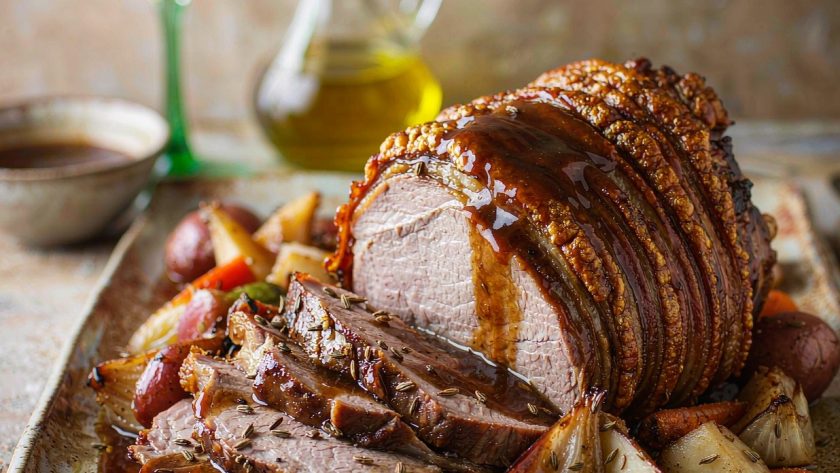
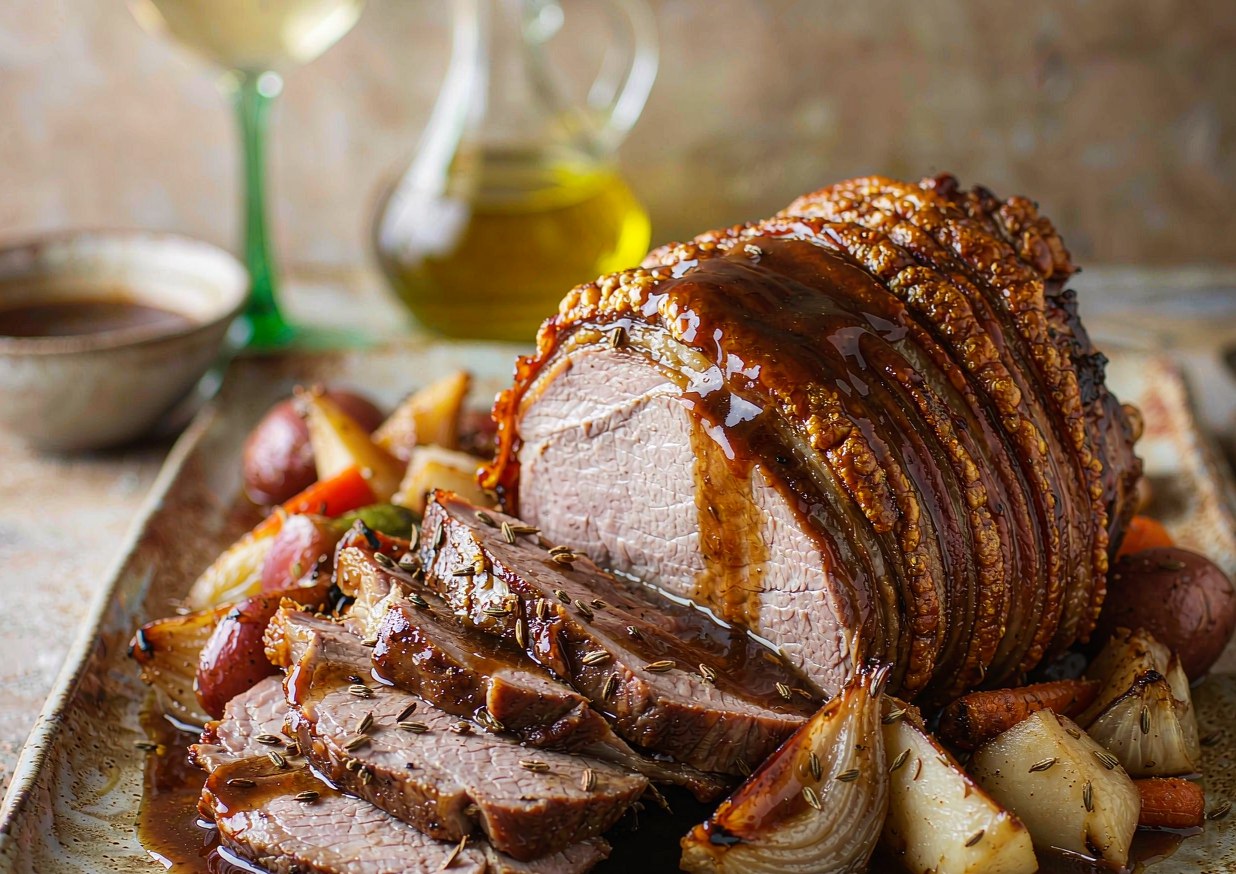
Quick answer: Rub a 4 lb / 1.8 kg pork shoulder with salt, crushed caraway, marjoram, pepper, and garlic and let it sit for 30 minutes. Set it fat side up on a rack over quartered onions, carrot, and celeriac with 2 cups of stock. Roast at 160°C / 325°F for 2 hours, basting every 40 minutes, until the centre reaches 68°C / 155°F. Raise the oven to 240°C / 465°F for 12 to 15 minutes to crackle the cap, then rest 20 minutes and finish the pan juices into a gravy.
- Prep time: 25 minutes
- Cook time: 155 minutes
- Total time: 180 minutes
- Servings: 6
- Cuisine: German
- Course: Main Dishes
- Difficulty: Medium
Why this recipe works
Two decisions carry this roast. The first is the cut: pork shoulder has enough collagen and intramuscular fat to survive two and a half hours in the oven and stay juicy, while a loin roast of the same weight is dry at an hour. The second is temperature discipline. The roast spends almost all of its time at low heat so the collagen converts to gelatin, and only the last 15 minutes are hot, which is what blisters the fat cap into crackling without overcooking the meat underneath. Caraway and marjoram are what make this read as German rather than as a generic pot roast, and caraway turns bitter when it burns, so it goes under the fat cap rather than onto the exposed surface. We cook pork to the USDA safe minimum of 63°C / 145°F and then carry it higher for texture.
Our method follows the technique guidance published by Serious Eats — The Food Lab and is adapted for a standard home kitchen.
Ingredients
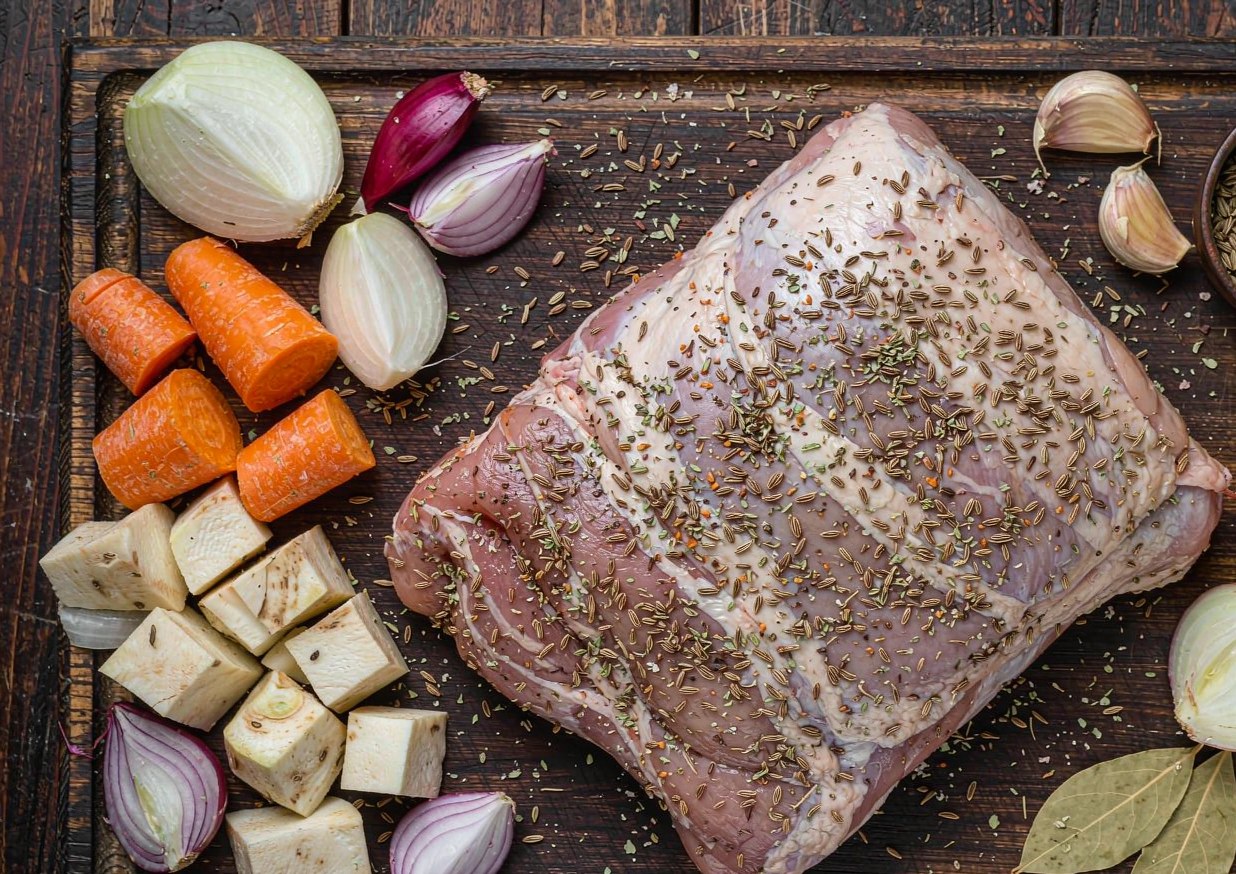
- 4 lb / 1.8 kg pork shoulder (Boston butt), fat cap intact, tied if uneven
- 2 tsp kosher salt
- 1 tbsp caraway seeds, lightly crushed
- 2 tsp dried marjoram
- 1 tsp freshly ground black pepper
- 4 cloves garlic, thinly sliced
- 2 tbsp neutral oil
- 2 large onions, quartered
- 2 medium carrots, cut into short lengths
- 1 small celeriac (celery root), peeled and cubed, or 3 celery stalks in large pieces
- 2 cups / 480 ml low-sodium chicken or beef stock
- 1 tbsp apple cider vinegar
- 1 tsp unsulphured molasses or dark brown sugar
- 2 bay leaves
- 2 tbsp all-purpose flour
- 2 tbsp cold unsalted butter
- Salt and freshly ground black pepper, to taste
- 1 tbsp chopped flat-leaf parsley (optional)
Equipment
- A heavy roasting pan with a rack, which keeps the underside out of the rendering fat
- An instant-read digital thermometer — with a fat cap and an irregular shape, colour and timing both lie
- Kitchen twine, if the shoulder is uneven, so it cooks as one cylinder
- A mortar and pestle or a spice grinder for the caraway seeds
- A bulb baster for basting with the pan juices
- A fat separator or a heatproof jug, for skimming the gravy
- A carving board with a well, so the resting juices stay on the board
How to make pork roast step by step
- Bring the meat to temperature. Pat the pork completely dry with paper towels and leave it uncovered on a plate for 30 minutes. A roast that goes in fridge-cold loses about 15 minutes to warming through, and the outside overcooks while you wait.
- Season the rub. Mix the salt, crushed caraway, marjoram, and pepper. Rub the oil over the whole surface, then press the spice mix into the meat on every side except the fat cap. Use a paring knife to make a dozen small slits and push the garlic into them.
- Salt the fat cap. Rub the cap with a further 1/2 tsp of kosher salt and nothing else. Salt draws moisture out of the skin, and the drier it starts, the better it crackles. Do not put caraway on it; exposed seeds scorch.
- Build the pan. Heat the oven to 160°C / 325°F. Scatter the onion, carrot, celeriac, and bay over the base of the pan and pour in the stock, vinegar, and molasses. Set the rack over them; the liquid should sit just below the meat, not touch it.
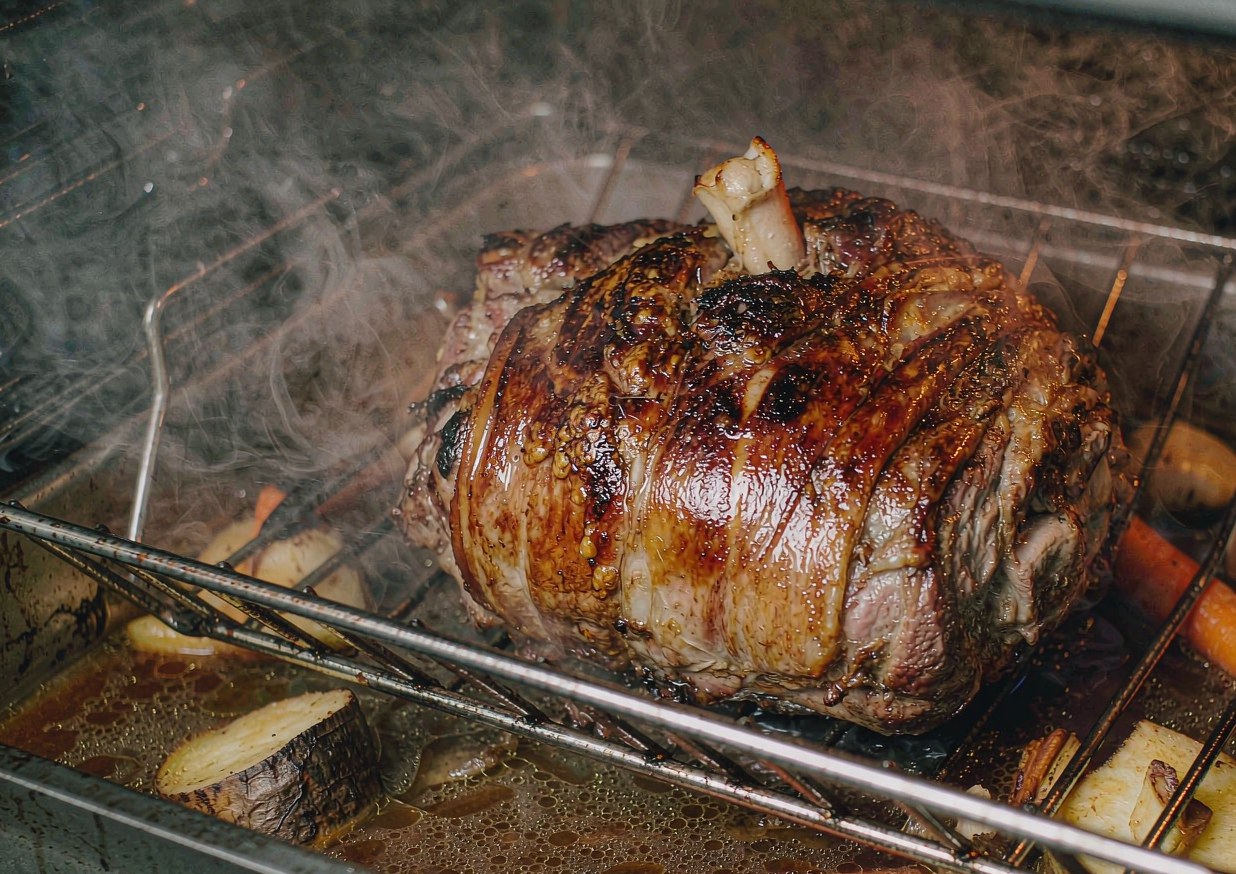
- Roast low. Set the pork on the rack, fat side up, in the centre of the oven. Roast for 2 hours, basting the exposed meat every 40 minutes. If the vegetables look dry, add another 1/2 cup of stock; a dry pan means the drippings burn instead of becoming gravy.
- Check, do not guess. After 2 hours, insert the thermometer into the thickest part of the roast, avoiding any bone and the fat cap. You want 68°C / 155°F. If it reads lower, give it 15 minutes more and check again.
- Crackle the fat cap. Raise the oven to 240°C / 465°F and return the roast to the top third for 12 to 15 minutes, watching it closely. The cap should blister and turn deep amber; rotate the pan once if it browns unevenly. Pull it the moment the centre reaches 71°C / 160°F.
- Rest properly. Move the roast to a carving board, tent it loosely with foil, and rest for 20 minutes. The temperature climbs a couple of degrees and the juices thicken enough to stay in the meat. Skipping the rest is the most common way to serve a dry roast.
- Make the gravy. Strain the pan contents into a jug, pressing on the vegetables, and skim off all but 2 tbsp of the fat. Put the pan over medium heat, whisk the flour into the reserved fat, and cook 2 minutes until it smells nutty. Whisk in the strained liquid and simmer 5 minutes until it coats a spoon.
- Finish and season. Off the heat, whisk in the cold butter a piece at a time. Taste and add salt, pepper, and a few drops of vinegar; pork fat needs the acid.
- Carve and serve. Cut the fat cap into strips first, then slice the meat across the grain about 1/4 inch / 6 mm thick. Pour the board juices into the gravy and serve with the softened vegetables.
What we learned testing this pork roast recipe
We cooked this recipe three times before publishing it. These are the things that only showed up in the kitchen, not on paper.
- We roasted shoulder against loin at the same weight. The loin hit 71°C / 160°F forty minutes earlier and sliced dry; the shoulder needed the full two hours and sliced with moisture on the knife. Shoulder is the only cut worth the time here.
- Our first attempt was a genuine failure: we ran the whole roast at 220°C / 425°F to save time. The fat cap blistered and looked right after 50 minutes, but the centre was still 52°C / 125°F and the outside inch had tightened into a grey, chewy band. The whole roast now goes low, with a separate hot stage at the end.
- Basting every 40 minutes gave a deeper crust and a measurably smaller gap between the temperature at the top and the bottom of the roast. It stays in the method.
- The pan went dry once, because we had used the last of the stock for basting. The drippings scorched onto the vegetables and the gravy tasted bitter; no amount of butter saved it. We now start with 2 cups and keep a kettle of hot stock to hand.
- Crushing the caraway rather than grinding it changed the crust. Ground caraway baked into a dusty, medicinal layer; cracked seeds stayed visible and read clearly against the pork fat.
Expert tips
- Score the fat cap in a diamond pattern before salting it. Scoring gives rendering fat somewhere to escape and roughly doubles the surface that crackles.
- Keep the liquid level steady. If the pan goes dry the drippings burn and the gravy turns bitter, which no amount of added stock will fix.
- Buy the shoulder with the fat cap on and ask the butcher to leave it. A trimmed shoulder roasts fine but never crackles.
- Rest the roast on a board, not a plate. A plate traps the juices and steams the underside you spent two hours crisping.
Variations and substitutions
- With dumplings: serve with bread or potato dumplings, the usual Bavarian plate, and make more gravy than you think you need.
- Slow cooker: sear as above, then cook on low for 8 hours over the vegetables and half the stock. You get tender meat but no crackling, so finish under a hot broiler for 5 minutes.
- Bone-in instead: takes about 25 minutes longer and gives a deeper gravy. Check in two places, since meat near the bone runs cooler.
- Loin instead of shoulder: use a 3 lb / 1.4 kg loin and cut the low-roast stage to 55 minutes, pulling it at 63°C / 145°F. Loin will not forgive a long cook.
Troubleshooting
| What went wrong | Why it happens | How to fix it |
|---|---|---|
| Fat cap is soft and pale, not crackled | It went into the oven wet, or the final blast was not hot enough. | Pat the cap dry, salt it, leave it uncovered for 30 minutes, then give it 12 to 15 minutes at 240°C / 465°F, or 3 to 4 minutes under a broiler, watching constantly. |
| Meat is dry and stringy | A lean cut, or the roast was cooked well past 71°C / 160°F. | Use shoulder and pull it when the thermometer says 71°C / 160°F, not when the clock says two hours. Resting 20 minutes matters too: slicing straight from the oven loses the juices. |
| Gravy tastes bitter or burnt | The pan liquid dropped too low and the drippings scorched on the vegetables. | Start with the full 2 cups and top up with hot stock if the vegetables look dry. If it has burned, rebuild with fresh stock; a bitter gravy cannot be diluted away. |
| Outside is dark but the centre is undercooked | The oven was too hot for the whole cook, so the exterior set long before the middle did. | Roast at 160°C / 325°F for the full time and keep the high heat for the last 15 minutes only. Check the thickest part with a thermometer, not by colour. |
Storage, food safety and make-ahead
Cool leftovers within 2 hours, then refrigerate for up to 3 days, or freeze sliced meat with a little gravy for up to 3 months. Store meat and gravy separately so the crackling does not soften. Reheat slices in a 160°C / 325°F oven, covered, for 15 minutes, then uncovered for 5 minutes to recrisp — a microwave turns the fat cap to soft rubber. A whole roast can also be cooked a day ahead and sliced cold for sandwiches.
For safe cooling, storage times, and reheating, follow the USDA FSIS food safety guidance.
Nutrition information
Per serving (about 250 g / 9 oz of meat with gravy and vegetables): approximately 615 kcal, 48 g protein, 44 g fat, 8 g carbohydrates, 2 g fibre, 730 mg sodium. Values are estimates derived from USDA FoodData Central and vary with the marbling of the shoulder and portion size.
Figures are calculated from the USDA FoodData Central database and are estimates only. Values vary with ingredient brands and portion size.
Frequently asked questions
What cut should I use for a German pork roast?
Pork shoulder, sold as Boston butt or pork butt, with the fat cap left on. It has enough fat and collagen to stay moist through a 2-hour roast. A loin roast of the same weight dries out, because it is lean and must be served at 63°C / 145°F rather than 71°C / 160°F.
Why is my crackling soft instead of crisp?
Either the cap went into the oven wet, or the final blast was not hot enough. Pat it dry, salt it, leave it uncovered for the full 30 minutes, then give it 240°C / 465°F for 12 to 15 minutes. If it is still pale, run it under a broiler for 3 to 4 minutes, watching constantly.
Can I make the gravy ahead of time?
Yes. Make it up to 2 days ahead; it sets firm, and reheating gently with a splash of stock brings it back. Do not boil it hard once thickened, because a flour-thickened gravy thins out again.
Do I really need a roasting rack?
It is worth having. Without one the underside sits in rendering fat and fries, which softens the base and gives a greasy rather than a glossy gravy. With no rack, prop the meat on thick onion slices.
Sources and further reading
- USDA FoodData Central
- Serious Eats — The Food Lab
- USDA FSIS — Safe Minimum Internal Temperatures
- BBC Food — Recipes & Techniques
Nutrition figures on this page are calculated from the USDA FoodData Central database and are estimates only. They are not a substitute for advice from a qualified dietitian or physician.
Last updated: September 7, 2026. Recipe tested three times in a standard home kitchen by the named author above. Corrections are welcome and are noted on the page when published.