 Old Kitchen Stories
Quick answer: Whisk 6 egg yolks with 150 g sugar over a pan of simmering water until thick and pale, about 8 minutes. Cool, then beat in 1 kg mascarpone. Dip 24 savoiardi briefly in 2 cups of cooled espresso, layer with the cream in a 23 x 33 cm dish, and chill at least 4 hours. Dust thickly with cocoa just before serving.
- Prep time: 30 minutes
- Cook time: 15 minutes
- Total time: 45 minutes
- Servings: 8 to 10
- Cuisine: Italian
- Course: Desserts
- Difficulty: Medium
Why this recipe works
Two decisions make this version different from most published recipes, and both are about structure. First, the yolks are cooked into a sabayon over a water bath rather than beaten in raw. It takes eight minutes, it makes the dessert safer to serve, and it produces a cream that holds its shape when sliced instead of sliding off the spoon. Second, the savoiardi are dipped, not soaked. A one-second dip per side is enough: the biscuit keeps absorbing moisture from the cream during the chilling time, and a fully saturated biscuit turns the finished tiramisu into a pudding. The mascarpone must be at room temperature when it meets the sabayon, because cold mascarpone will not blend smoothly and you will beat it into graininess trying. The sabayon method follows the custard technique published by King Arthur.
Our method follows the technique guidance published by King Arthur Baking Company — Baking Resources and is adapted for a standard home kitchen.
Ingredients
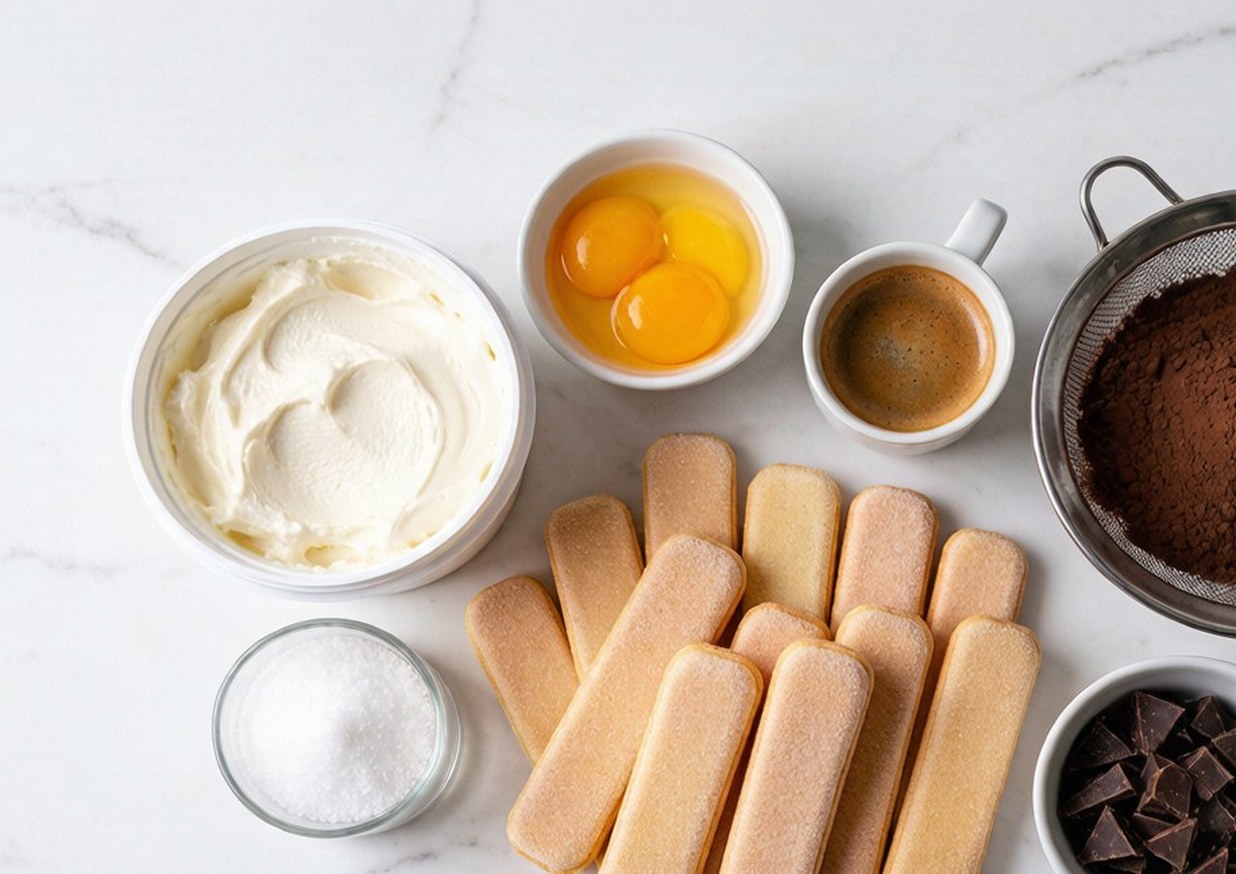
- 6 large egg yolks
- 3/4 cup / 150 g caster sugar
- 1/3 cup / 80 ml water
- 2 1/4 lb / 1 kg mascarpone, at room temperature
- 2 cups / 480 ml strong espresso, cooled to room temperature
- 2 tbsp caster sugar, for the espresso
- 24 to 30 savoiardi (Italian ladyfingers), about 200 g
- 3 tbsp unsweetened cocoa powder, for dusting
- 1/4 tsp fine sea salt
- Dark chocolate, finely grated, for the top (optional)
Equipment
- A heatproof bowl that sits over a saucepan without touching the water
- A balloon whisk or a handheld electric mixer
- A 23 x 33 cm dish, about 6 cm deep; glass shows the layers
- A wide shallow bowl for dipping the savoiardi
- A fine-mesh sieve for dusting the cocoa evenly
How to make tiramisu step by step
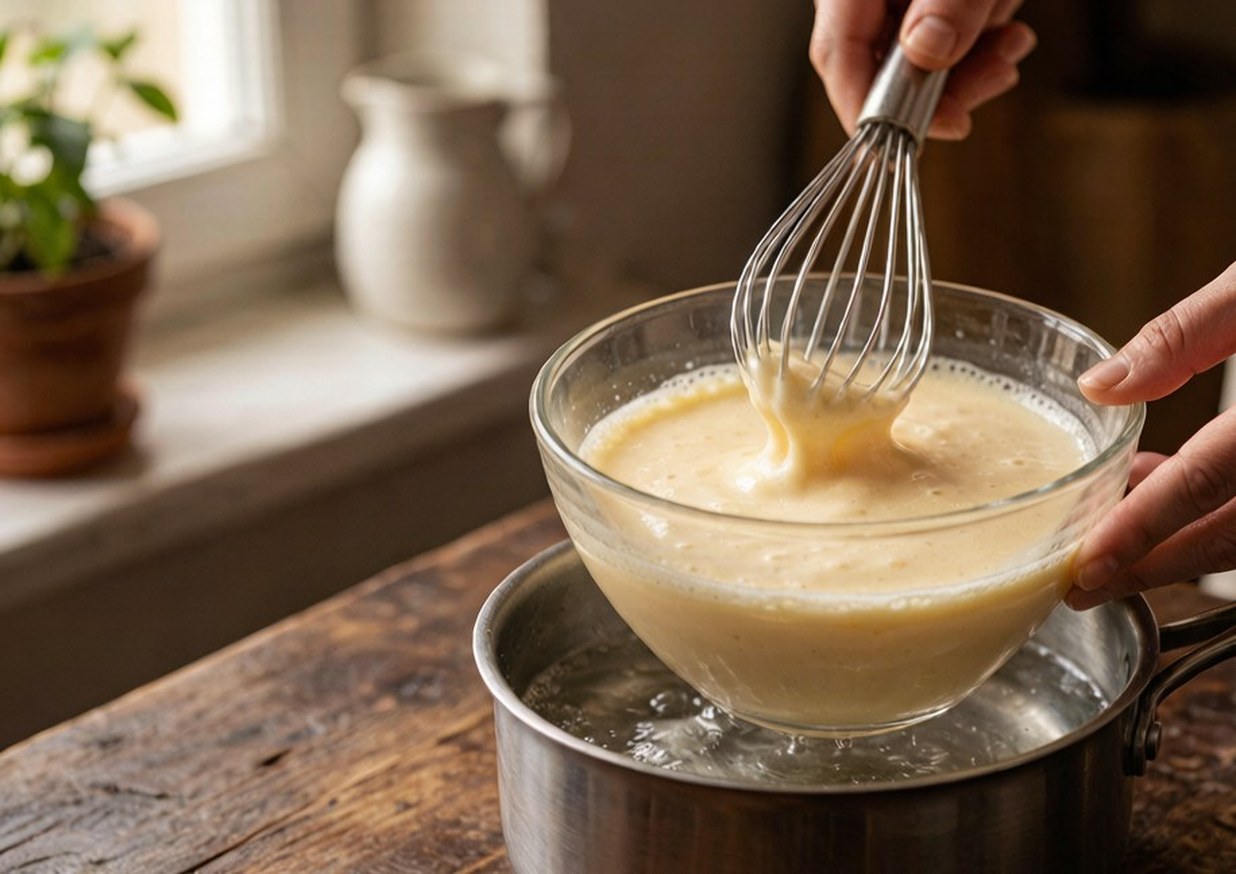
- Brew the coffee. Make 2 cups of strong espresso, stir in the 2 tbsp of sugar while hot, and let it cool completely. Warm coffee melts the cream and over-softens the biscuits.
- Make the sabayon. Put the yolks, sugar, water, and salt in a heatproof bowl over a pan of barely simmering water. The bowl must not touch the water. Whisk constantly for 7 to 9 minutes, until the mixture is pale, thick, and holds a ribbon trail for two seconds.
- Cool it. Take the bowl off the heat and keep whisking for 2 minutes to release the heat, then let it cool to room temperature. Do not rush this by adding the cold mascarpone early.
- Beat in the mascarpone. Add the room-temperature mascarpone a third at a time, beating gently until the cream is smooth and thick. Stop as soon as it is combined; overbeating thins mascarpone.
- Dip the biscuits. Working one at a time, dip each savoiardo in the espresso for about one second per side. It should be coloured on the outside and still firm in the centre.
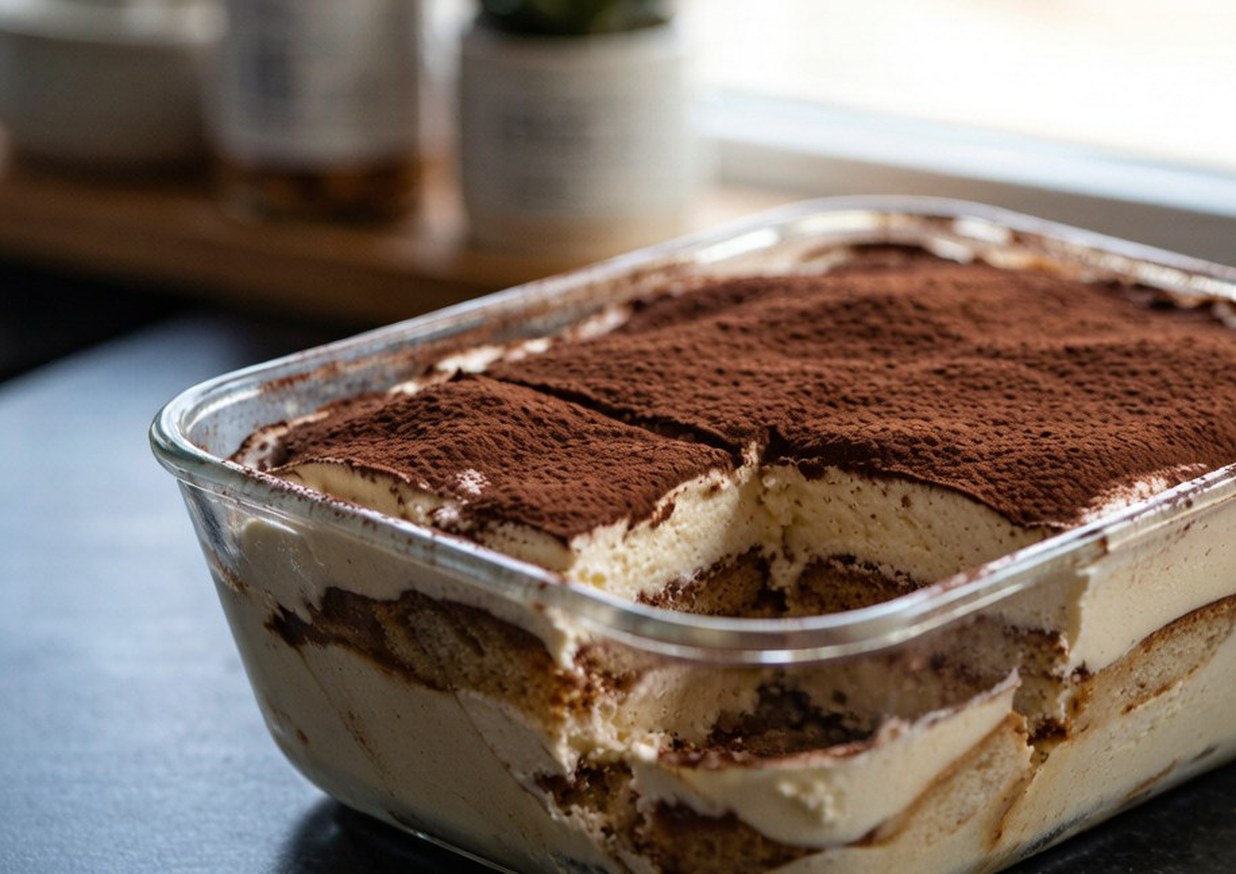
- Layer. Spread a thin layer of cream over the base of the dish. Add a layer of dipped biscuits, then half the remaining cream. Repeat with a second layer of biscuits and the rest of the cream, smoothing the top.
- Chill. Cover with plastic wrap pressed against the surface and refrigerate for at least 4 hours, preferably overnight. This is what lets the biscuits soften into the cream.
- Dust and serve. Sift the cocoa thickly over the top just before serving, never earlier, or it will draw moisture and go patchy.
What we learned testing this tiramisu recipe
We cooked this recipe three times before publishing it. These are the things that only showed up in the kitchen, not on paper.
- We tested raw yolks against a cooked sabayon. The sabayon version took eight extra minutes but was noticeably more stable: it sliced cleanly instead of slumping, and in a blind taste none of us could reliably tell them apart.
- Cold mascarpone was a failure. It stayed lumpy when beaten into the sabayon, and the longer we beat it to smooth it out, the thinner it became. Room temperature mascarpone folds in almost immediately.
- We made one batch with fully soaked biscuits and one with a one-second dip. The soaked version turned to mush after four hours in the fridge. The dipped biscuits softened to exactly the right point and still had structure.
- Dusting the cocoa the night before was a visible mistake: by morning it had drawn moisture and looked patchy and dull. Dust at the table, always.
- Warm coffee melted the cream layer it touched and made the base soggy. The espresso has to be completely cool before anything goes in it.
Expert tips
- Mascarpone at room temperature is essential. Cold mascarpone stays lumpy and then breaks if you keep beating it.
- Dip, do not soak. The biscuit will absorb a lot more liquid during the four hours in the fridge.
- Dust the cocoa at the table, not the night before. It goes dull and blotchy overnight.
- Use a serrated knife dipped in hot water for clean slices, wiping the blade between cuts.
Variations and substitutions
- Alcohol-free: this recipe contains none. Traditional versions sometimes add Marsala or rum to the coffee; leaving it out costs very little.
- Chocolate: fold 100 g of finely chopped dark chocolate into half the cream for a chocolate layer.
- Individual servings: layer in eight glasses, which shortens the chilling time to about 2 hours.
- Nutty: scatter toasted chopped hazelnuts between the layers for crunch.
Troubleshooting
| What went wrong | Why it happens | How to fix it |
|---|---|---|
| Filling is runny | The mascarpone was overbeaten, or the sabayon was still warm when it went in. | Cool the sabayon fully, and fold the mascarpone in gently, stopping as soon as it is smooth. |
| Grainy filling | Cold mascarpone was beaten against the warm sabayon. | Bring the mascarpone to room temperature for at least an hour before using. |
| Biscuits turned to mush | They were soaked rather than dipped, or the coffee was still warm. | One second per side, in coffee that has cooled completely. |
| Cocoa looks patchy | It was dusted hours ahead and absorbed moisture. | Sift the cocoa over the top within a few minutes of serving. |
Storage, food safety and make-ahead
Tiramisu keeps covered in the fridge for up to 3 days and is better on the second day. It freezes for up to 1 month, well wrapped, though the cream can separate slightly on thawing; thaw overnight in the fridge. Because it contains egg and dairy, do not leave it at room temperature for more than two hours.
For safe cooling, storage times, and reheating, follow the USDA FSIS food safety guidance.
Nutrition information
Per serving (one of ten): approximately 520 kcal, 11 g protein, 38 g fat, 33 g carbohydrates, 1 g fibre, 180 mg sodium. Values are estimates derived from USDA FoodData Central and will vary with brands and portion size.
Figures are calculated from the USDA FoodData Central database and are estimates only. Values vary with ingredient brands and portion size.
Frequently asked questions
Do I have to cook the egg yolks?
No, many recipes use raw yolks. We cook them into a sabayon because it makes the dessert safer to serve and the cream more stable, and we could not taste a difference in a side-by-side test.
Can I use cream cheese instead of mascarpone?
It is a different dessert. Mascarpone is sweet and very high in fat; cream cheese is tangy and needs more sugar. If you must, use full-fat cream cheese and add 2 tbsp of sugar and a splash of cream.
Why is my tiramisu runny?
The biscuits were soaked too long, or the cream was overbeaten. Mascarpone thins out if you keep working it, so stop as soon as it is smooth.
Can I make it a day ahead?
Yes, and it is better that way. Twelve hours in the fridge lets the biscuits soften fully and the layers set. Add the cocoa just before serving.
Sources and further reading
- USDA FoodData Central
- King Arthur Baking Company — Baking Resources
- Serious Eats — The Food Lab
- Epicurious — Recipe Archive & Technique Guides
Nutrition figures on this page are calculated from the USDA FoodData Central database and are estimates only. They are not a substitute for advice from a qualified dietitian or physician.
Last updated: September 7, 2026. Recipe tested three times in a standard home kitchen by the named author above. Corrections are welcome and are noted on the page when published.