 Old Kitchen Stories
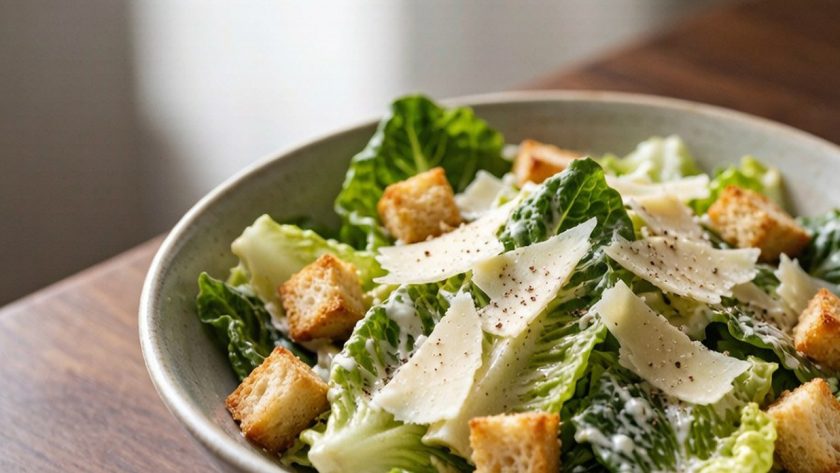
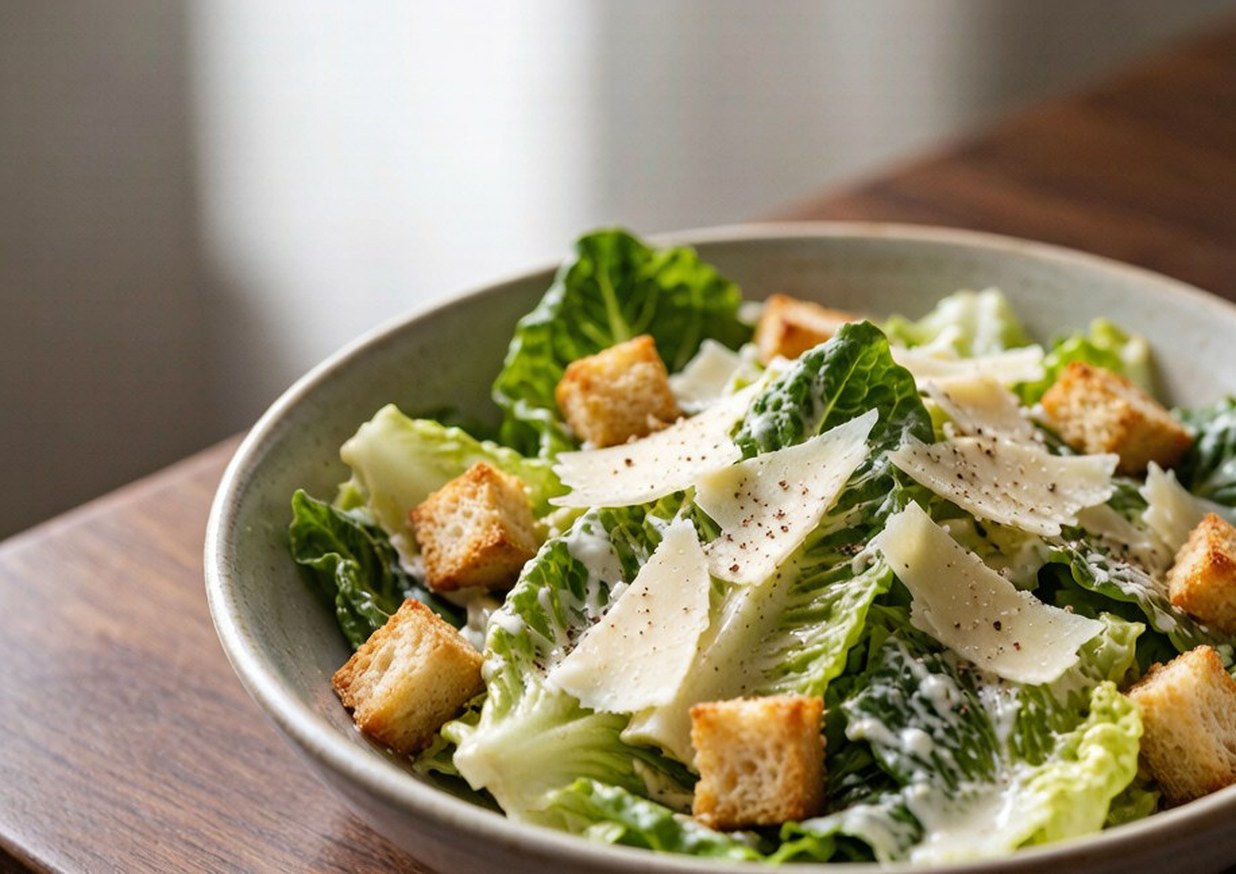
Quick answer: Toss cubed day-old bread with olive oil and bake at 200°C / 400°F for 10 to 12 minutes until crisp. Whisk one egg yolk with a crushed garlic clove, 4 anchovy fillets, 1 tbsp lemon juice, 1 tsp Dijon, and 60 g grated Parmigiano, then stream in 1/2 cup olive oil until creamy. Toss with torn romaine hearts and the croutons.
- Prep time: 20 minutes
- Cook time: 12 minutes
- Total time: 32 minutes
- Servings: 4
- Cuisine: Italian
- Course: Sides & Salads
- Difficulty: Easy
Why this recipe works
A great Caesar is a texture problem before it is a flavour problem. The romaine has to be bone dry and cold, the croutons have to stay crisp for the two minutes between tossing and eating, and the dressing has to be thick enough to cling without drowning the leaves. Three things get us there. We use romaine hearts only, torn rather than cut, because a knife bruises the ribs and they go limp faster. We bake the croutons with a little grated Parmigiano pressed onto them, which helps them resist the dressing. And we build the dressing on an egg yolk emulsion so it coats instead of running. The method follows the technique guidance in the Serious Eats Food Lab archive, and we use a pasteurised egg so the dressing is safe to serve without cooking.
Our method follows the technique guidance published by USDA FSIS — Safe Minimum Internal Temperatures and is adapted for a standard home kitchen.
Ingredients
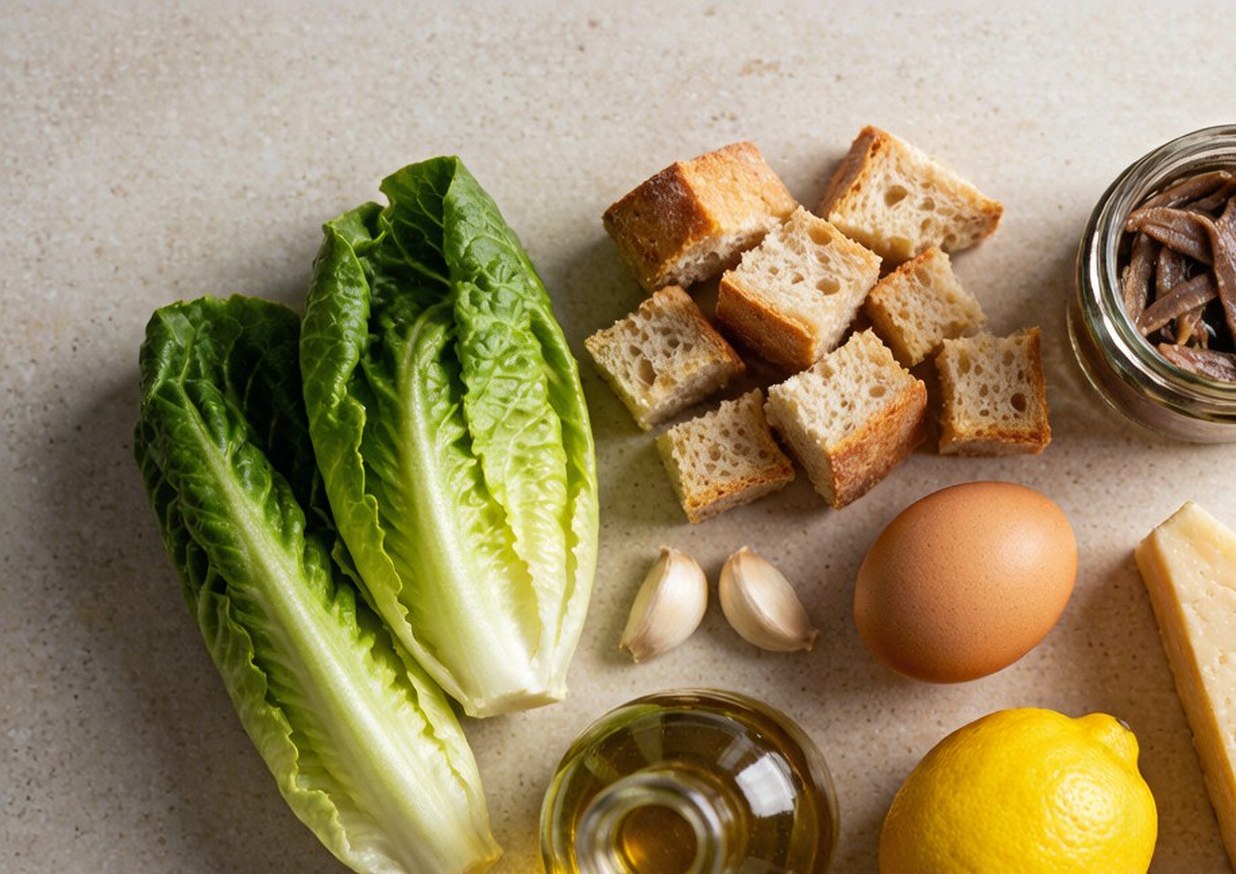
- 3 romaine hearts, outer leaves removed
- 3 cups / 150 g day-old rustic bread, torn into 2.5 cm cubes
- 3 tbsp olive oil, for the croutons
- 2 tbsp finely grated Parmigiano-Reggiano, for the croutons
- 1 large pasteurised egg yolk (or 2 tbsp mayonnaise)
- 1 small garlic clove, crushed to a paste with a pinch of salt
- 4 oil-packed anchovy fillets, mashed with a fork
- 1 tbsp fresh lemon juice, plus more to taste
- 1 tsp Dijon mustard
- 1/2 tsp Worcestershire sauce
- 1/2 cup / 120 ml extra-virgin olive oil
- 1/3 cup / 30 g finely grated Parmigiano-Reggiano, for the dressing
- 1/2 tsp freshly ground black pepper
- Salt, to taste
- Shaved Parmigiano-Reggiano, for serving
Equipment
- A rimmed baking sheet for the croutons
- A large wide salad bowl — wide matters more than deep, so you can toss without bruising
- A balloon whisk and a glass or stainless bowl (avoid reactive metals with the lemon)
- A salad spinner, or clean tea towels, for drying the lettuce properly
- A microplane for the Parmigiano-Reggiano
How to make caesar salad step by step
- Make the croutons. Heat the oven to 200°C / 400°F. Toss the bread cubes with the 3 tbsp olive oil and a pinch of salt, spread them on the baking sheet, and bake 10 to 12 minutes, turning once, until golden at the edges.
- Cheese the croutons. While they are still hot, scatter the 2 tbsp grated Parmigiano over them and toss. The residual heat melts the cheese into a thin shell that slows down sogginess. Let them cool completely.
- Prep the lettuce. Separate the romaine leaves, wash them in cold water, and spin them completely dry. Tear the larger leaves into bite-sized pieces by hand. Wet lettuce will not hold the dressing.
- Start the dressing. In a bowl, whisk the egg yolk with the garlic paste, mashed anchovies, lemon juice, Dijon, and Worcestershire until smooth. Let it sit for a minute so the salt begins to break down the garlic.
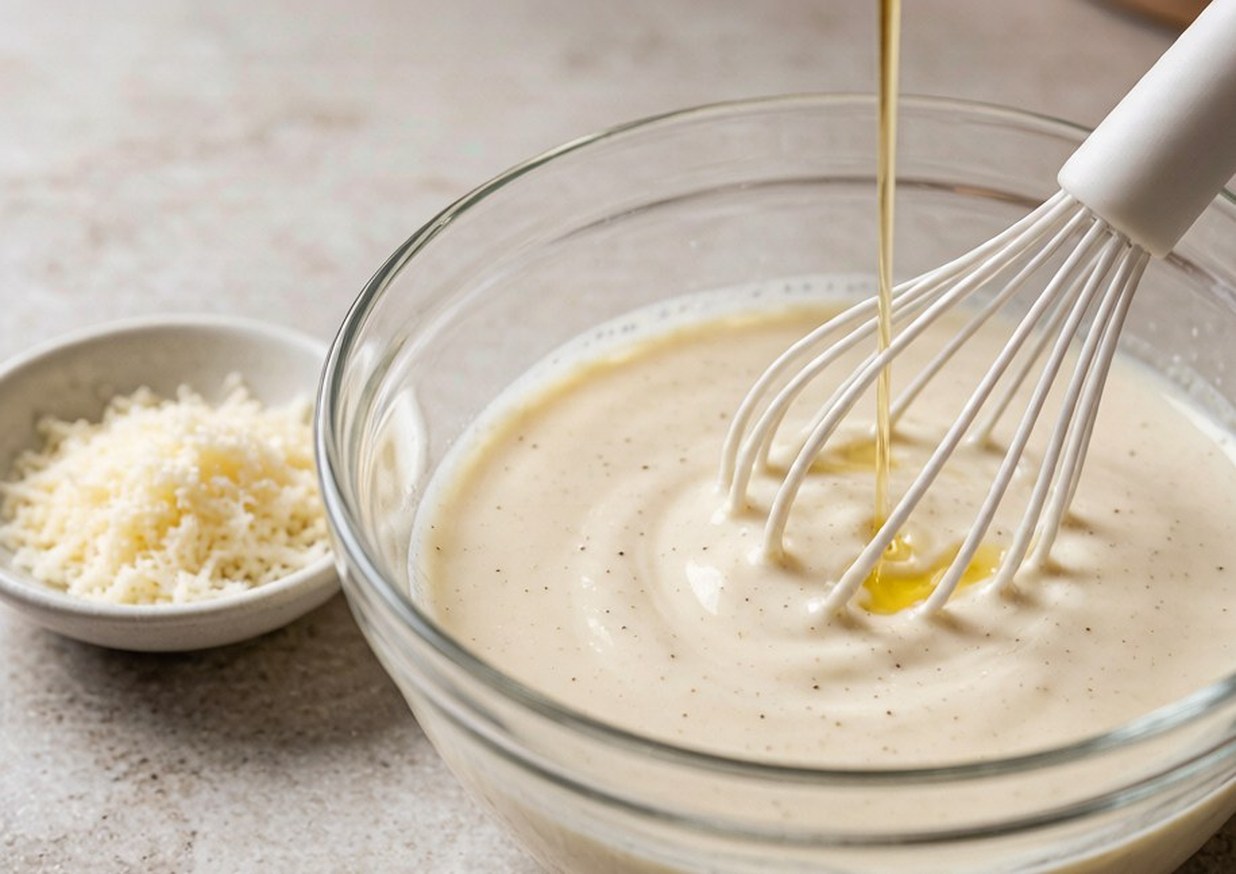
- Emulsify. Whisking constantly, add the olive oil a teaspoon at a time for the first quarter, then in a thin stream. The dressing should turn pale and thick enough to coat the back of a spoon.
- Finish the dressing. Whisk in the grated Parmigiano and the black pepper. Taste. It should be salty from the anchovy and cheese, so add salt cautiously, and sharpen with more lemon if it tastes flat.
- Toss. Put the romaine in the wide bowl, spoon two thirds of the dressing over, and toss gently from the bottom up with your hands or tongs. Add more dressing only until the leaves are barely coated.
- Serve immediately. Add the croutons, toss once more, and pile onto cold plates. Shave Parmigiano over the top and finish with a grinding of black pepper.
What we learned testing this caesar salad recipe
We cooked this recipe three times before publishing it. These are the things that only showed up in the kitchen, not on paper.
- We tested romaine hearts against whole heads. The outer leaves of a whole head are tougher and hold water in the rib, which dilutes the dressing. Hearts only, and torn by hand rather than cut, lasts noticeably longer on the plate.
- One batch was made with lettuce that still had water on it. The dressing slid straight off and pooled at the bottom of the bowl. Spinning the leaves until they are squeaky dry is not optional.
- Adding grated Parmigiano to the croutons while they are still hot made a measurable difference. Plain croutons went soft in about three minutes; cheese-coated croutons were still crisp after eight.
- We deliberately poured the oil in too fast to see how bad it gets. The dressing never thickened and stayed oily and separated. Building the emulsion a teaspoon at a time at the start is the whole technique.
- A batch made with pre-grated supermarket cheese turned out gritty and slightly bitter; the anti-caking agents stop it dissolving into the dressing. Grate it yourself on a microplane.
Expert tips
- Chill the bowls and plates for 15 minutes before serving. Cold plates buy you another five minutes before the leaves wilt.
- Mash the anchovies with a fork into a paste rather than chopping them, so the flavour distributes evenly instead of landing in one bite.
- If the dressing splits, whisk a teaspoon of warm water into a clean bowl and beat the dressing into it a spoonful at a time; it will come back.
- Dress the salad in batches if you are serving more than four. A doubled quantity of dressing and lettuce in one bowl never tosses evenly.
Variations and substitutions
- Grilled chicken Caesar: top with sliced grilled chicken breast and serve as a light main for two.
- Kale Caesar: swap half the romaine for finely shredded Tuscan kale and massage it with a spoonful of the dressing for 2 minutes first.
- Anchovy-free: replace the fillets with 2 tsp of capers mashed with 1/2 tsp of miso. You lose some depth but keep the savoury edge.
- Egg-free: use 2 tbsp of good mayonnaise in place of the yolk and skip the oil stream entirely, thinning with water as needed.
Troubleshooting
| What went wrong | Why it happens | How to fix it |
|---|---|---|
| Dressing is thin and oily | The oil was added too quickly and the emulsion never formed. | Whisk a teaspoon of warm water into a clean bowl, then beat the dressing into it a spoonful at a time until it thickens. |
| Salad is watery and the lettuce is limp | The leaves were wet, or they were dressed too far ahead. | Dry the leaves in a spinner until squeaky, and dress no more than five minutes before serving. |
| Croutons went soft immediately | They were added while still warm, or the bread was too fresh. | Cool the croutons completely, and use day-old bread tossed with a little grated cheese while hot. |
| Dressing tastes too salty | Anchovies and Parmigiano are both very salty, and the dish was then seasoned again. | Add a squeeze more lemon and a spoonful of olive oil to balance, and hold back the added salt next time. |
Storage, food safety and make-ahead
Caesar dressing keeps for up to 3 days in a sealed jar in the fridge; bring it back to room temperature and whisk before using. Croutons keep for 3 days in an airtight tin. Dressed salad does not keep, so toss only what you will eat. Wash and dry the lettuce up to a day ahead and store it wrapped in a dry towel in the fridge.
For safe cooling, storage times, and reheating, follow the USDA FSIS food safety guidance.
Nutrition information
Per serving: approximately 430 kcal, 11 g protein, 36 g fat, 16 g carbohydrates, 3 g fibre, 690 mg sodium. Values are estimates derived from USDA FoodData Central and will vary with brands and portion size.
Figures are calculated from the USDA FoodData Central database and are estimates only. Values vary with ingredient brands and portion size.
Frequently asked questions
Is the raw egg yolk safe?
Use a pasteurised egg if you have any doubt, or make the dressing with mayonnaise instead. We use pasteurised yolks as standard and follow the USDA FSIS guidance on egg handling, including keeping everything cold until it is served.
Why is my Caesar dressing too thin?
The oil went in too fast. The first few teaspoons have to be whisked in one at a time to build the emulsion; once it is built you can pour more confidently. Whisking in a teaspoon of warm water at the end also helps.
Can I make it without anchovies?
Yes, but it will not taste like a Caesar. Anchovies provide the savoury base. The closest substitute we found is capers mashed with a small amount of miso paste.
What bread is best for croutons?
Day-old rustic bread with an open crumb. Fresh sandwich bread is too soft and steams rather than crisps, and a dense sourdough can turn rock-hard.
Sources and further reading
- USDA FoodData Central
- USDA FSIS — Safe Minimum Internal Temperatures
- Serious Eats — The Food Lab
- Epicurious — Recipe Archive & Technique Guides
Nutrition figures on this page are calculated from the USDA FoodData Central database and are estimates only. They are not a substitute for advice from a qualified dietitian or physician.
Last updated: September 7, 2026. Recipe tested three times in a standard home kitchen by the named author above. Corrections are welcome and are noted on the page when published.