 Old Kitchen Stories
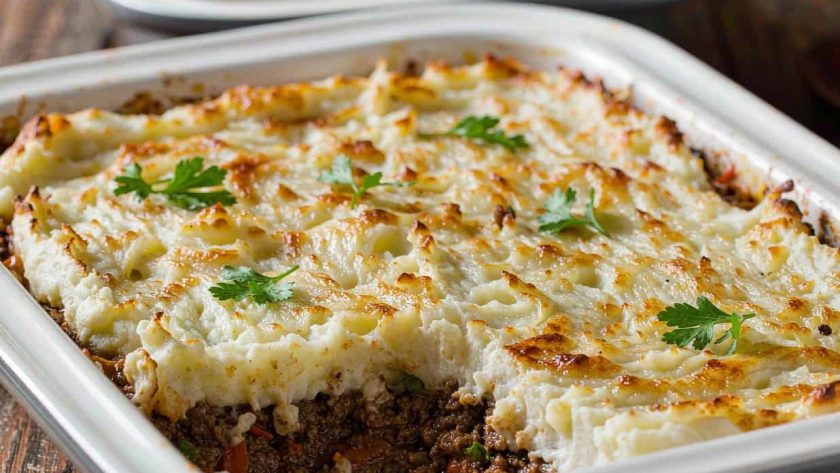
Quick answer: Brown 1.5 lb of minced lamb with diced onion, carrot, and celery. Thicken with flour and tomato paste, add stock, Worcestershire sauce, and herbs, and simmer until glossy. Stir in peas, top with buttery mashed potato loosened with an egg yolk, rake the surface with a fork, and bake at 205°C / 400°F for 25 to 30 minutes.
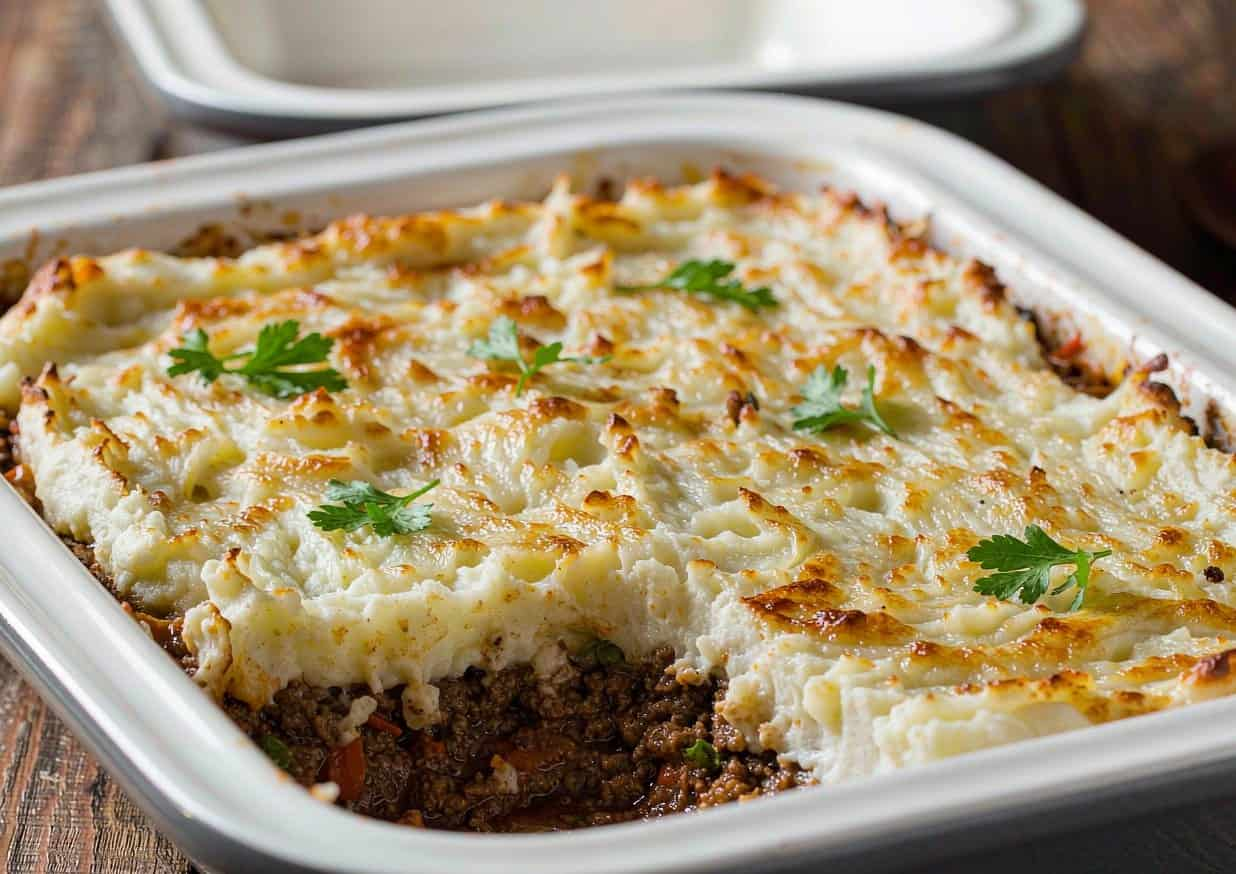
- Prep time: 20 minutes
- Cook time: 60 minutes
- Total time: 80 minutes
- Servings: 6
- Cuisine: British
- Course: Main Dishes
- Difficulty: Medium
Why this recipe works
Most shepherd’s pie recipes skip the gravy and simmer the lamb in tomato paste and water, which tastes thin. We build a proper gravy: flour toasted with the aromatics, stock reduced until it coats a spoon, Worcestershire for savoury depth. The mashed-potato topping gets an egg yolk, which helps it set and brown rather than slump into the filling. Russet potatoes, well drained and mashed with warm milk, give the lightest crust. Note that shepherd’s pie is made with lamb by definition; the same dish made with beef is cottage pie.
Our method follows the technique guidance published by BBC Food — Recipes & Techniques and is adapted for a standard home kitchen.
Ingredients
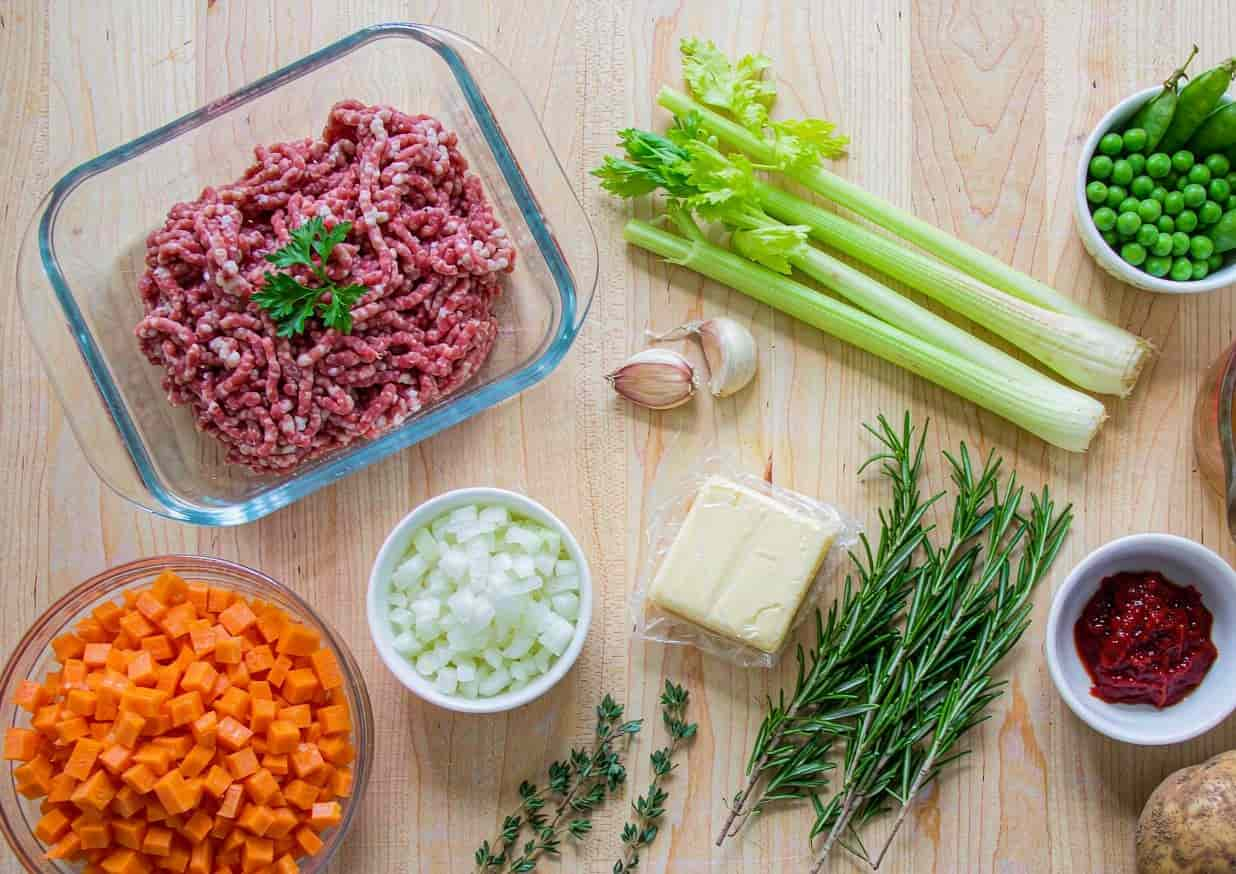
- Filling: 2 tbsp olive oil
- 1 large yellow onion, finely diced
- 2 carrots, diced
- 2 celery ribs, diced
- 4 garlic cloves, minced
- 1 1/2 lb / 680 g ground lamb
- 2 tbsp tomato paste
- 1 tbsp all-purpose flour
- 1 cup / 240 ml low-sodium beef stock
- 1 tbsp Worcestershire sauce
- 1 tsp dried rosemary
- 1 tsp dried thyme
- 1 bay leaf
- 1 cup frozen peas
- Kosher salt and freshly ground black pepper
- Topping: 2 1/2 lb / 1.1 kg russet potatoes, peeled and cubed
- 4 tbsp unsalted butter
- 1/3 cup / 80 ml whole milk, warm
- 1 large egg yolk
- Kosher salt and white pepper
Equipment
- A 23 x 33 cm rectangular ceramic or cast-iron baking dish
- A potato ricer or food mill for a lump-free topping
- A large skillet for the filling
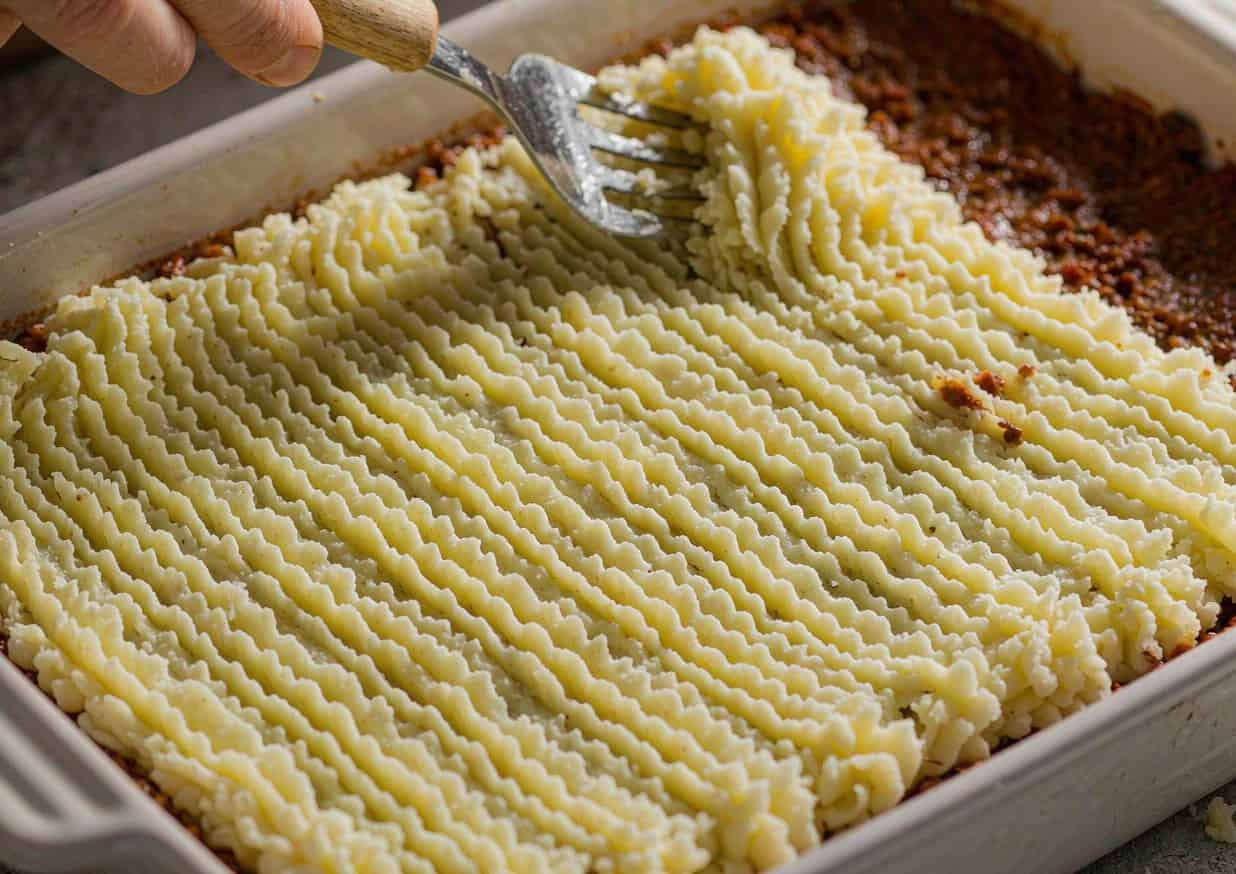
- A fork, for dragging ridges into the mash before it goes under the broiler
How to make shepherd’s pie step by step
- Boil the potatoes. Cover the potatoes with cold salted water, bring to a boil, and cook until fork-tender, about 18 minutes. Drain well and return them to the hot pot for 1 minute to drive off moisture.
- Mash. Mash with the butter, warm milk, egg yolk, 1 tsp salt, and a few grinds of white pepper until smooth. Set aside.
- Cook the vegetables. Heat the olive oil in a large skillet over medium heat. Add the onion, carrot, and celery and cook until softened, 8 minutes. Add the garlic and cook 1 minute more.
- Brown the lamb. Raise the heat to medium-high, add the lamb, and break it up with a spoon. Cook until no longer pink, about 7 minutes. Season with 1 1/2 tsp salt and 1/2 tsp pepper.
- Build the gravy. Stir in the tomato paste and flour and cook 1 minute. Pour in the stock and scrape up the browned bits. Add the Worcestershire, rosemary, thyme, and bay leaf. Simmer until thickened, about 8 minutes.
- Add peas and fill. Stir in the peas and cook 2 minutes. Remove the bay leaf and adjust the seasoning. Transfer to a 9×13 inch baking dish.
- Top. Spoon the mash over the filling and spread it gently to the edges. Drag a fork across the surface to create ridges, which crisp in the oven.
- Bake. Bake at 205°C / 400°F on an upper rack for 25 to 30 minutes, until the filling bubbles at the edges and the potato is deeply golden.
- Rest for 10 minutes before serving so the gravy sets up.
What we learned testing this shepherd's pie recipe
We cooked this recipe three times before publishing it. These are the things that only showed up in the kitchen, not on paper.
- The filling has to be genuinely thick before it goes under the potato. In the batch where we rushed it, steam pushed up through the mash and the entire topping slid off in one sheet when we scooped it.
- We tested russets against waxy potatoes. Russets gave the fluffiest mash and browned best. Waxy potatoes turned gluey when whipped and stayed pale under the broiler.
- Ricing the potatoes eliminated every lump. We now use a ricer or food mill, and add the butter before the milk rather than after.
- Warm milk, not cold. Cold milk dropped the temperature of the mash, we compensated by working it harder, and it turned gluey.
- Dragging a fork across the surface before baking creates the peaks that catch the heat and crisp. The batch we smoothed flat browned in patches and stayed soft.
Expert tips
- Drain the potatoes thoroughly and let them steam dry in the hot pot. Wet mash produces a soggy topping.
- Spread the mash gently rather than pressing it down, or the filling will rise through.
- If the filling looks watery before you top it, simmer it longer. It should coat a spoon.
- For extra colour, brush the potato with a little melted butter before baking.
Variations and substitutions
- Cottage pie: substitute ground beef for the lamb. Same method, different name.
- Cheesy topping: stir 1 cup of shredded sharp cheddar into the mash.
- Root vegetable mash: replace half the potatoes with parsnip or swede for a sweeter, earthier topping.
- Gluten-free: replace the flour with 2 tsp cornflour slaked in cold water, added at the end of step 5.
Troubleshooting
| What went wrong | Why it happens | How to fix it |
|---|---|---|
| Topping sinks into the filling | The filling was too loose when it went into the dish. | Reduce the filling until a spoon dragged across the base leaves a clear trail. |
| Mash is gluey | The potatoes were overworked, or the wrong variety. | Use russets, rice them rather than mashing, and fold the liquid in gently. |
| Pale, soft topping | Not enough time under the broiler, or the surface was smoothed flat. | Rough up the surface with a fork and finish under a hot broiler for 3 to 5 minutes, watching closely. |
| Watery filling after baking | The vegetables released liquid, or frozen peas went in at the start. | Stir the frozen peas in at the very end and let the filling reduce fully before topping. |
Storage, food safety and make-ahead
Assemble up to 2 days ahead, refrigerate, and bake straight from cold, adding 10 minutes to the bake time. Cooked leftovers keep 4 days refrigerated or 3 months frozen.
For safe cooling, storage times, and reheating, follow the USDA FSIS food safety guidance.
Nutrition information
Per serving: approximately 540 kcal, 28 g protein, 30 g fat, 38 g carbohydrates, 5 g fibre, 620 mg sodium. Estimates based on USDA FoodData Central reference values.
Figures are calculated from the USDA FoodData Central database and are estimates only. Values vary with ingredient brands and portion size.
Frequently asked questions
What is the difference between shepherd’s pie and cottage pie?
Shepherd’s pie is made with lamb; cottage pie is the same dish made with beef. The mashed-potato topping is identical.
Can I make it ahead?
Yes, and it is better for it. Assemble up to two days ahead, keep it covered in the fridge, and bake from cold with an extra 10 minutes.
Can I use instant mashed potato?
You can, but the crust will not brown or hold peaks as well. If you do, beat in the egg yolk and an extra knob of butter to help it along.
My lamb tastes strong. What can I do?
Add a splash more Worcestershire sauce and a small pinch of sugar to balance the gaminess, and make sure you have seasoned with enough salt.
Sources and further reading
- USDA FoodData Central
- BBC Food — Recipes & Techniques
- Epicurious — Recipe Archive & Technique Guides
- Serious Eats — The Food Lab
Nutrition figures on this page are calculated from the USDA FoodData Central database and are estimates only. They are not a substitute for advice from a qualified dietitian or physician.
Last updated: September 5, 2026. Recipe tested three times in a standard home kitchen by the named author above. Corrections are welcome and are noted on the page when published.