 Old Kitchen Stories
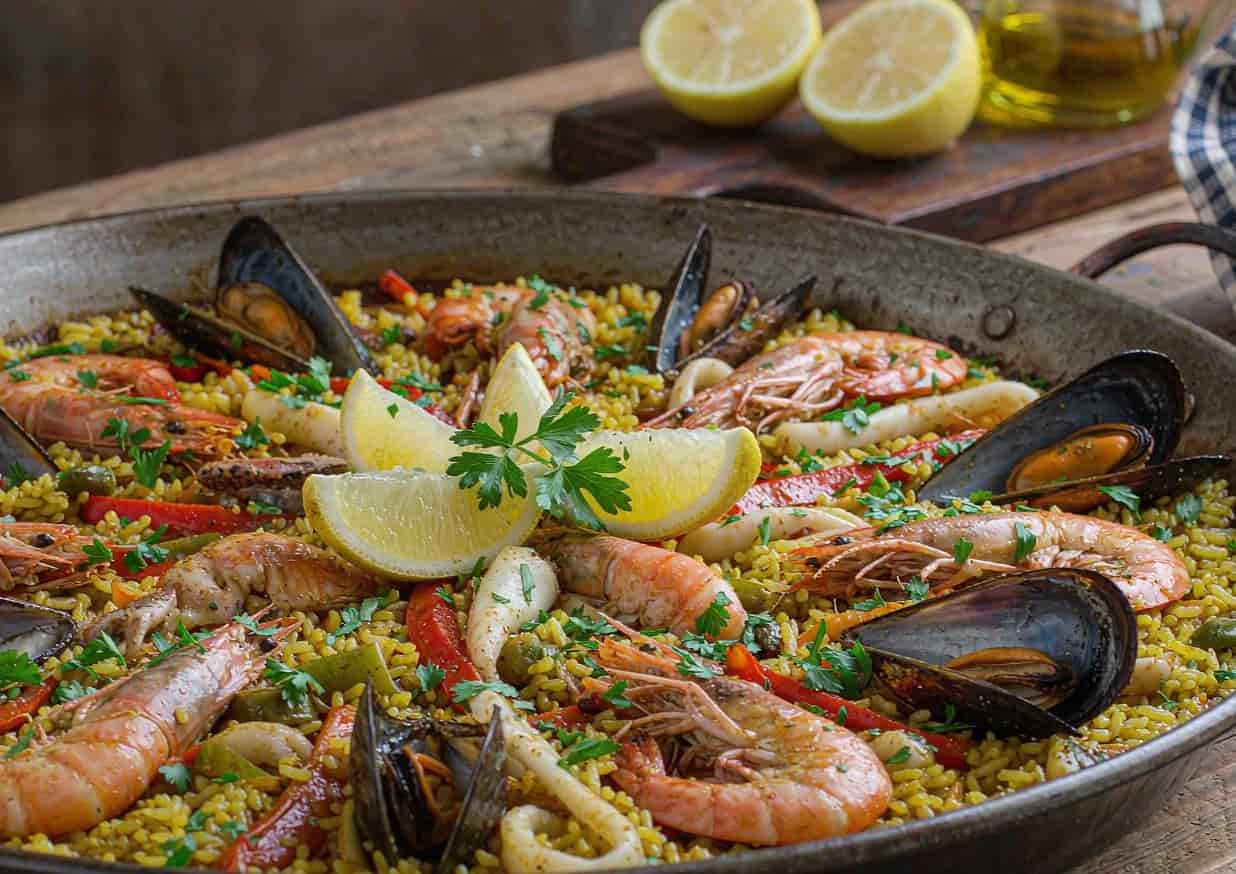
Quick answer: Brown chicken in a wide shallow paella pan, build a sofrito of onion, pepper, garlic, and smoked paprika, then add crushed tomatoes, rice, and hot stock with bloomed saffron. Simmer undisturbed for 12 minutes, arrange shrimp, mussels, and calamari on top, cook 6 to 8 minutes more, then raise the heat for 45 seconds to develop the crisp socarrat base.
- Prep time: 20 minutes
- Cook time: 45 minutes
- Total time: 65 minutes
- Servings: 4
- Cuisine: Spanish
- Course: Main Dishes
- Difficulty: Medium
Why this recipe works
Three things define real paella. First, the pan: wide and shallow, so the rice cooks in a thin layer and develops socarrat, the toasted crust on the bottom. A deep pot gives you soupy rice. Second, the rice: Spanish short-grain varieties such as Bomba or Calasparra absorb three times their volume in stock without disintegrating. Arborio works in a pinch but is starchier and forgives less. Third, restraint: once the stock goes in, you do not stir. Stirring releases starch and turns the dish creamy, which is risotto, not paella. Saffron is worth buying properly — it is the only significant spice in the dish.
Our method follows the technique guidance published by Epicurious — Recipe Archive & Technique Guides and is adapted for a standard home kitchen.
Ingredients
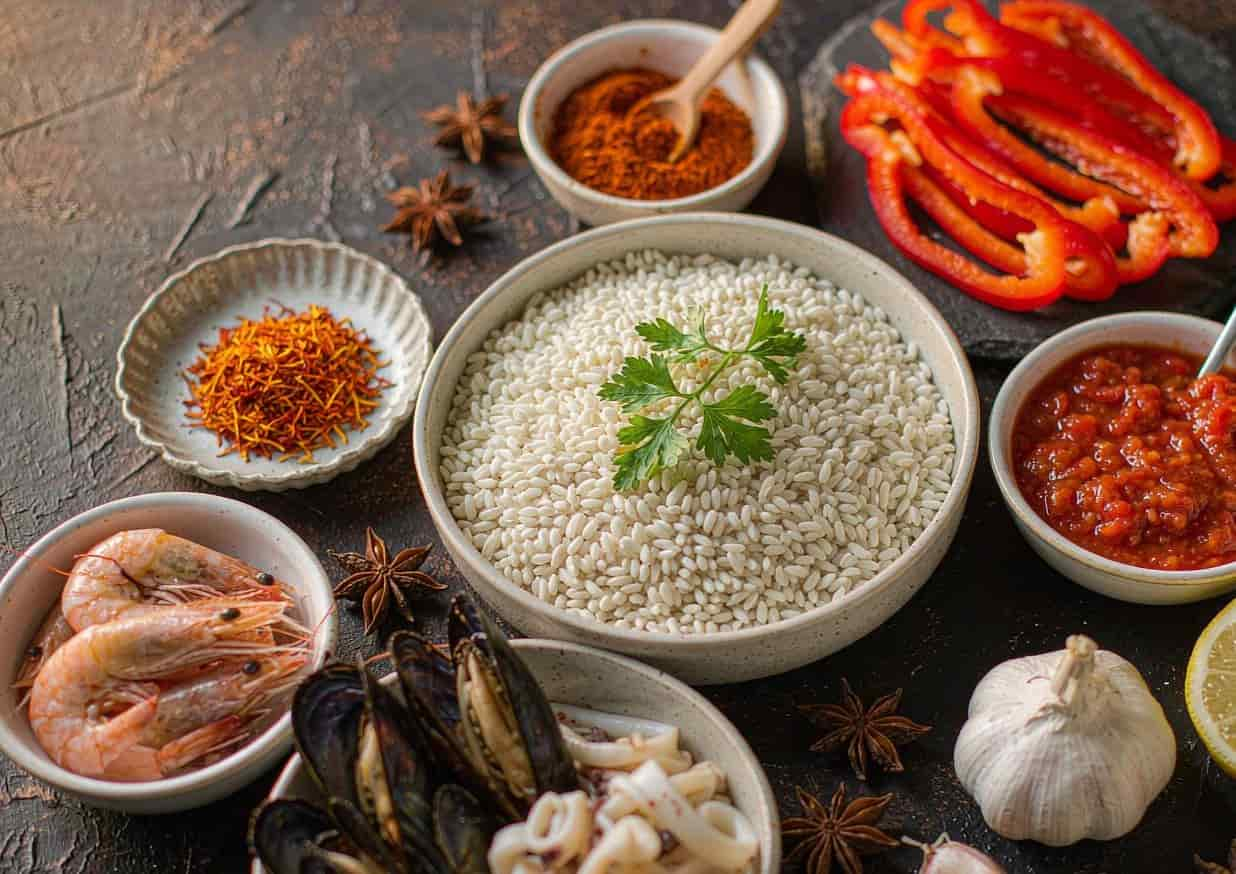
- 1/4 cup / 60 ml extra-virgin olive oil
- 1 lb / 450 g bone-in chicken thighs, skin on, halved
- Kosher salt and freshly ground black pepper
- 1 large Spanish onion, finely diced
- 1 red bell pepper, sliced into thin strips
- 4 garlic cloves, minced
- 2 tsp smoked paprika (pimentón)
- 1 tsp sweet paprika
- 1/2 tsp saffron threads, bloomed in 2 tbsp hot water
- 1 (14 oz / 400 g) can crushed tomatoes
- 2 cups / 400 g Bomba or Calasparra rice
- 4 cups / 950 ml hot chicken or seafood stock
- 1/2 lb / 225 g cleaned calamari rings
- 1 lb / 450 g medium shrimp, shell on
- 1 lb / 450 g mussels, scrubbed and debearded
- 1 lemon, cut into wedges
- Fresh parsley, chopped
Equipment
- 15 inch / 38 cm paella pan, or a wide shallow stainless-steel skillet
How to make seafood paella step by step
- Bloom the saffron. Steep the saffron threads in 2 tbsp hot water and set aside.
- Brown the chicken. Heat the olive oil in the pan over medium-high heat. Season the chicken and brown it skin-side down until deep golden, about 5 minutes per side. Transfer to a plate.
- Build the sofrito. Pour off all but 2 tbsp of fat. Cook the onion and bell pepper until softened, 7 minutes. Add the garlic and cook 1 minute. Stir in both paprikas and cook 30 seconds — do not let them burn.
- Add tomato. Stir in the crushed tomatoes and cook until darkened and thickened, about 5 minutes.
- Rice and stock. Add the rice and stir to coat, 1 minute. Pour in the hot stock and the bloomed saffron. Nestle the chicken back into the rice. Season with 1 1/2 tsp salt.
- Simmer undisturbed. Bring to a gentle boil, then reduce to medium and simmer for 12 minutes without stirring. Rotate the pan occasionally for even cooking.
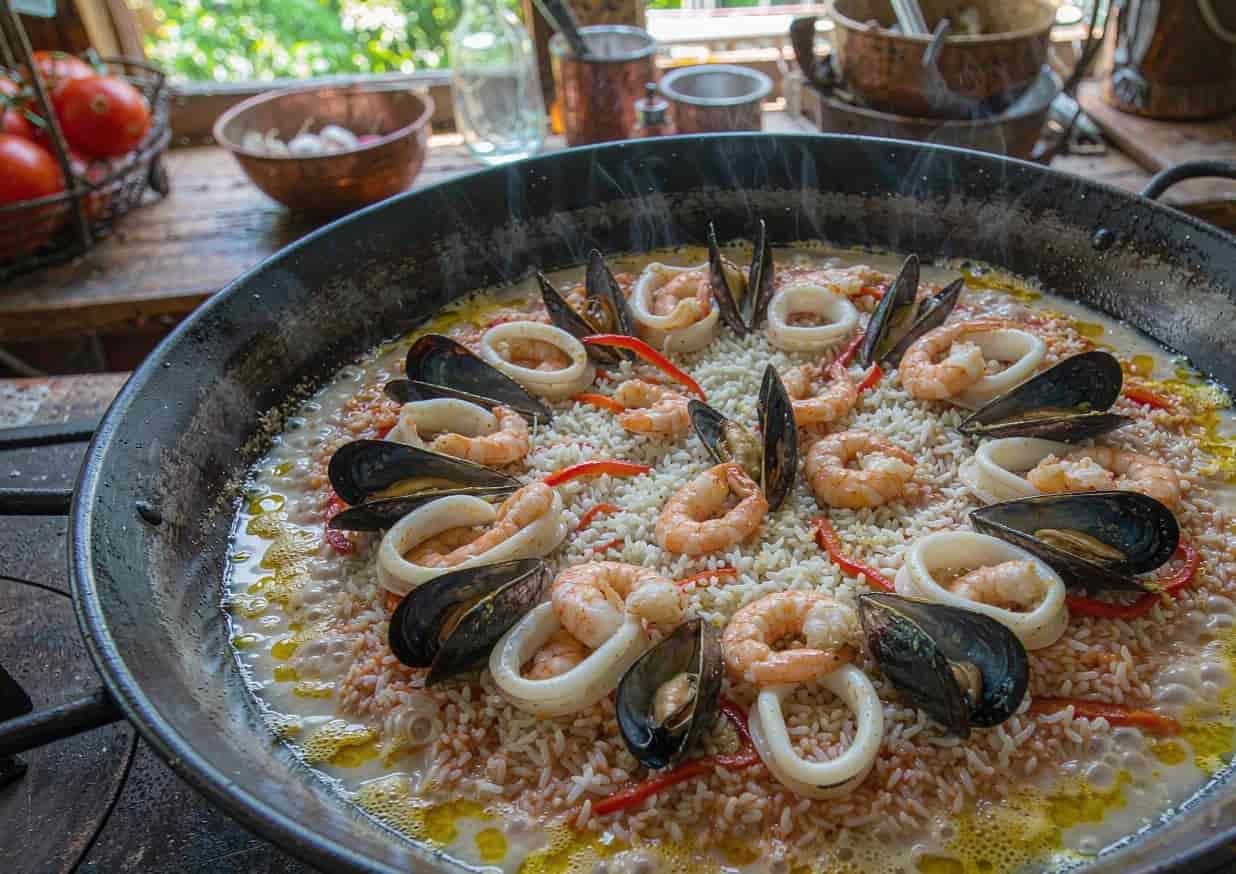
- Add seafood. Arrange the calamari and shrimp over the rice and stand the mussels hinge-side down on top. Cook, still without stirring, for 6 to 8 minutes, until the rice is tender, the shrimp are opaque, and the mussels have opened. Discard any mussels that stay shut.
- Develop the socarrat. Raise the heat to medium-high for 30 to 60 seconds. Listen for the rice to crackle and smell for a toasted aroma, then remove from the heat at once.
- Rest. Cover the pan with a clean kitchen towel — not a lid, which traps steam — and rest for 5 minutes.
- Serve with lemon wedges and chopped parsley, straight from the pan.
What we learned testing this seafood paella recipe
We cooked this recipe three times before publishing it. These are the things that only showed up in the kitchen, not on paper.
- Bomba rice outperformed arborio. Arborio released too much starch and turned creamy, closer to risotto. Bomba absorbed three times its volume in broth and the grains stayed distinct.
- Our biggest mistake on the first attempt was stirring, out of risotto habit. The rice went stodgy. Once the rice is in, it does not get touched.
- Saffron needs to bloom. We once tipped the threads straight into cold broth and got a pale, weakly flavoured rice. Steeping them in a little hot broth for ten minutes gives you the colour and aroma you are paying for.
- The caramelised crust on the bottom, the socarrat, takes nerve. We burned one batch while listening for the wrong sound. Listen for a quiet crackling and smell for toasted rather than acrid, then pull it immediately.
- Pan size mattered more than we expected. A 40 cm pan across two burners gave the rice the shallow, even layer it needs. In a deeper pot the rice cooked unevenly from top to bottom.
Expert tips
- Measure the stock before you start and have it hot. Cold stock stalls the cook.
- Do not stir after the stock goes in. Not once.
- Arrange the seafood in a deliberate pattern. You are not going to stir it again, so it will be exactly where you put it when you serve.
- Cook the rice to just tender. Paella should be dry, not creamy, and definitely not soupy.
Variations and substitutions
- Paella Valenciana: replace the seafood with rabbit, chicken, and green beans, and use chicken stock.
- Mixed paella: add sliced chorizo with the sofrito.
- Vegetarian: omit the meat and seafood, double the vegetables, and use vegetable stock with a pinch more saffron.
Troubleshooting
| What went wrong | Why it happens | How to fix it |
|---|---|---|
| Rice is mushy | Too much liquid, or the rice was stirred during cooking. | Use a 3:1 broth-to-rice ratio by volume and never stir once the rice is in. |
| Rice is hard in the centre | The heat was too high, or the pan was too deep. | Use a wide shallow pan, keep the simmer gentle, and rest it covered with foil for 5 minutes off the heat. |
| Bland, pale rice | The saffron was not bloomed, or the broth was under-seasoned. | Steep the saffron in hot broth first and season the broth more boldly than you think you need. |
| No crust on the bottom | The heat was too low at the end, or the pan was moved around. | Raise the heat for the final one to two minutes and leave the pan completely still. |
Storage, food safety and make-ahead
Paella is best eaten straight from the pan and does not reheat well. Refrigerate leftovers for up to 2 days and reheat in a hot pan with a splash of stock to revive the rice.
For safe cooling, storage times, and reheating, follow the USDA FSIS food safety guidance.
Nutrition information
Per serving: approximately 620 kcal, 42 g protein, 22 g fat, 64 g carbohydrates, 4 g fibre, 920 mg sodium. Estimates based on USDA FoodData Central reference values.
Figures are calculated from the USDA FoodData Central database and are estimates only. Values vary with ingredient brands and portion size.
Frequently asked questions
Do I need a special paella pan?
It helps considerably. The wide, shallow shape gives you the rice surface area needed for socarrat. A 15-inch stainless-steel skillet or a wide paella-style carbon steel pan is a fine substitute. Avoid deep pots.
What rice should I use?
Spanish short-grain rice: Bomba or Calasparra. Both absorb a lot of liquid without turning mushy. Arborio is an acceptable substitute but is starchier and less forgiving.
Why is my paella mushy?
Either the wrong rice or too much stirring. Rice goes in once, stock goes in once, and then your spoon goes down. Also check your liquid ratio: 2 parts stock to 1 part rice by volume is a good starting point.
How do I know when the socarrat is ready?
You will hear it. Turn the heat up for the last 30 to 60 seconds and listen for a light crackling sound from the bottom of the pan, then pull it immediately before it burns.
Sources and further reading
- USDA FoodData Central
- Epicurious — Recipe Archive & Technique Guides
- BBC Food — Recipes & Techniques
- Serious Eats — The Food Lab
Nutrition figures on this page are calculated from the USDA FoodData Central database and are estimates only. They are not a substitute for advice from a qualified dietitian or physician.
Last updated: September 5, 2026. Recipe tested three times in a standard home kitchen by the named author above. Corrections are welcome and are noted on the page when published.