 Old Kitchen Stories
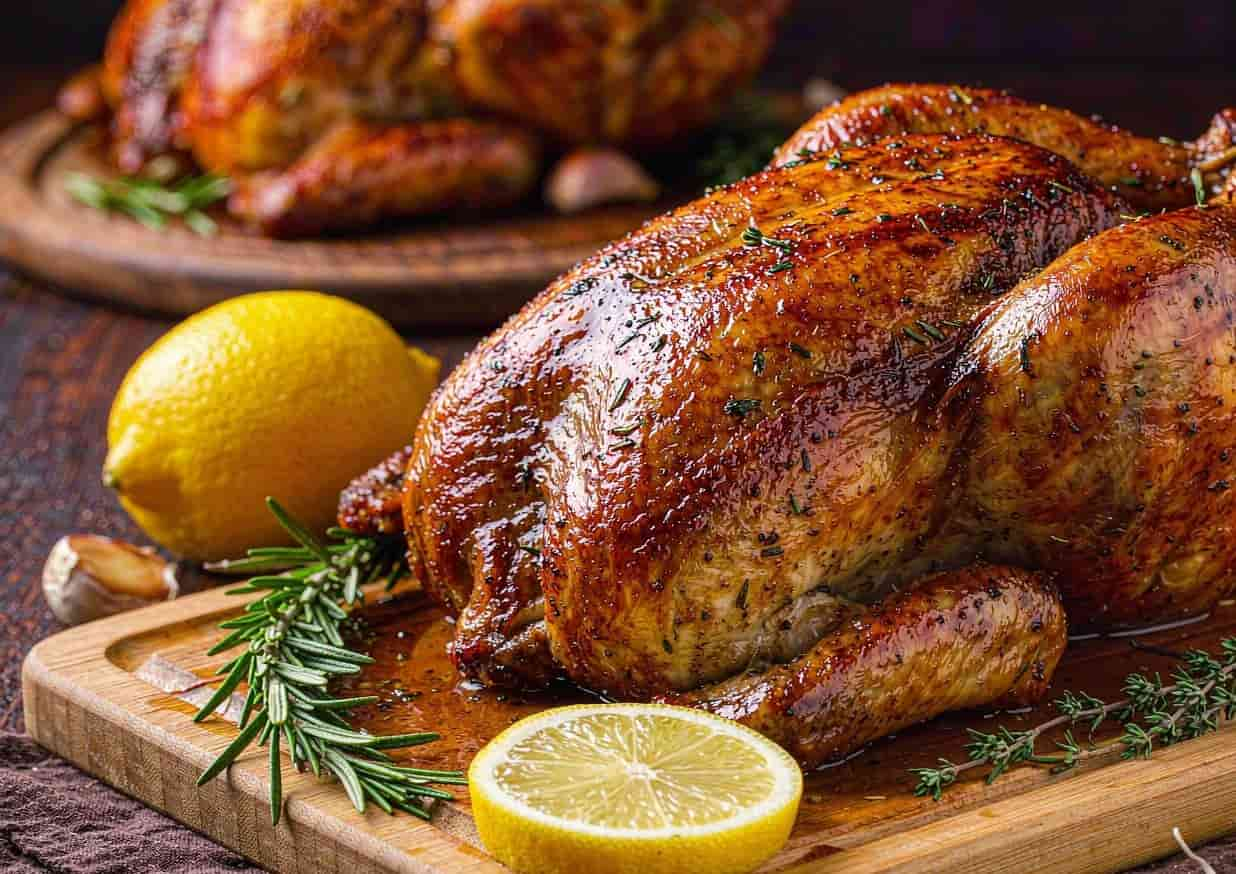
Quick answer: Salt a 4 to 5 lb chicken and leave it uncovered in the fridge overnight. Stuff the cavity with lemon, garlic, rosemary, and thyme, tie the legs, and roast at 220°C / 425°F for 55 to 70 minutes until the thigh reads 74°C / 165°F on an instant-read thermometer. Rest 15 minutes before carving.
- Prep time: 15 minutes
- Cook time: 75 minutes
- Total time: 90 minutes
- Servings: 4
- Cuisine: American
- Course: Main Dishes
- Difficulty: Easy
Why this recipe works
Three details decide whether a roast chicken is memorable or merely fine. First, the dry brine: salt on the skin plus a night of uncovered refrigeration dries the surface, and a dry surface is what crisps. Second, a hot oven — 220°C / 425°F — which sets the skin quickly and keeps the meat moist. Third, the rest: 15 minutes minimum, which lets the juices redistribute instead of running out onto the board. Poultry should always be cooked to a safe minimum internal temperature; check the current USDA FSIS guidance and verify with a thermometer rather than by eye.
Our method follows the technique guidance published by USDA FSIS — Safe Minimum Internal Temperatures and is adapted for a standard home kitchen.
Ingredients
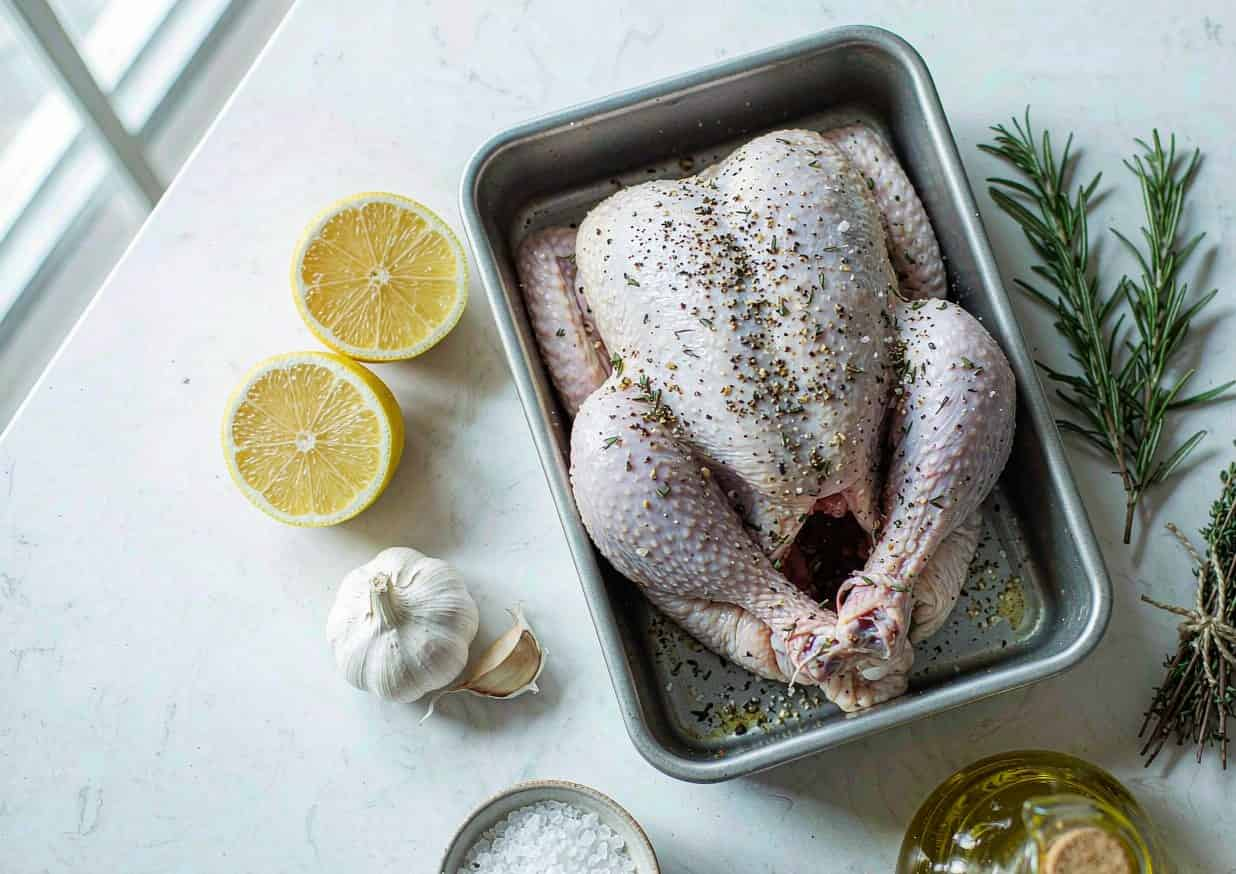
- 1 whole chicken, 4 to 5 lb / 1.8 to 2.3 kg
- 2 tbsp kosher salt
- 1 tsp freshly ground black pepper
- 2 tbsp olive oil or melted butter
- 1 lemon, halved
- 1 head garlic, halved crosswise
- 4 sprigs fresh rosemary
- 6 sprigs fresh thyme
- Kitchen twine
Equipment
- Roasting pan with a rack, or a large cast-iron skillet
- Instant-read thermometer
- Kitchen shears (for the spatchcock option)
How to make roast chicken step by step
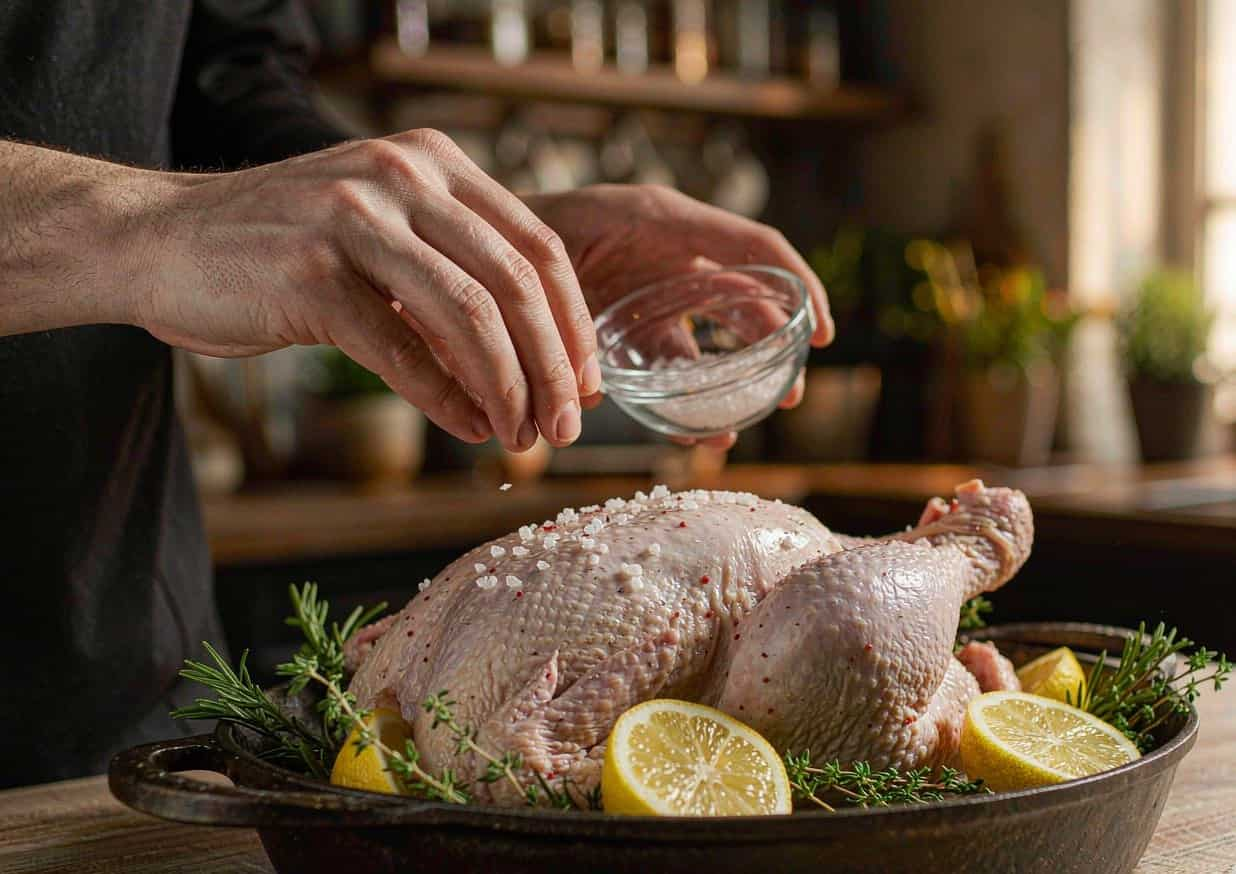
- Dry-brine. Pat the chicken dry and season it inside and out with the salt and pepper. Set it on a rack over a sheet pan and refrigerate uncovered for 12 to 24 hours. In a hurry, dry it very thoroughly and rest it at room temperature for 30 minutes instead.
- Preheat. Heat the oven to 220°C / 425°F with a rack in the lower third.
- Stuff and truss. Pat dry again and rub all over with the olive oil. Put the lemon halves, garlic, rosemary, and thyme in the cavity and tie the legs together with twine.
- Roast. Set the chicken breast-side up on the rack and roast for 55 to 70 minutes, until an instant-read thermometer in the thickest part of the thigh reads 74°C / 165°F. If the skin is not golden at 45 minutes, run it under the broiler for 2 to 3 minutes, watching closely.
- Rest. Move the chicken to a carving board and rest it for at least 15 minutes. Pour the pan juices into a bowl and skim off the fat; keep the jus.
- Carve. Remove the twine, take the legs and thighs off the body, then slice the breast off the carcass. Arrange on a warm platter and spoon a little jus over the top.
- Serve with pan-roasted potatoes or a green salad.
What we learned testing this roast chicken recipe
We cooked this recipe four times before publishing it. These are the things that only showed up in the kitchen, not on paper.
- Dry-brining overnight was the single biggest improvement. Salted the night before and left uncovered on a rack, the skin came out thin, taut, and genuinely crisp. Salted just before roasting, it was flabby and pale.
- We tested 190°C / 375°F against 220°C / 425°F. The higher temperature gave better skin but dried the breast before the thighs were done. Starting high and finishing at 200°C / 400°F was the best compromise.
- A thermometer improved our results more than any technique. Cooking to 74°C / 165°F in the thickest part of the thigh, instead of cooking by time, gave evenly cooked meat in every single batch.
- Trussing matters. Untrussed birds splayed in the pan, the wing tips scorched, and the legs cooked faster than the breast.
- Resting for fifteen minutes is not optional. The bird we carved immediately lost most of its juices onto the board.
Expert tips
- The dry brine is the single biggest improvement you can make. Do not skip it if you have the time.
- Pat the skin dry a second time just before it goes in the oven. Surface moisture is the enemy of crisp skin.
- If the breast browns faster than the legs, tent only the breast with foil rather than covering the whole bird.
- Save the carcass. It makes several litres of excellent stock.
Variations and substitutions
- Spatchcock: cut out the backbone with kitchen shears, flatten the bird, and roast for 40 to 45 minutes instead. More even browning and a faster cook.
- Compound butter: slip 3 tbsp of herb butter under the breast skin before roasting.
- Spiced: add 1 tbsp smoked paprika and 1 tsp ground cumin to the salt rub.
- Pan sauce: after roasting, set the pan over medium heat, add 1 cup each of stock and water, reduce by half, and whisk in 2 tbsp cold butter off the heat.
Troubleshooting
| What went wrong | Why it happens | How to fix it |
|---|---|---|
| Skin is pale and rubbery | The bird was not dried, or the oven was too cool. | Dry-brine uncovered overnight and roast at 220°C / 425°F for the first 20 minutes. |
| Breast dry, thighs undercooked | Roasted too long at a single temperature. | Start high for colour, drop to 200°C / 400°F, and pull at 74°C / 165°F in the thigh. |
| Kitchen full of smoke | Fat rendering onto a hot oven floor, or the pan is too small. | Use a heavy roasting pan with a rack and pour off excess fat halfway through. |
| Juices run out when carving | The bird was not rested. | Rest it tented with foil for a full 15 minutes. |
Storage, food safety and make-ahead
Cooked chicken keeps 4 days refrigerated or 3 months frozen. Store the meat off the bone in an airtight container, and freeze the carcass separately for stock.
For safe cooling, storage times, and reheating, follow the USDA FSIS food safety guidance.
Nutrition information
Per serving (1/4 of the chicken): approximately 460 kcal, 45 g protein, 28 g fat, 2 g carbohydrates, 0 g fibre, 1,420 mg sodium. Estimates based on USDA FoodData Central reference values.
Figures are calculated from the USDA FoodData Central database and are estimates only. Values vary with ingredient brands and portion size.
Frequently asked questions
How do I know when it is done?
Use an instant-read thermometer in the thickest part of the thigh, away from the bone. Poultry should reach the safe minimum internal temperature given in the current USDA FSIS guidance. Without a thermometer, pierce the thigh: the juices should run clear.
Can I stuff the cavity with bread stuffing?
We do not recommend it. Stuffing cooked inside a bird heats slowly and unevenly. Cook it in a separate dish and use the aromatics in the cavity for flavour only.
Should I cover the chicken with foil?
No — covering traps steam and softens the skin. If one part is browning too fast, tent just that part with foil.
Why is my breast meat dry?
It is overcooked. Pull the chicken as soon as the thigh reaches temperature and rest it properly. Carryover heat will finish the breast without drying it out.
Sources and further reading
- USDA FoodData Central
- USDA FSIS — Safe Minimum Internal Temperatures
- Serious Eats — The Food Lab
- Epicurious — Recipe Archive & Technique Guides
Nutrition figures on this page are calculated from the USDA FoodData Central database and are estimates only. They are not a substitute for advice from a qualified dietitian or physician.
Last updated: September 5, 2026. Recipe tested four times in a standard home kitchen by the named author above. Corrections are welcome and are noted on the page when published.