
 Old Kitchen Stories
Quick answer: Make a 70% hydration dough with 500 g flour, 350 g water, 10 g salt, and 3 g instant yeast. Bulk ferment 2 hours with three stretch-and-folds, then cold-proof for 24 to 72 hours. Bake on a baking steel preheated to 260°C / 500°F for 4 minutes, then finish under the broiler for 2 minutes.

- Prep time: 20 minutes
- Cook time: 6 minutes
- Total time: 26 minutes
- Servings: 4 (one 10-inch pizza each)
- Cuisine: Italian
- Course: Breads & Pizza
- Difficulty: Medium
Why this recipe works
Three things make home pizza taste like pizzeria pizza. First, time: a 24 to 72 hour cold fermentation builds flavour that no amount of kneading can fake, and it makes the dough easy to stretch. Second, heat: a baking steel preheated for a full 45 minutes stores far more energy than a baking stone and transfers it into the base fast, which is what gives you an open, blistered rim. Third, restraint with toppings. Sauce should be a thin layer and cheese should be torn, not shredded; too much of either and the centre never sets.
Our method follows the technique guidance published by Accademia Italiana della Cucina and is adapted for a standard home kitchen.
Ingredients
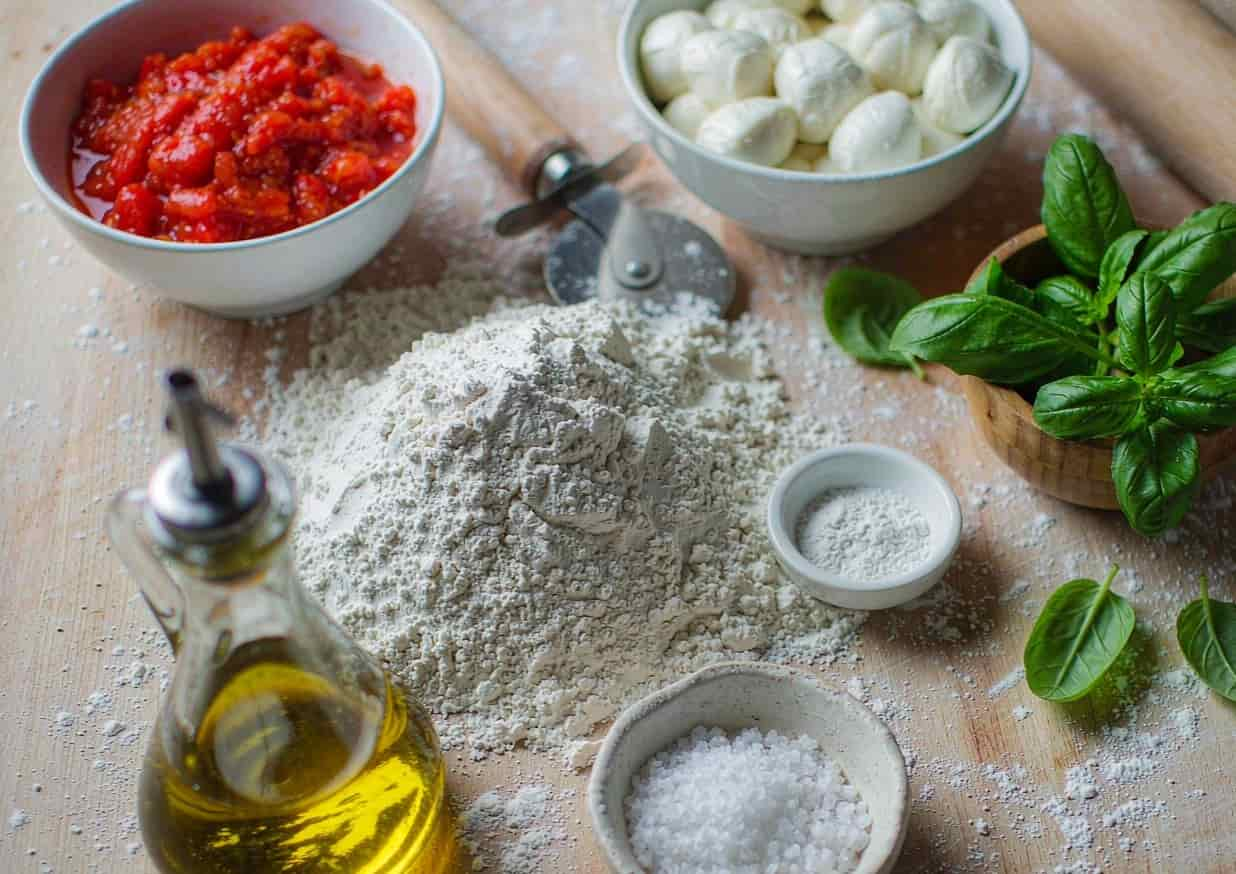
- Dough: 500 g type 00 flour, or bread flour
- 350 g water at 24°C / 75°F (70% hydration)
- 10 g fine sea salt
- 3 g instant yeast (about 1 tsp)
- Per pizza: 1/3 cup / 80 ml crushed San Marzano tomatoes
- 1/4 tsp fine sea salt
- 3 oz / 85 g fior di latte or fresh mozzarella, torn
- 4 to 5 fresh basil leaves
- 1 tbsp extra-virgin olive oil
Equipment
- Baking steel or baking stone
- Pizza peel
- Stand mixer (optional; the dough can be mixed by hand)
How to make margherita pizza step by step
- Mix. Stir the flour, water, and yeast together until shaggy. Cover and rest 20 minutes to let the flour hydrate fully.
- Knead. Add the salt and knead by hand or with a dough hook for 5 minutes, until smooth and elastic.
- Bulk ferment. Cover and rest at room temperature for 2 hours, performing three sets of stretch-and-folds at 30-minute intervals.
- Cold proof. Divide into four 220 g balls. Place them in a lightly oiled container, cover, and refrigerate for 24 to 72 hours.
- Preheat hard. Put the baking steel on an upper-third rack and heat the oven to 260°C / 500°F for at least 45 minutes. Preheat the broiler as well.
- Make the sauce. Blend a can of whole peeled San Marzano tomatoes until smooth and stir in 1/2 tsp salt. Do not cook it.
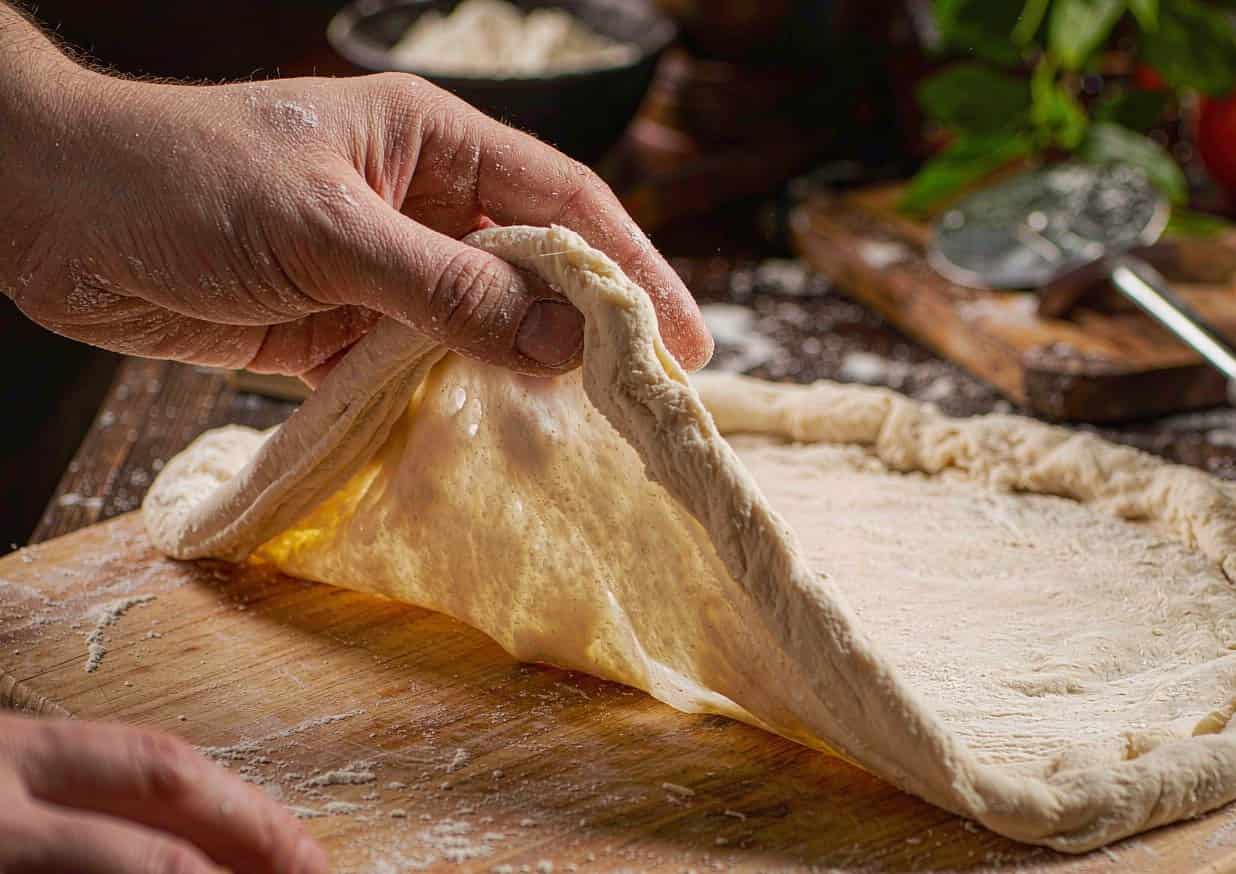
- Shape. Rest one dough ball at room temperature for 30 minutes. Press it out from the centre with your fingertips, leaving a 1-inch rim of air, then stretch it over your knuckles, rotating as you go. Never use a rolling pin.
- Top. Place the base on a floured peel, spread the sauce thinly, and scatter the torn mozzarella. Leave the rim bare.
- Bake. Slide onto the steel and bake 4 minutes, then switch to the broiler for 2 minutes, watching closely, until the rim is blistered and charred in spots.
- Finish. Scatter the basil over the hot pizza, drizzle with olive oil, add a pinch of salt, slice, and serve at once.
What we learned testing this margherita pizza recipe
We cooked this recipe four times before publishing it. These are the things that only showed up in the kitchen, not on paper.
- A 24-hour cold ferment changed everything. The same dough baked after four hours tasted flat and bready. Cold-fermented dough had visible holes in the rim and a nutty, more complex flavour.
- We tested 250°C / 480°F against the maximum 290°C / 550°F with a baking steel. The steel at full heat gave a four-minute bake with a blistered, leopard-spotted rim. On a cold sheet at the lower temperature the base stayed pale and soft.
- San Marzano tomatoes, crushed by hand and left uncooked, beat every sauce variation we tried. Simmering the sauce first made it sweeter but denser, and it weighed the base down.
- Wet mozzarella is the enemy. Our first batch used cheese straight from the brine and the pizza had a puddle in the middle. Tearing it and draining it on paper towels for 20 minutes fixed it completely.
- Less is more. Overloading with cheese and basil insulated the base and the centre came out undercooked even though the rim was done.
Expert tips
- Weigh everything. Pizza dough is a ratio, and volume measures are not accurate enough at this hydration level.
- A baking steel outperforms a stone for home ovens. If you have neither, preheat an inverted cast-iron skillet and slide the pizza onto it.
- Test the slide before you add toppings: give the peel a shake and make sure the base moves freely. If it sticks, add more flour or semolina.
- Tear the mozzarella and let it drain on paper towels for 10 minutes, or it will release water onto the pizza.
Variations and substitutions
- Marinara: skip the cheese, add sliced garlic and dried oregano.
- Bufala: use buffalo mozzarella; drain it well before topping.
- Whole wheat: replace 30% of the flour with whole wheat for a nuttier crust.
- Same-day dough: skip the cold proof and bulk ferment at room temperature for 4 to 6 hours instead.
Troubleshooting
| What went wrong | Why it happens | How to fix it |
|---|---|---|
| Base is soggy in the middle | The mozzarella was too wet, or the stone was not hot enough. | Drain the cheese for 20 minutes and preheat the stone or steel for a full 45 minutes. |
| Dough tears when stretched | Under-kneaded, or not rested. | Knead until smooth and elastic, then rest the dough balls at room temperature for two hours. |
| Pale, soft crust | The oven was not hot enough, or the pizza sat too low. | Preheat to maximum with the steel on the top rack. |
| Bitter, burnt basil | The basil went on before baking. | Add it in the last 30 seconds, or scatter it on as soon as the pizza comes out of the oven. |
Storage, food safety and make-ahead
Dough keeps 4 days refrigerated and freezes for up to 1 month in oiled bags. Baked pizza does not reheat well, but leftover sauce keeps 5 days in the fridge.
For safe cooling, storage times, and reheating, follow the USDA FSIS food safety guidance.
Nutrition information
Per pizza (1 of 4): approximately 540 kcal, 22 g protein, 18 g fat, 70 g carbohydrates, 3 g fibre, 880 mg sodium. Estimates based on USDA FoodData Central reference values.
Figures are calculated from the USDA FoodData Central database and are estimates only. Values vary with ingredient brands and portion size.
Frequently asked questions
Can I make the dough the same day?
Yes. Skip the cold proof and let the dough bulk ferment at room temperature for 4 to 6 hours. It will be easier to handle but less flavourful than the cold-fermented version.
What is the difference between 00 flour and bread flour?
Type 00 is a finer-milled Italian flour with a slightly different protein profile, producing a tender, extensible dough. Bread flour is an excellent and widely available substitute. All-purpose flour works but gives a less chewy crust.
Do I need a baking steel?
It is the single biggest upgrade for home pizza. It transfers heat into the base much faster than a stone, which is what produces an open, blistered rim in a domestic oven.
Why is my crust tough?
Usually overworking the dough or under-fermenting it. Knead only until smooth, then let time do the work. A longer, colder fermentation gives a more tender, more flavourful crust.
Sources and further reading
- USDA FoodData Central
- Accademia Italiana della Cucina
- Serious Eats — The Food Lab
- King Arthur Baking Company — Baking Resources
Nutrition figures on this page are calculated from the USDA FoodData Central database and are estimates only. They are not a substitute for advice from a qualified dietitian or physician.
Last updated: September 5, 2026. Recipe tested four times in a standard home kitchen by the named author above. Corrections are welcome and are noted on the page when published.