 Old Kitchen Stories
Quick answer: Mix 500 g of bread flour with 7 g instant yeast, 10 g fine salt, 300 ml of water and 30 g softened butter, then knead until smooth and springy, about 8 minutes by machine. Rise covered for 1 hour. Divide into eight pieces of about 105 g, roll each into a rope 60 cm long, and shape into pretzels. Chill them uncovered for 30 minutes to dry the skin. Dip each one for 30 seconds in either a 4 percent food-grade lye solution or a simmering water-and-baking-soda bath, drain, salt the fat side, and bake at 230°C / 450°F for 12 to 14 minutes until deep mahogany. Brush with butter as they come out.
- Prep time: 30 minutes
- Cook time: 15 minutes
- Total time: 45 minutes
- Servings: 8 pretzels
- Cuisine: German
- Course: Breads & Pizza
- Difficulty: Medium
Why this recipe works
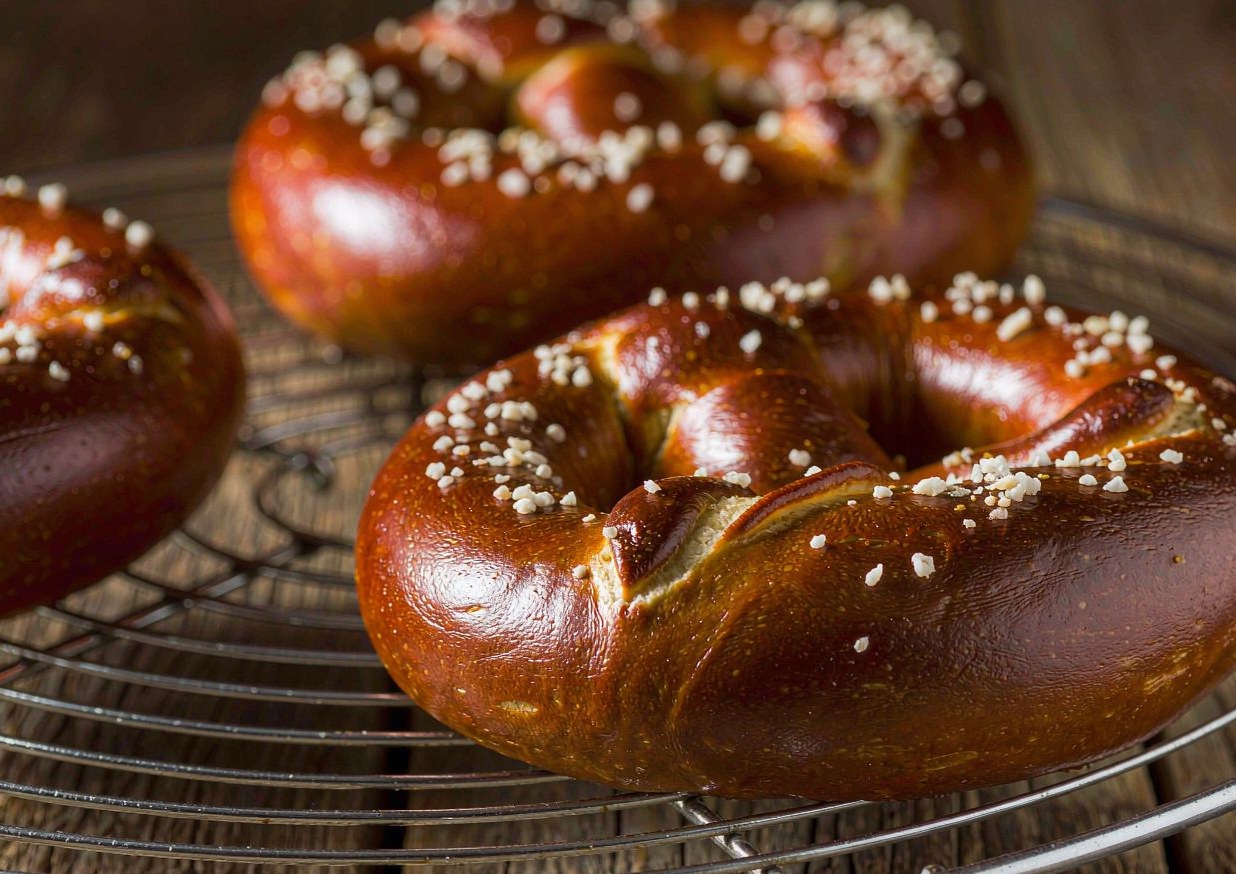
Four things separate a real Brezel from a brown roll in a knot. The dough is stiff, about 60 percent hydration, firm enough to hold a rope without sagging. Then the alkaline bath: raising the surface pH speeds up the Maillard reaction, so the crust browns hard in the twelve minutes it takes to cook the inside, and without it the same dough comes out straw-coloured. Third, the chilled uncovered rest, because a dry skin holds the twist together. Last, heat from below: a preheated steel sets the base before the crust over-browns. We give the baking soda bath as the default because it is what most home kitchens can do safely, with lye as the option for anyone who wants the flavour of a Bavarian bakery. Treat lye with respect: gloves, eye protection, and a container you retire.
Our method follows the technique guidance published by King Arthur Baking Company — Baking Resources and is adapted for a standard home kitchen.
Ingredients
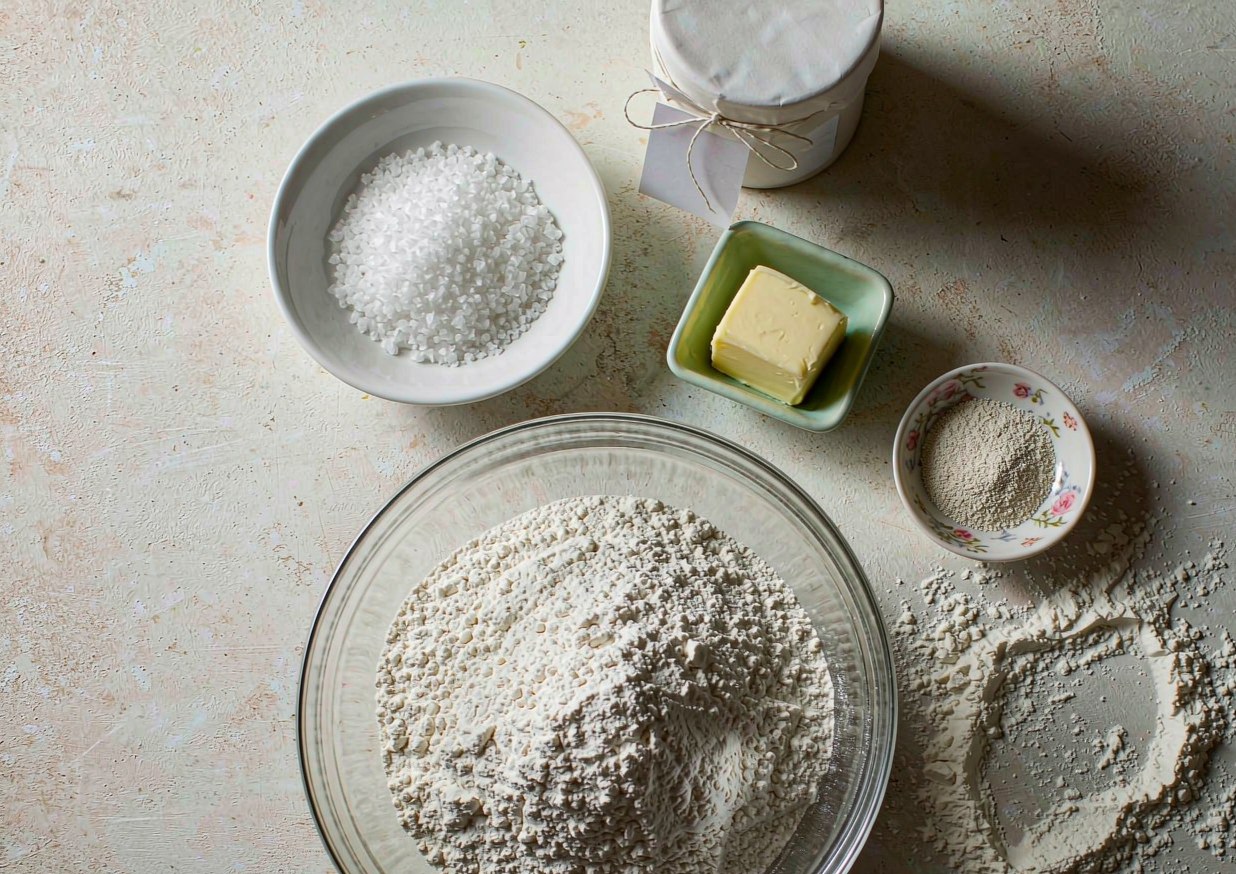
- 500 g / 4 cups bread flour, plus a little more for the bench
- 300 ml / 1 1/4 cups water at about 24°C / 75°F
- 7 g / 2 1/4 tsp instant (bread-machine) yeast
- 10 g / 2 tsp fine sea salt
- 30 g / 2 tbsp unsalted butter, softened
- 2 litres / 8 cups water, for the bath
- 1/2 cup / 120 g baking soda, for the bath (or a 4 percent food-grade lye solution — see the notes)
- 2 tbsp coarse pretzel salt or flaky sea salt
- 30 g / 2 tbsp unsalted butter, melted, for brushing after baking
Equipment
- A digital kitchen scale that reads to 1 g — at this hydration a cup of flour either way is the difference between a rope that holds and one that sags
- A stand mixer with a dough hook, or a bench scraper and ten minutes of hand kneading
- A baking steel or pizza stone, preheated 45 minutes so the base sets before the crust colours
- Two heavy rimmed baking sheets, parchment paper, and a wire rack so the bases do not steam
- A spider strainer or slotted spoon for lifting pretzels out of the dip, and a pastry brush
- If you use food-grade lye: chemical-resistant gloves, eye protection, and a labelled container you retire from the kitchen afterwards
How to make soft pretzels step by step
- Mix the dough. Whisk the flour, yeast, and fine salt together in the mixer bowl, add the water, and mix on low with the dough hook until a shaggy mass forms. Add the softened butter and mix for another minute.
- Knead until it springs back. Knead on medium-low for 8 minutes by machine, or 10 to 12 by hand, until smooth and slightly tacky but not sticky. If it smears on the bowl, add flour a teaspoon at a time; if it tears, add water the same way.
- Rise. Shape the dough into a ball, put it in a lightly oiled bowl, cover, and leave it until roughly doubled, about 1 hour at 22°C / 72°F. It is ready when a pressed finger leaves a dent that fills back slowly.
- Divide and pre-shape. Divide the dough into eight pieces of about 105 g — weigh them, because uneven pieces bake unevenly. Roll each into a ball, cover, and let them relax for 10 minutes so the gluten stops fighting you.
- Roll the ropes. Working one ball at a time and keeping the rest covered, roll it into a rope about 60 cm / 24 inches long, thick in the middle and tapering at the ends. The fat middle becomes the belly; the thin ends become the arms. If the dough springs back, cover it for 5 minutes and try again.
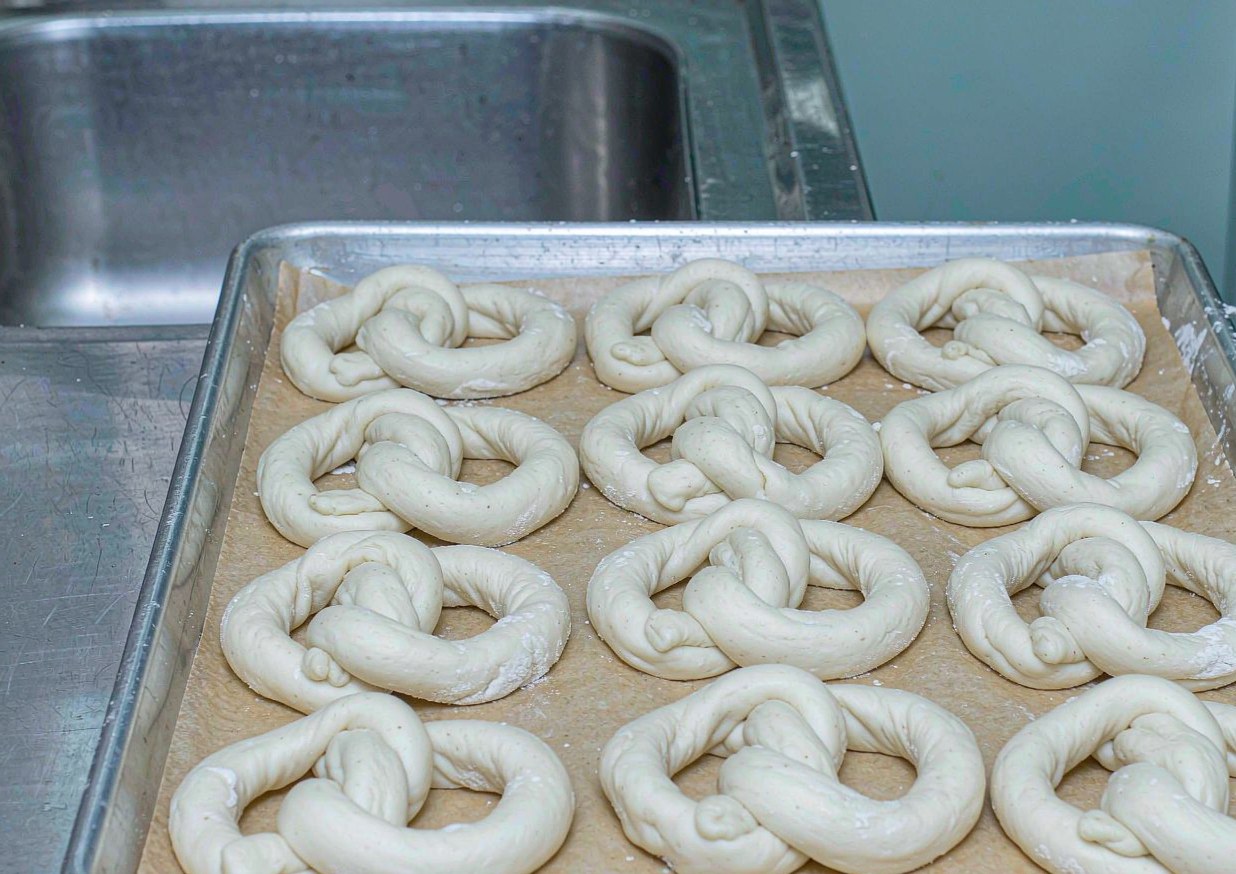
- Shape the pretzel. Lay the rope in a U shape with the fat middle at the bottom. Cross the thin ends two-thirds of the way up, twist them once, fold them down and press them firmly onto the belly either side of the loop. Press hard — a light press opens in the oven.
- Chill uncovered. Set the pretzels on a parchment-lined tray, not touching, and refrigerate uncovered for 30 minutes. The surface dries into a thin skin. Do not cover them with plastic; trapped moisture undoes the point.
- Heat the oven hard. Put a baking steel or stone on the middle rack and heat the oven to 230°C / 450°F for a full 45 minutes. Ovens lie about being preheated.
- Make the bath and dip. Bring 2 litres of water to a bare simmer in a wide pan, add the baking soda a little at a time (it foams), and hold it just below a boil. Dip one pretzel at a time, belly down, for 30 seconds, then lift it out and let it drain. For a 4 percent lye solution instead: gloves and eye protection, 8 to 10 seconds, drain well.
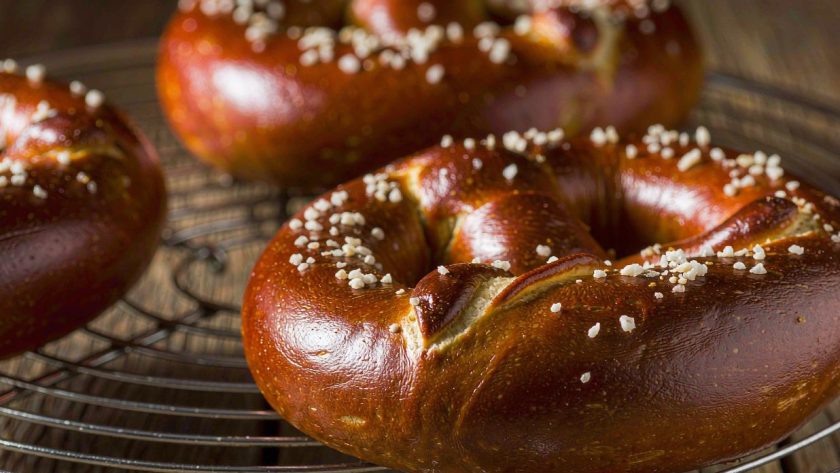
- Salt and bake. Set the drained pretzels on parchment, salt the belly with coarse salt, and slash the thickest part once, about 1 cm deep. Slide them, parchment and all, onto the hot stone and bake for 12 to 14 minutes, until deep mahogany.
- Butter and cool. Brush the hot pretzels with melted butter, then move them to a wire rack so the bases do not steam. Cool for 10 minutes; they are best within a few hours.
What we learned testing this soft pretzels recipe
We cooked this recipe three times before publishing it. These are the things that only showed up in the kitchen, not on paper.
- Our first tray was a genuine failure. We shaped the pretzels straight after dividing, skipped the chill, dipped for 10 seconds, and baked at 200°C / 400°F on a cold sheet. They came out straw-coloured, the twists sprang open into loose knots, and the crumb was a bread roll in a pretzel shape. The chill, the 30-second dip and the hot stone are what turned it into a Brezel.
- Dip time, tested at 10, 30 and 60 seconds on the same dough: 10 seconds gave a dull tan crust, 30 gave the mahogany we wanted, 60 was almost too dark with a faintly metallic aftertaste. Thirty is worth timing rather than guessing.
- Lye against baking soda, side by side: the lye-dipped pretzel was darker, glossier, and smelled of a German bakery; the soda one was paler and cleaner-tasting. Smaller gap than we expected — the soda bath is a genuinely good pretzel.
- Chilled against unchilled: the chilled batch came off the peel with the arms welded to the belly. Two of eight unchilled pretzels had opened into loose loops by minute five.
- Baking surface: on a preheated steel the bases browned in 12 minutes; on a cold lined sheet the same pretzels needed 17 and were still damp. Our oven runs 12°C / 22°F cool against a standalone thermometer.
Expert tips
- Weigh the flour. Scooped bread flour varies by 20 percent, which decides whether a rope holds or sags.
- Add the baking soda gradually; half a cup dumped into simmering water at once foams over.
- Salt after the dip, never before. The wet alkaline surface is what makes crystals stick.
- If the crust is dark but the crumb is doughy, the stone was not hot enough. Give it another 15 minutes and bake in two batches.
Variations and substitutions
- Pretzel bites: divide the dough into 40 pieces of about 20 g, roll them into balls, dip for 20 seconds, and bake for 9 to 10 minutes.
- Laugenstange (batons): roll each piece into a fat sausage about 15 cm / 6 inches long, slash the top once, and dip as normal.
- Cheese batons: wrap a baton around a stick of Emmentaler or Gruyere so the dough encases it, then bake. The cheese leaks at the seam and crisps against the pan.
- Pretzel buns: shape eight rounds instead of knots, dip for 25 seconds, and bake for 14 minutes. Split them for sandwiches the same day.
Troubleshooting
| What went wrong | Why it happens | How to fix it |
|---|---|---|
| Pretzels are pale and taste like bread rolls | The alkaline dip was skipped or cut short, so without a raised surface pH the Maillard reaction cannot run fast enough in twelve minutes. | Dip for a full 30 seconds in a simmering bath of half a cup of baking soda per 2 litres of water, and check the oven with a standalone thermometer. |
| The twist opened up in the oven | The arms were pressed on lightly, or the pretzels never got their chilled rest, so the joins had no dry skin to hold them. | Press the joins until the dough merges, then chill the tray uncovered for 30 minutes. If it has already happened, call them batons — they taste identical. |
| Crust is dark but the inside is raw | The baking surface was not preheated, so the base never set and the oven lost heat when the door opened. | Give the steel a full 45 minutes and bake in two batches. If the batch is already in, drop to 200°C / 400°F for another 6 to 8 minutes. |
| Pretzels stuck to the peel or the parchment | They were dipped and then left sitting, so the wet alkaline surface glued itself to the paper as it dried. | Drain and move them within a minute, or dust the parchment with semolina. Sliding the parchment onto the stone avoids the problem entirely. |
Storage, food safety and make-ahead
Pretzels are best within about 4 hours. Keep cooled pretzels in a paper bag for up to 2 days; plastic traps moisture and turns the crust leathery. To revive one, spritz it with water and heat it at 180°C / 350°F for 5 to 7 minutes. Freeze baked pretzels, wrapped well, for up to 2 months and reheat from frozen at 200°C / 400°F for 10 minutes. Shaped raw pretzels also freeze on a tray; dip and bake them from frozen, adding 2 minutes.
For safe cooling, storage times, and reheating, follow the USDA FSIS food safety guidance.
Nutrition information
Per pretzel (one of eight): approximately 265 kcal, 8 g protein, 6 g fat, 45 g carbohydrates, 2 g fibre, 640 mg sodium. Values are estimates derived from the USDA FoodData Central database and vary with flour and how heavily you salt.
Figures are calculated from the USDA FoodData Central database and are estimates only. Values vary with ingredient brands and portion size.
Frequently asked questions
Do I have to use lye?
No. A simmering bath of half a cup of baking soda per 2 litres of water gets you most of the way, raising the surface pH enough to brown properly. Lye gives the darker, glossier crust and the savoury smell of a Bavarian bakery, but it is a caustic solution that needs gloves, eye protection and care. Start with the soda.
Why did my pretzels come out pale?
One of three things: the dip was too short, the bath was too weak, or the oven was not hot enough. Thirty seconds in a properly simmering soda bath is the minimum, and the stone needs its full 45 minutes. Skip the dip entirely and you have a bread roll in a pretzel shape.
Can I make the dough a day ahead?
Yes, and it is better for it. After the knead, refrigerate the dough in an oiled covered container for up to 24 hours — cold dough rolls into ropes more easily. Let it sit at room temperature for 30 minutes before dividing so it is not too stiff to shape.
My pretzels lost their shape in the dip. What went wrong?
The arms were not pressed firmly onto the belly, or the shaped pretzels were not chilled. Press the joins until the dough merges, then give them the full 30 minutes uncovered in the fridge. A slack, over-hydrated dough sags too, which is why we weigh flour and water.
Sources and further reading
- USDA FoodData Central
- King Arthur Baking Company — Baking Resources
- USDA FSIS — Safe Minimum Internal Temperatures
- Serious Eats — The Food Lab
Nutrition figures on this page are calculated from the USDA FoodData Central database and are estimates only. They are not a substitute for advice from a qualified dietitian or physician.
Last updated: September 7, 2026. Recipe tested three times in a standard home kitchen by the named author above. Corrections are welcome and are noted on the page when published.