 Old Kitchen Stories
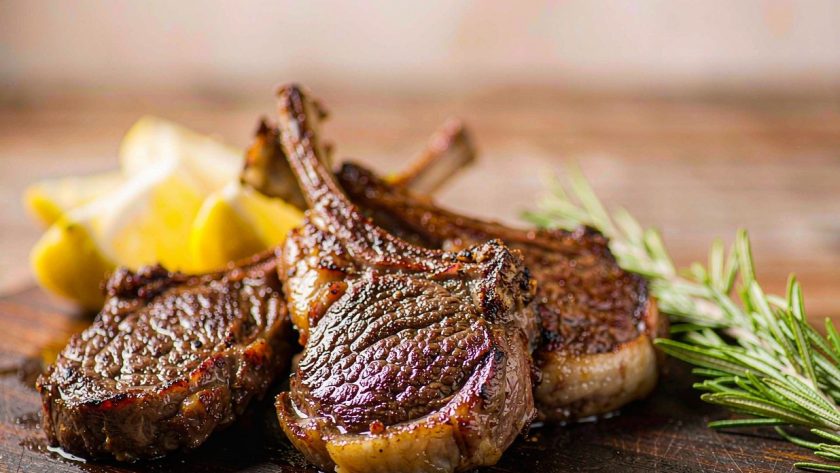
Quick answer: Buy loin chops about 2.5 cm / 1 inch thick and pat them dry. Salt them and leave them uncovered on a rack in the fridge for at least 40 minutes, or toss them with olive oil, crushed garlic, rosemary, and lemon zest and refrigerate for 2 hours. Build a two-zone fire with the hot side at about 230°C / 450°F. Sear the chops over the hot side for 2 minutes a side with the lid up, then move them to the cooler side, close the lid, and cook until the thickest part away from the bone reads 63°C / 145°F for medium-rare. Rest for 5 minutes before serving.
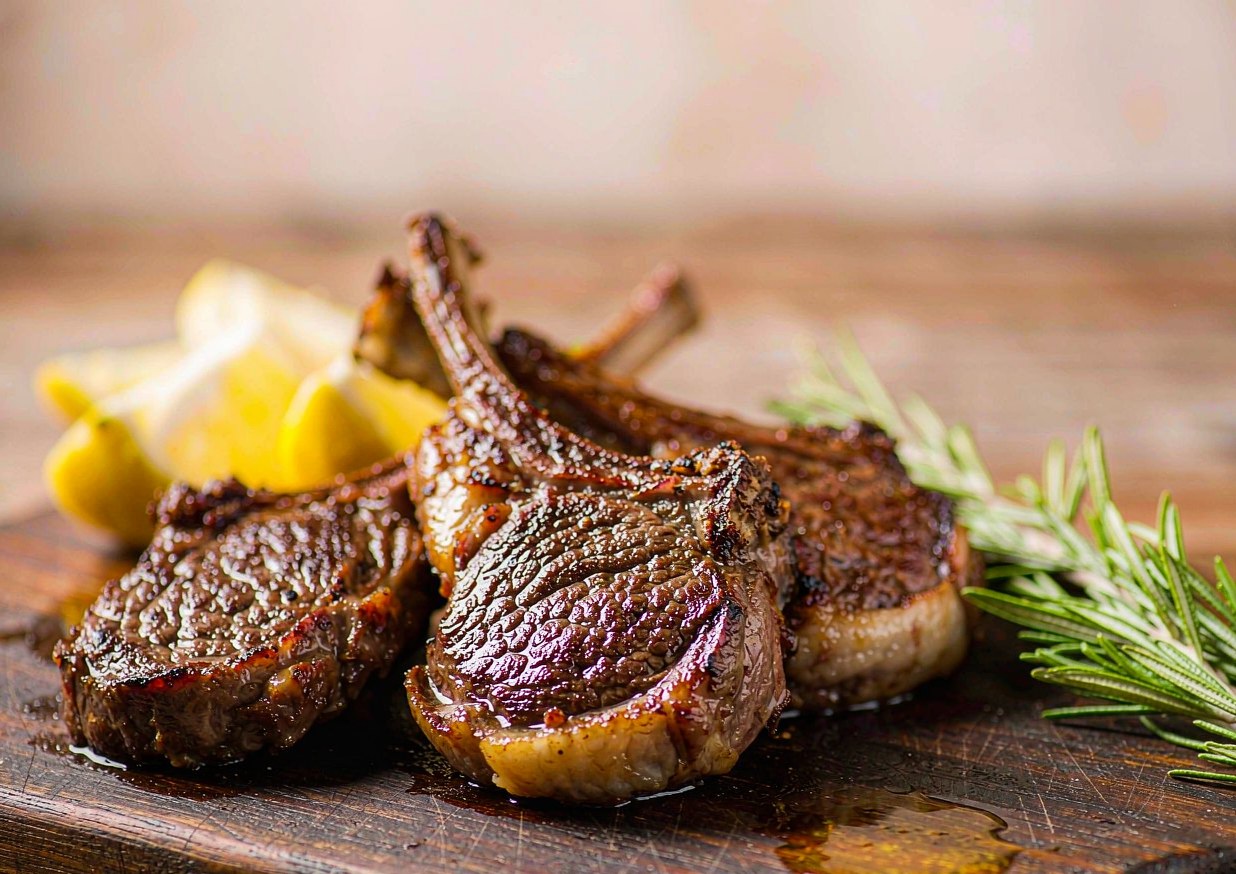
- Prep time: 15 minutes
- Cook time: 10 minutes
- Total time: 25 minutes
- Servings: 4
- Cuisine: British
- Course: Main Dishes
- Difficulty: Easy
Why this recipe works
Lamb chops are thin, expensive, and unforgiving, and almost every disappointment comes from one of four things. Cut thickness first: a chop under 2 cm / 3/4 inch goes from raw to overdone in the time it takes to look away, and 2.5 cm is the thinnest worth buying. Second, a dry surface. Salt applied 40 minutes ahead draws moisture out, dissolves into a brine, and is partly reabsorbed, which seasons below the surface; patting dry on top of that gives you the contact you need for browning. Third, two-zone heat. Chops get their crust over the fire and finish gently away from it, which is the only way to get colour and an even interior from something this thin. Fourth, a thermometer and a rest. We cook to 63°C / 145°F for medium-rare and rest for 5 minutes, which matches the USDA safe-minimum guidance for lamb and lets the juices settle instead of running onto the board. The fat cap matters too: lamb fat needs real heat to render, and a chop pulled too early leaves it waxy and white.
Our method follows the technique guidance published by BBC Food — Recipes & Techniques and is adapted for a standard home kitchen.
Ingredients
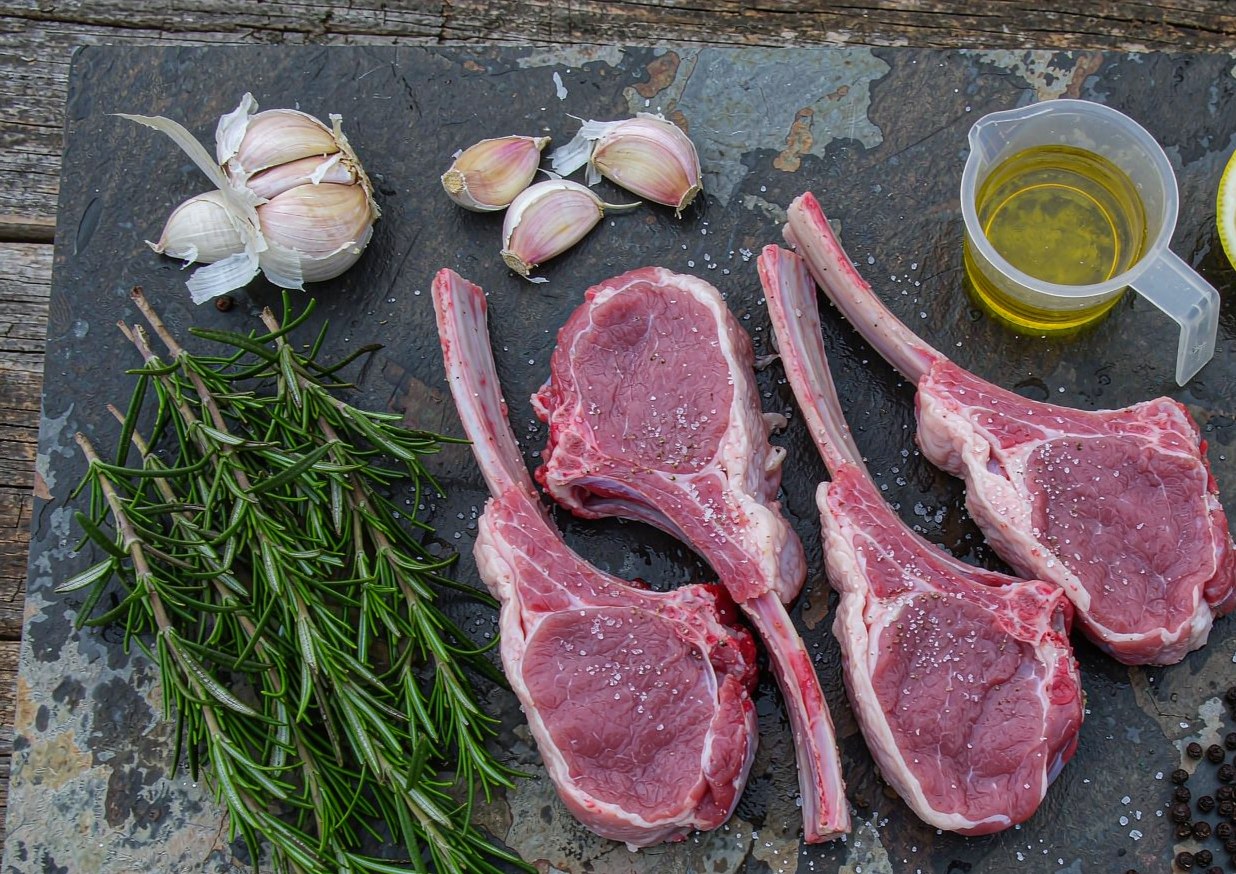
- 8 lamb loin chops, about 2.5 cm / 1 inch thick, 110 to 140 g each
- 2 tsp kosher salt (or 1 1/2 tsp fine sea salt)
- 3 tbsp extra-virgin olive oil
- 4 cloves garlic, crushed to a paste
- 2 tbsp fresh rosemary, finely chopped
- Zest of 1 unwaxed lemon
- 1 tsp freshly ground black pepper
- 1 tsp Dijon mustard (optional, it helps the marinade cling)
- 1 lemon, cut into wedges, for serving
- Flaky sea salt, to finish
Equipment
- A charcoal grill with a lid, or a gas grill with at least two burners — you need a direct zone and an indirect zone
- An instant-read digital thermometer, the only way to hit medium-rare without cutting in and losing the juices
- Long-handled tongs, never a fork, which pierces the meat and lets the juices run
- A stiff grill brush for the grates, and paper towels for drying the chops
- A rimmed tray and wire rack for salting the chops uncovered in the fridge
- A carving board with a well, and a sharp knife
How to make grilled lamb chops step by step
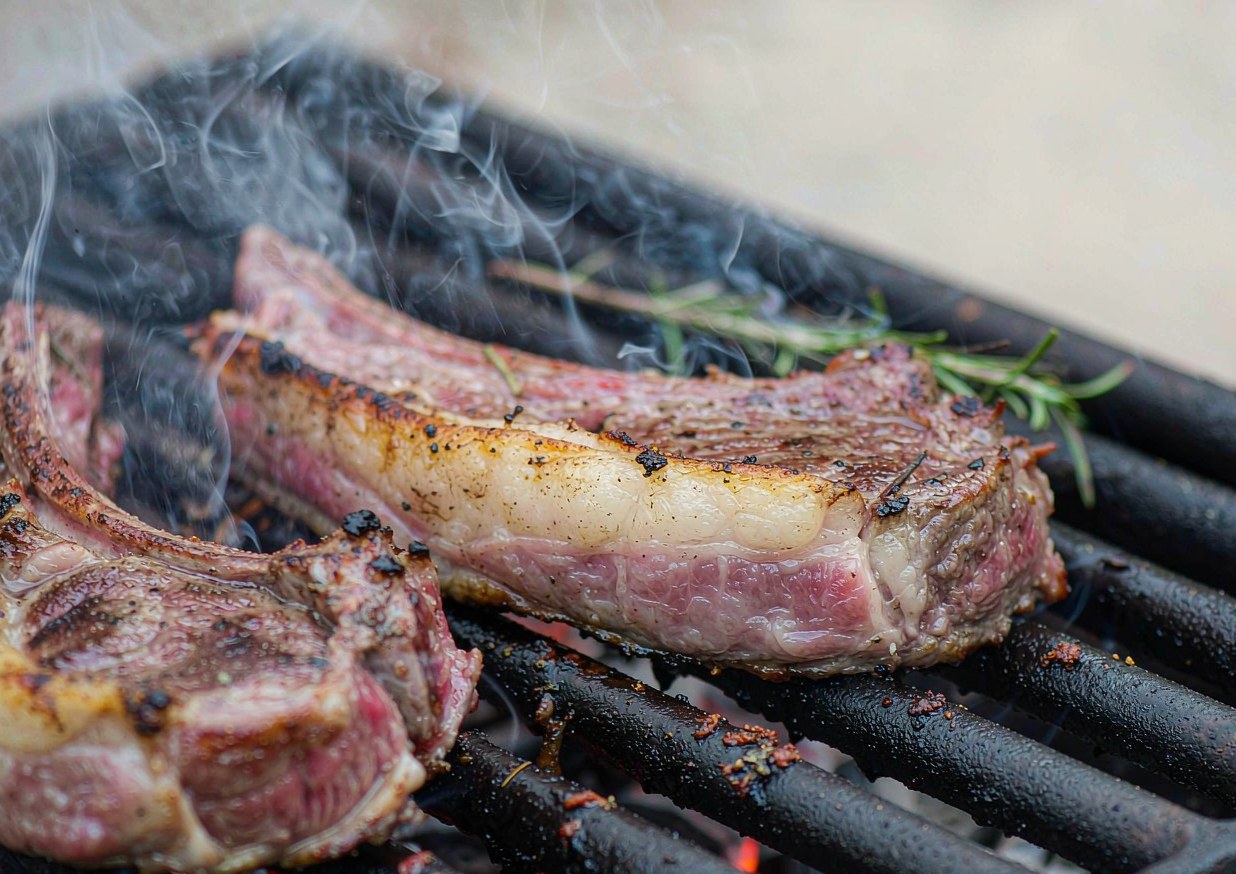
- Choose and trim the chops. Look for loin chops with a single round eye of meat and a fat cap about 5 mm / 1/4 inch thick. Trim the cap to that, but do not remove it — it bastes the meat as it renders. If your butcher cut them thin, cook four at a time so you can pull them on time.
- Salt in advance. Pat the chops dry, salt both faces, and set them on a rack over a tray, uncovered, in the fridge for at least 40 minutes and up to overnight. Uncovered matters: the surface dries, and dry meat browns.
- Mix the marinade. Whisk the olive oil, garlic, rosemary, lemon zest, pepper, and mustard (if using) in a bowl big enough to hold the chops. Keep the acid to the zest — lemon juice in a long marinade firms and dulls the surface.
- Marinate, briefly. Turn the chops in the marinade, cover, and refrigerate for 2 hours, up to 8. Set a few tablespoons aside before the raw meat goes in if you want a sauce.
- Temper before the fire. Take the chops out 20 minutes before cooking and blot them dry. A cold chop cooks unevenly: the outside overcooks before the centre moves.
- Build a two-zone fire. For charcoal, bank the lit coals over one half and leave the other bare. For gas, set one burner high and one low or off. Scrub and oil the grates and let the hot side reach about 230°C / 450°F.
- Sear. Lay the chops over the hot side, fat cap down first, holding them down with tongs for 30 seconds so the fat renders. Then lay them flat and sear 2 minutes a side, lid up, without moving them around.
- Finish on the cool side. Move the chops to the cooler zone, bone side down, close the lid, and cook 4 to 6 minutes more, turning once. The lid turns the grill into an oven, which is the point.
- Check the temperature, not the clock. Push the thermometer in from the side into the thickest part of the eye, away from bone and fat. Pull at 60°C / 140°F for pink after resting, or 63°C / 145°F for medium-rare with the USDA-recommended rest.
- Rest. Move the chops to a warm plate — never the dish the raw meat travelled on — and rest them 5 minutes, loosely tented. The temperature rises 2 to 3°C, which is what you planned for.
- Serve. Finish with flaky salt and a squeeze of lemon, either off the bone in pairs or whole, to pick up.
What we learned testing this grilled lamb chops recipe
We cooked this recipe three times before publishing it. These are the things that only showed up in the kitchen, not on paper.
- Our first attempt was a genuine failure. We marinated the chops for 8 hours in a wet lemon-juice marinade, grilled them straight from the fridge, and cooked the whole time over direct heat. The outside scorched before the centre moved, the surface had gone mealy from the acid, and there was a grey band under the crust. Zest instead of juice, 2 hours instead of 8, and a two-zone fire fixed all three.
- Salt timing, three ways: salted 40 minutes ahead was seasoned through and browned best; salted at the grill was brown but flat at the centre; overnight uncovered on a rack matched the 40-minute chops with a drier surface.
- Fridge-cold against 20 minutes on the counter: the cold chops took 4 extra minutes and had a noticeably wider grey band.
- Two-zone against all-direct: over direct heat alone we pulled the chops at 7 minutes with a black crust and a cool centre. With the cool zone they took 10 minutes and were even from edge to eye.
- We weighed the board after resting and after cutting immediately. A rested chop lost about a teaspoon of liquid; one cut straight off the grill lost three times that.
Expert tips
- Score the fat cap every 2 cm. Unscored fat tightens as it renders and curls the chop into a cup, lifting the meat off the grate.
- Read the temperature from the side, parallel to the bone; from the top you hit bone or shoot through into the grate.
- Never press the chops flat with the tongs. Every squeeze pushes juice out onto the coals.
- If the fire flares, move the chops to the cool zone for 30 seconds rather than spraying water, which throws ash over everything.
Variations and substitutions
- Shoulder chops: cheaper and more flavourful but full of connective tissue. Marinate for 8 hours and finish them on the cool side for 15 to 20 minutes, to 71°C / 160°F, where the collagen softens.
- Butterflied leg: a 1.5 kg boneless leg opened out cooks in about 18 minutes over a two-zone fire and rests for 15. This is the standard British Sunday alternative to a roast.
- Indoor: a screaming-hot ridged grill pan, 3 minutes a side, then 4 minutes in a 200°C / 400°F oven. A broiler works too, at 10 cm / 4 inches from the element.
- Herb swap: thyme and mint instead of rosemary, with the lemon zest doubled. Mint belongs with lamb because it cuts the fat rather than adding to it.
Troubleshooting
| What went wrong | Why it happens | How to fix it |
|---|---|---|
| Chops are charred outside and raw in the middle | They were cooked entirely over the direct zone, or they went on fridge-cold, so the surface hit high heat long before the centre could catch up. | Move them to the cool side as soon as both faces have colour and close the lid. Temper them on the counter for 20 minutes first, and for an already-burnt chop, slice off the crust and finish the rest gently in a low oven. |
| The meat is grey, dry and chewy | Cooked past about 71°C / 160°F, or cut straight off the grill without resting. A lean loin chop has nothing to give back once it is overcooked. | Pull at 60 to 63°C / 140 to 145°F and rest 5 minutes. If it is already dry, slice it thin across the grain and serve it with the resting juices and something sharp, like a squeeze of lemon. |
| The fat cap is waxy and white | The chops came off the heat before the fat had a chance to render, usually because they were thick and the cook was short. | Start fat-side down directly over the hottest part of the grill and hold them there for a full 30 seconds, and score the cap every 2 cm so it renders instead of shrinking. Finish on the cool side if it flares. |
| Flames flare up and cover the meat in soot | Rendering fat is dripping onto hot coals or onto the bars of a gas grill, and there was no cool zone to escape to. | Move the chops to the indirect side for 30 seconds and let the flare burn out. Do not spray water on a charcoal fire — it throws ash over everything. Trimming the cap to 5 mm / 1/4 inch prevents most of it. |
Storage, food safety and make-ahead
Cooked chops keep for 3 days in an airtight container in the fridge. Reheat gently: 8 minutes in a 120°C / 250°F oven warms them through without cooking them further, while a microwave turns leftover lamb grey. Freeze raw chops for up to 4 months, thaw in the fridge, and never refreeze thawed raw meat. Cool leftovers within 2 hours and reheat only once.
For safe cooling, storage times, and reheating, follow the USDA FSIS food safety guidance.
Nutrition information
Per serving (2 chops): approximately 390 kcal, 36 g protein, 27 g fat, 1 g carbohydrate, 0 g fibre, 520 mg sodium. Values are estimates derived from the USDA FoodData Central database and will vary with the cut, how much of the fat cap you trim, and how much marinade clings to the meat.
Figures are calculated from the USDA FoodData Central database and are estimates only. Values vary with ingredient brands and portion size.
Frequently asked questions
What temperature is medium-rare for lamb?
63°C / 145°F at the thickest point, measured away from the bone, then a rest of at least 3 minutes — the USDA safe minimum for lamb chops. For pinker meat, pull at 60°C / 140°F and rest 5 minutes. Breast, shoulder and minced lamb should be cooked to 71°C / 160°F instead.
Can I use a gas grill instead of charcoal?
Yes. Set one burner high and the second low or off, preheat 15 minutes with the lid down, and cook the same way. You lose the smoke, which you can partly replace by throwing a sprig of rosemary straight onto the grate.
How long do lamb chops take on the grill?
About 8 to 10 minutes for a 2.5 cm / 1 inch loin chop: 2 minutes a side over direct heat, then 4 to 6 minutes indirect with the lid down. Add about 3 minutes per extra centimetre, and treat every timing as an estimate the thermometer confirms.
Why are my lamb chops tough?
One of three causes: cooked past 71°C / 160°F, which squeezes the moisture out of a lean cut; never rested, so the juice ran onto the board; or shoulder and leg steaks cooked like loin chops, which need slow moist heat instead of a fast sear.
Sources and further reading
- USDA FoodData Central
- BBC Food — Recipes & Techniques
- USDA FSIS — Safe Minimum Internal Temperatures
- Serious Eats — The Food Lab
Nutrition figures on this page are calculated from the USDA FoodData Central database and are estimates only. They are not a substitute for advice from a qualified dietitian or physician.
Last updated: September 7, 2026. Recipe tested three times in a standard home kitchen by the named author above. Corrections are welcome and are noted on the page when published.