 Old Kitchen Stories
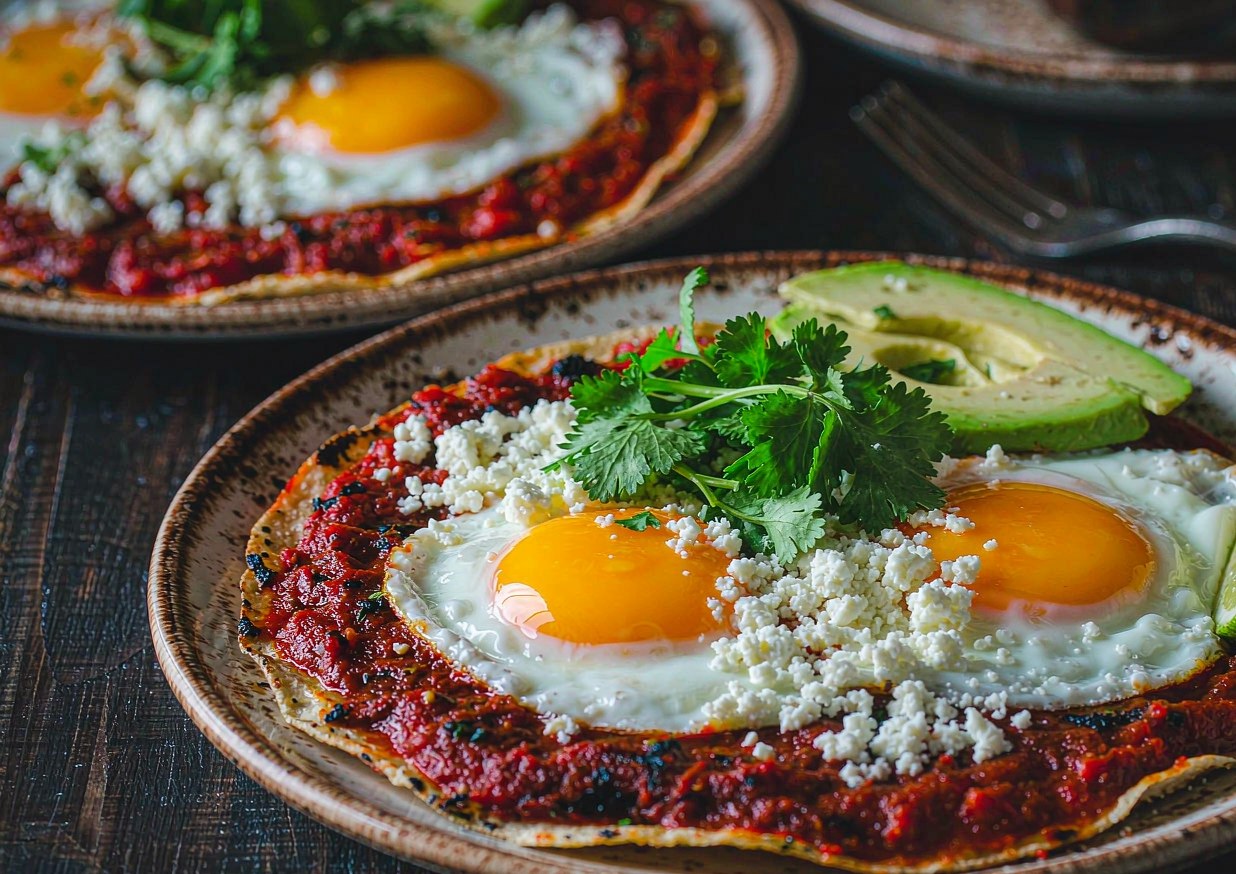
Quick answer: Char 1 lb / 450 g of Roma tomatoes with half an onion, three unpeeled garlic cloves, and a serrano chilli under the broiler until blackened in spots, then blend them with salt and cumin. Fry that salsa in a hot oiled pan for 5 minutes until it darkens and thickens — do not skip this step. Crisp 8 corn tortillas briefly in hot oil, spread each with warm refried beans, and fry 4 eggs. Stack tortilla, salsa, and egg, then finish with queso fresco, avocado, cilantro, and lime.
- Prep time: 20 minutes
- Cook time: 25 minutes
- Total time: 45 minutes
- Servings: 4
- Cuisine: Mexican
- Course: Breakfast & Brunch
- Difficulty: Easy
Why this recipe works
Huevos rancheros is four cheap things and a timing problem, and almost every disappointing version fails on the second. The salsa matters most. Char the tomatoes, onion, and garlic until they blister and you get sweetness and smoke; boil them and you get something sharp and thin. But char alone is not enough, and this is the step most recipes leave out: a blended raw salsa tastes unfinished, because nothing in it has been cooked together. Frying the purée in hot oil for five minutes darkens it, thickens it, and knits the chilli into the tomato. It is the difference between a salsa and a tomato smoothie. The second decision is the tortilla. A cold corn tortilla under hot salsa turns to paste in under a minute, so it gets a quick fry — long enough to blister the surface, short enough that it stays pliable rather than becoming a tostada. The third is the egg. Cooked in the simmering salsa, the white sets and the yolk stays liquid, but the sauce underneath overcooks. We fry separately and pour over, which keeps both under control.
Our method follows the technique guidance published by Epicurious — Recipe Archive & Technique Guides and is adapted for a standard home kitchen.
Ingredients
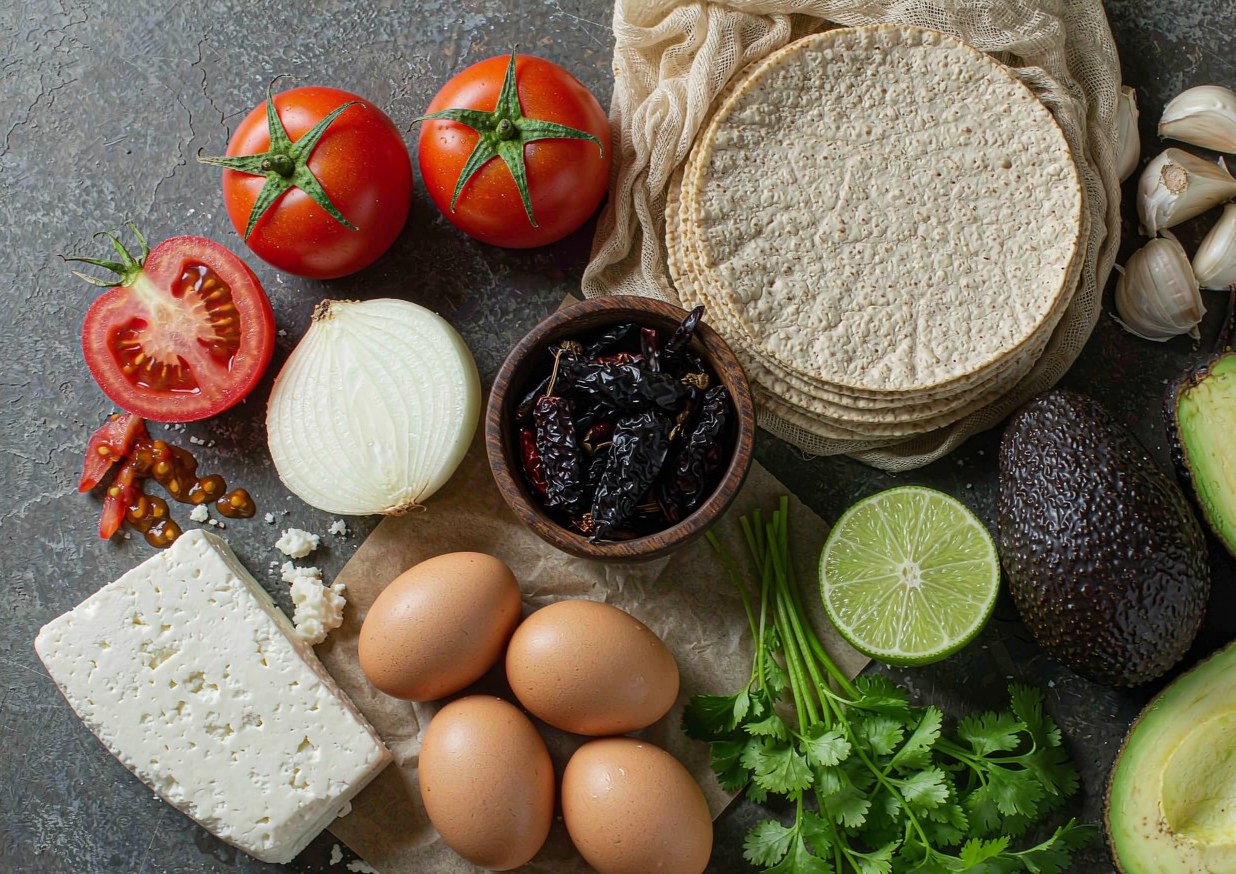
- 1 lb / 450 g Roma tomatoes, about 6, halved
- 1/2 medium white onion
- 3 cloves garlic, left unpeeled
- 1 to 2 serrano chillies, stemmed (or 1 jalapeño for a milder plate)
- 1 tbsp neutral oil, plus more for frying the tortillas
- 1/2 tsp ground cumin
- 3/4 tsp kosher salt, divided
- 8 corn tortillas
- 1 cup / 250 g refried beans, warmed
- 4 large eggs
- 2 oz / 60 g queso fresco, crumbled (feta works in a pinch)
- 1 ripe avocado, sliced
- 2 tbsp chopped cilantro
- 1 lime, cut into wedges
Equipment
- A heavy cast-iron or carbon-steel skillet, 10 to 12 inches. Thin pans lose heat the moment a cold tortilla hits them and you get pale, leathery results
- A blender or food processor. A molcajete gives a better texture if you have one, and is worth using for a small batch
- A rimmed baking sheet for charring the salsa vegetables under the broiler
- Tongs, for turning tortillas in hot oil without splashing yourself
- A thin flexible spatula, the only thing that slides under a fried egg with the yolk intact
- A second skillet, so the eggs and tortillas are not competing for the same burner when everything has to be hot at once
How to make huevos rancheros step by step
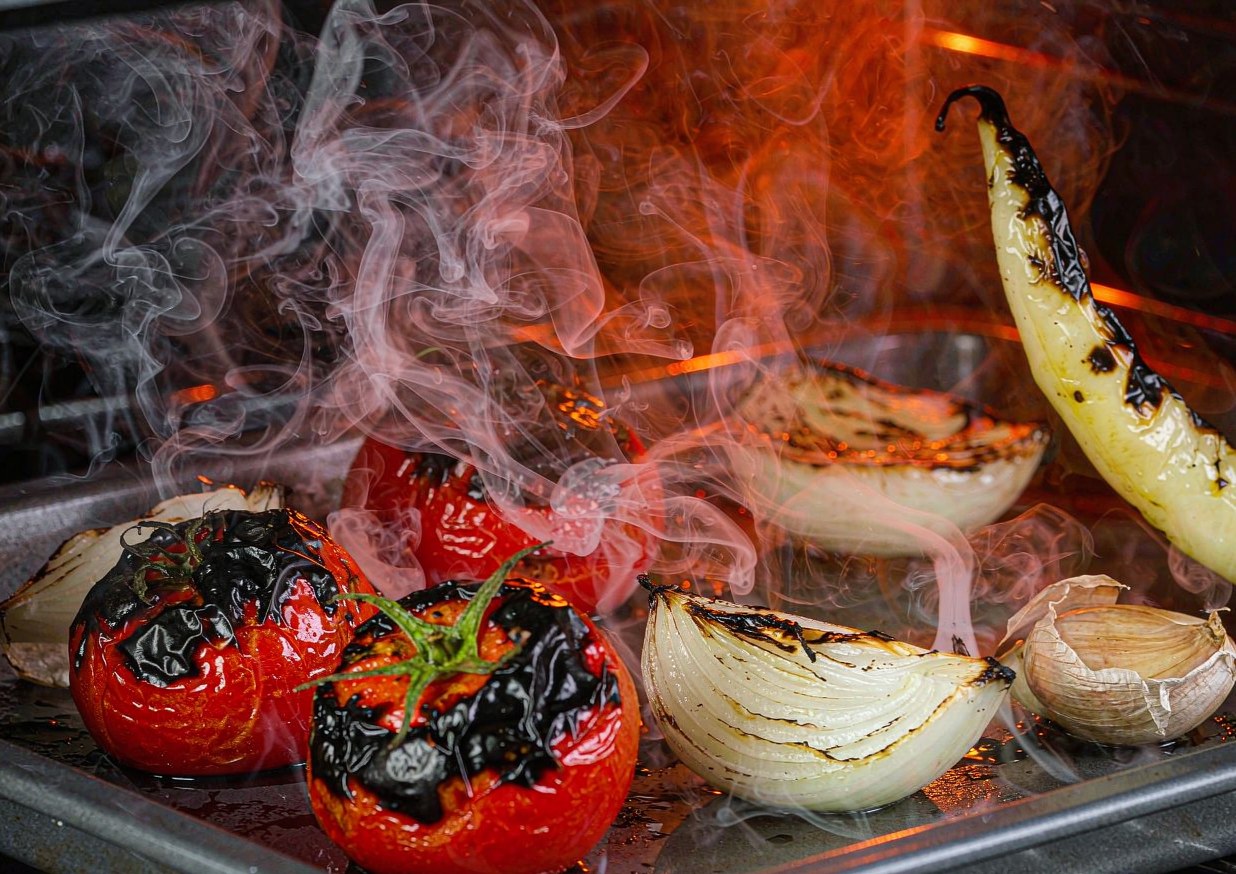
- Heat the broiler. Set a rack about 4 inches / 10 cm from the element and turn it to high. Spread the tomatoes cut-side up on a rimmed sheet with the onion, garlic, and chillies.
- Char the vegetables. Broil for 8 to 10 minutes, until the tomato skins are blackened in patches and the onion edges are scorched. Do not turn them; you want the tops charred and the insides soft.
- Blend the salsa. Peel the garlic and put everything from the pan, including any juices, into the blender with the cumin and 1/2 tsp of the salt. Pulse rather than purée — three or four short bursts leaves it coarse, which is right.
- Fry the salsa. This is the step that makes the dish. Heat 1 tablespoon of oil over medium-high until it shimmers, pour in the salsa all at once, and stand back; it will spit. Cook, stirring, for 5 minutes, until it darkens to brick and a spoon dragged across the base leaves a channel that holds.
- Season and hold. Taste and add the remaining salt. Keep it warm over the lowest heat; it should be loose enough to pour but not watery.
- Fry the tortillas. Heat about 1/4 inch / 6 mm of oil in the second skillet over medium-high. Fry each tortilla for 20 to 30 seconds a side, until blistered and just crisp at the edges but still bendy. Drain on paper towel and keep warm under a clean towel.
- Warm the beans. Heat the refried beans in a small pan with a splash of water until spreadable rather than stiff. They sit between the tortilla and the sauce and buy you time before the plate goes soft.
- Fry the eggs. Wipe out the tortilla pan if it needs it, add a thin film of oil, and set it over medium heat. Crack in the eggs, season them, and cook for 2 to 3 minutes, until the whites are set and the yolks still glossy and mobile. Spoon hot oil over the whites if they are setting unevenly.
- Assemble. Lay two tortillas side by side on each plate, spread each with beans, and spoon over plenty of salsa. Slide one egg on top. Two side by side rather than one stacked pair keeps the bottom from soaking through.
- Finish and serve immediately. Scatter with queso fresco, avocado, and cilantro, and put a lime wedge on the rim. This plate does not wait; carry it to the table the moment the eggs land.
What we learned testing this huevos rancheros recipe
We cooked this recipe three times before publishing it. These are the things that only showed up in the kitchen, not on paper.
- Our first attempt was a genuine failure. We poured the salsa straight from the blender without cooking it, and assembled all four plates while the eggs were still in the pan. By the time we sat down the tortillas had gone soft, the salsa had leaked into a thin red pool, and the yolks had set solid. The salsa now gets fried and the plates are assembled one at a time.
- Charred against boiled tomatoes: the boiled batch blended up as a bright red purée that tasted like cold tomato soup. The charred batch was darker, coarser, and tasted of smoke and sweetness. Nobody who tried both went back to the boiled one.
- We timed the salsa frying. At 2 minutes it still tasted raw and sharp. At 5 it had darkened to brick and thickened enough to hold a channel. At 10 it had gone dull and stewed. Five minutes is the window.
- Unfried tortilla against fried: a warmed but unfried tortilla went soft under hot salsa in about 60 seconds. Thirty seconds a side in hot oil gave a blistered surface still holding together four minutes later, roughly how long a plate lasts.
- Eggs cooked in the salsa against eggs fried separately: the in-salsa version tasted better, because the white picks up the sauce as it sets, but the salsa under each egg reduced past the point we wanted. We now fry separately and pour the sauce over.
Expert tips
- Fry the salsa, always. A blender gives you finely chopped raw vegetables, not a sauce. Five minutes in hot oil is the whole difference.
- Buy corn tortillas, not flour, ideally from a Latin American grocer rather than a supermarket chiller cabinet — the difference in flavour is considerable.
- Take the eggs off a shade before they look ready. Residual heat sets the last of the white without firming the yolk.
- Warm the plates. A cold plate pulls the heat out of the tortillas in under a minute.
Variations and substitutions
- Eggs in the salsa: the traditional ranch version. Make wells in the simmering salsa, crack the eggs straight in, cover, and cook for 4 minutes until the whites set. Better flavour, less control over the yolk.
- Huevos divorciados: split the plate in half — salsa roja on one egg, salsa verde on the other. Double the salsa quantities and make two batches.
- With chorizo: crumble 4 oz / 115 g of fresh Mexican chorizo into a dry pan, render it for 6 minutes, and spoon it over the beans before the egg.
- Sheet-pan version: for a crowd, lay the fried tortillas in a baking dish, top with beans and salsa, crack the eggs on, and bake at 200°C / 400°F for 10 to 12 minutes.
Troubleshooting
| What went wrong | Why it happens | How to fix it |
|---|---|---|
| Tortillas go soft before the plate reaches the table | They went on raw or merely warmed, and the plate was assembled too far ahead. A cold corn tortilla under hot salsa has about a minute in it. | Fry them 20 to 30 seconds a side until blistered, keep them warm under a towel, and assemble at the last moment. Spreading a layer of refried beans between the tortilla and the salsa buys several more minutes. |
| Salsa tastes sharp, thin, and slightly raw | It was never cooked after blending. Blending gives you finely chopped raw vegetables, not a sauce; the tomato and chilli have not been cooked together. | Tip it into a hot oiled skillet and cook, stirring, for 5 minutes until it darkens and thickens. This works as a rescue on a salsa made yesterday as well as a fresh one. |
| Whites are raw on top while the yolks are firm | The pan was too hot, so the underside set and insulated itself while the top stayed liquid, and by the time the top caught up the yolk was overcooked. | Use medium heat, and cover the pan for the last minute — the trapped steam sets the film over the yolk without cooking it through. Spooning a little hot oil over the whites works too. |
| Too spicy to eat | The chilli seeds and the white membrane inside were left in. That is where most of the heat sits, not in the flesh. | Stir a spoonful of the refried beans through the sauce and add a small pinch of sugar; both blunt the heat. Next time split the chillies and rinse the seeds out under cold water before they go under the broiler. |
Storage, food safety and make-ahead
The salsa is the part to make ahead: it keeps in an airtight container in the fridge for 5 days and in the freezer for 3 months, and it is better on day two. Everything else is made to order. Assembled huevos rancheros do not keep — the tortilla goes soft and the yolk sets solid — so store the components separately and assemble fresh. Cooked eggs should be eaten within 2 hours of cooking if left out. Leftover fried tortillas lose their crisp overnight; re-crisp them in a dry pan.
For safe cooling, storage times, and reheating, follow the USDA FSIS food safety guidance.
Nutrition information
Per serving (2 tortillas, 1 egg, salsa, beans, avocado, and cheese, one of four): approximately 480 kcal, 17 g protein, 27 g fat, 43 g carbohydrates, 9 g fibre, 720 mg sodium. Values are estimates derived from USDA FoodData Central and will vary with the size of the eggs, how much oil the tortillas absorb, and portion size.
Figures are calculated from the USDA FoodData Central database and are estimates only. Values vary with ingredient brands and portion size.
Frequently asked questions
Can I use flour tortillas?
Not if you want this to taste right. Corn tortillas have the nutty, slightly coarse character the dish is built on, and they hold up to hot salsa far better. Flour ones are softer and sweeter and turn slack almost immediately. If corn is genuinely unavailable, toast flour tortillas hard in a dry pan first.
How do I keep the yolk runny but the white set?
Medium heat and a lid. Two to three minutes uncovered, or cover the pan for the last minute if the top is still translucent — the trapped steam sets the film over the yolk without cooking it through. Pull them while the yolk still wobbles when you shake the pan.
Is it very spicy?
With one serrano it is warm rather than hot; with two it has real bite. The heat lives mostly in the seeds and the white membrane inside the chilli, so pulling those out under running water before blending gives you all the flavour and a fraction of the fire. Jalapeño is a straight, milder swap.
What is queso fresco, and what can I use instead?
A fresh, mild, crumbly Mexican cheese that does not melt. Feta is the closest thing in an ordinary supermarket, though saltier, so cut back a little on the salt in the salsa. Cotija is firmer and sharper and also works.
Sources and further reading
- USDA FoodData Central
- Epicurious — Recipe Archive & Technique Guides
- USDA FSIS — Safe Minimum Internal Temperatures
- Serious Eats — The Food Lab
Nutrition figures on this page are calculated from the USDA FoodData Central database and are estimates only. They are not a substitute for advice from a qualified dietitian or physician.
Last updated: September 7, 2026. Recipe tested three times in a standard home kitchen by the named author above. Corrections are welcome and are noted on the page when published.