
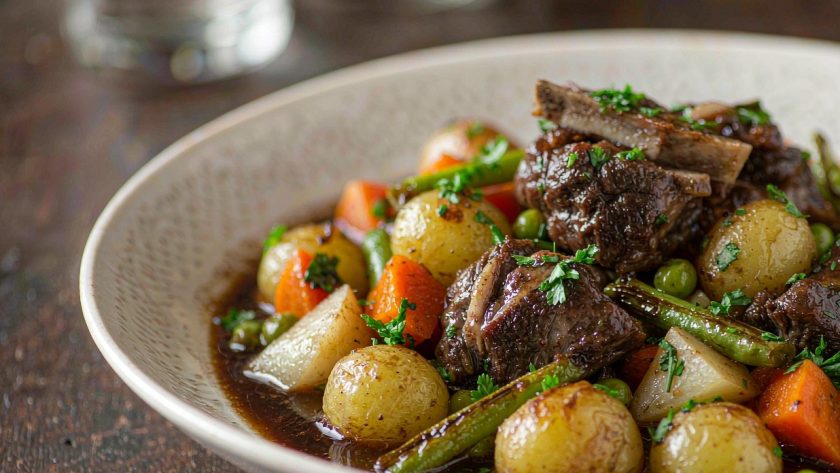
 Old Kitchen Stories
Quick answer: Cut 3 lb / 1.4 kg of boneless lamb shoulder into 2-inch chunks, season it, and brown it in batches. Soften sliced onion and garlic in the fat, stir in tomato paste and 2 tablespoons of flour, and cook the flour out for a minute. Deglaze with 3 cups / 720 ml of stock, return the lamb with a bouquet garni, and braise at 160°C / 325°F for 90 minutes. Add potatoes, carrots, and turnips for another 30 minutes, finish with peas and beans for the last 8, skim the fat, and rest 10 minutes.
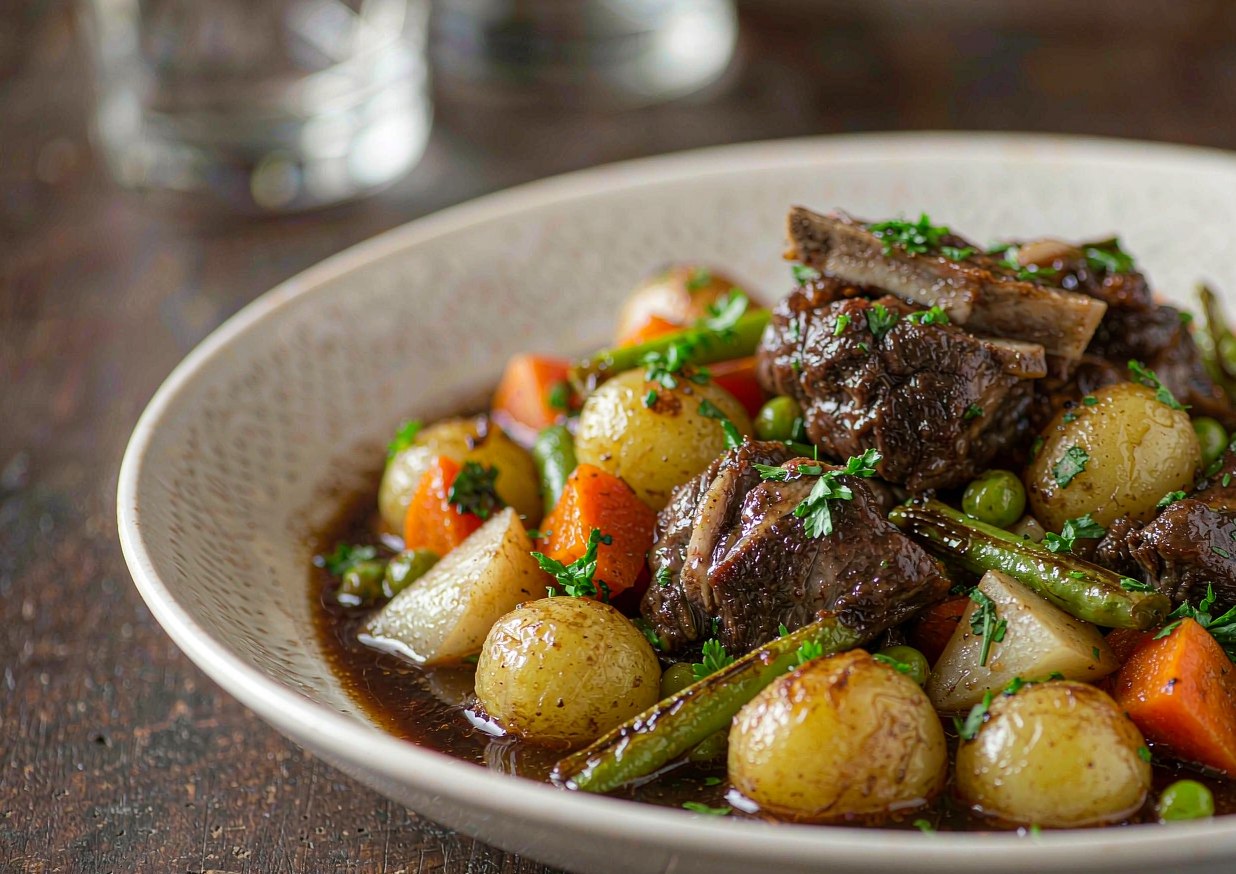
- Prep time: 30 minutes
- Cook time: 150 minutes
- Total time: 180 minutes
- Servings: 6
- Cuisine: French
- Course: Soups & Stews
- Difficulty: Medium
Why this recipe works
A navarin is named after the turnip, not the lamb: this is a braise where the vegetables are partners rather than garnish. Three decisions separate it from the anonymous brown stews published under the same name. The first is the cut. Shoulder and neck are laced with collagen, which does not begin to convert to gelatine until the meat has held well above about 80°C / 175°F for a long stretch. Leg is lean and tender to start with, which sounds like an advantage and is the opposite: it has nothing to convert, so it dries out over the same two hours. The second is the flour. A classic navarin is thickened by a singer — flour stirred into the fat after the aromatics and cooked a minute before the liquid goes in. Skip it and the sauce stays thin, with the fat floating in a separate layer. The third is staging. Potatoes need 30 minutes, peas need 8; put everything in together and you have picked one time for all of it.
Our method follows the technique guidance published by Epicurious — Recipe Archive & Technique Guides and is adapted for a standard home kitchen.
Ingredients
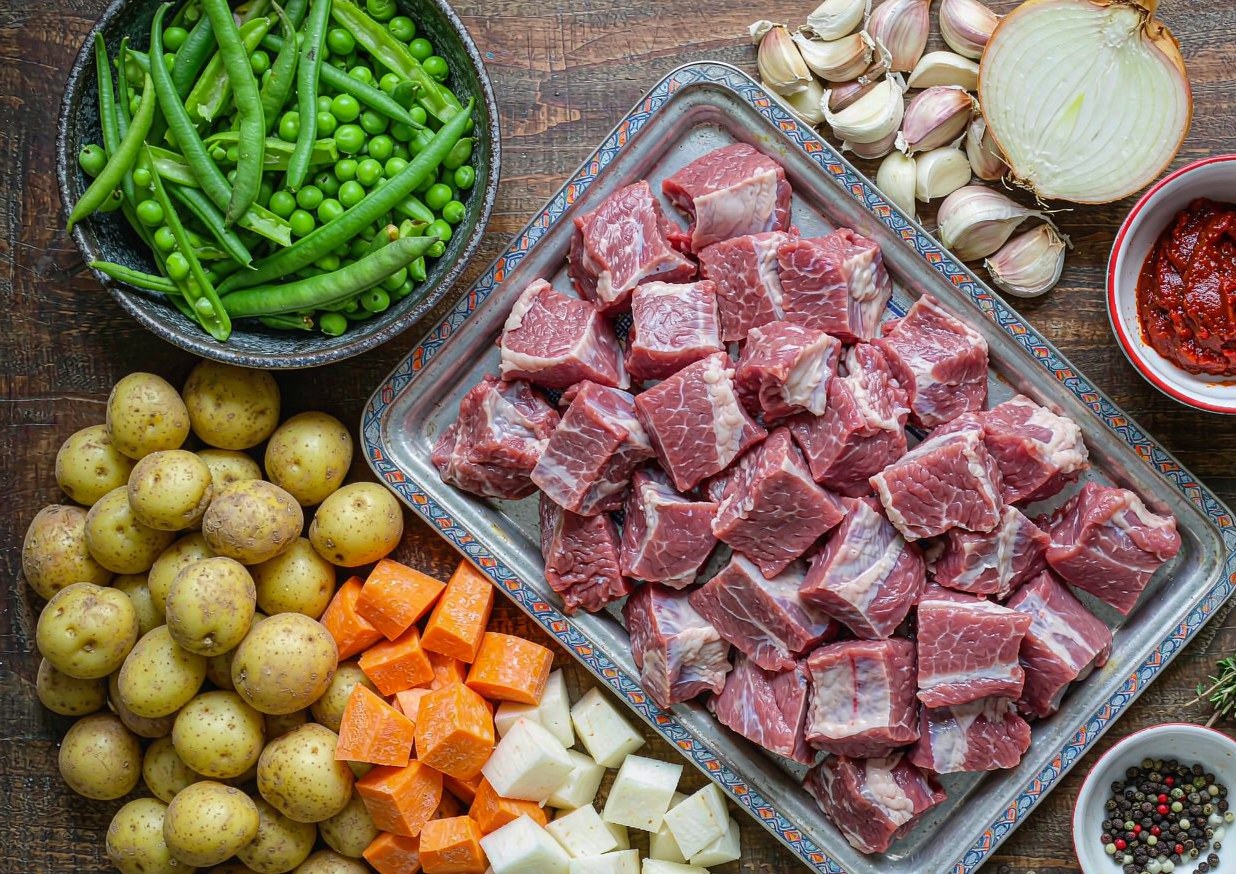
- 3 lb / 1.4 kg boneless lamb shoulder, cut into 2-inch / 5 cm chunks
- 2 tsp kosher salt, plus more to finish
- 1 tsp freshly ground black pepper
- 3 tbsp neutral oil, such as sunflower or grapeseed
- 2 large onions, 1 thinly sliced and 1 quartered
- 4 cloves garlic, smashed and peeled
- 2 tbsp tomato paste
- 2 tbsp plain flour
- 3 cups / 720 ml chicken or lamb stock, plus a little more if needed
- 1 bouquet garni: 2 bay leaves, 4 sprigs thyme, and 4 parsley stems tied with twine
- 1 lb / 450 g new or waxy potatoes, halved if large
- 4 medium carrots, cut into 1-inch / 2.5 cm chunks
- 4 small turnips, peeled and quartered
- 8 oz / 225 g green beans, trimmed
- 1 cup / 150 g shelled peas, fresh or frozen
- 1 tsp sugar
- 2 tbsp chopped flat-leaf parsley, to finish
Equipment
- A heavy 5 to 6 quart Dutch oven with a tight-fitting lid — cast iron holds an even low heat for a three-hour braise
- A wide, shallow serving bowl rather than a deep one; a stew with whole vegetables reads better spread out than stacked
- An instant-read digital thermometer, for checking the braise is genuinely at temperature before you leave it alone
- A fat separator, or a ladle and a jug, for taking the rendered lamb fat off the sauce
- A heavy chef’s knife. Lamb shoulder comes with silverskin that needs trimming
- Kitchen twine, for tying the bouquet garni so you can lift it out in one piece
How to make lamb navarin step by step
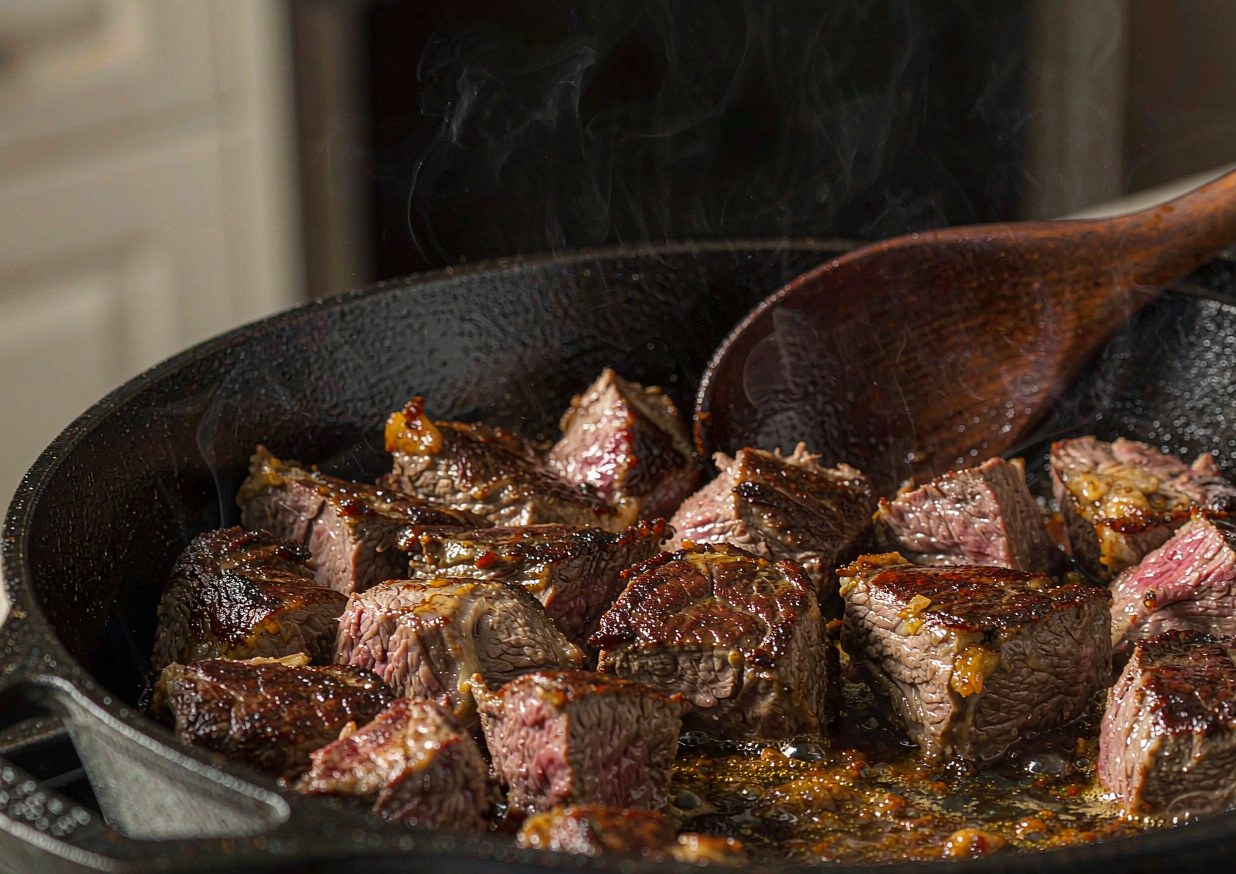
- Dry and season the lamb. Pat the chunks dry — surface water boils off before browning can start, and it costs you 10 minutes of grey meat otherwise. Toss with the salt and pepper and leave them while the pot heats.
- Brown in batches. Heat 1 tablespoon of the oil over medium-high until it shimmers. Add a single layer of lamb with space between the pieces and leave it for 4 minutes. Turn, brown the second side, move it to a bowl, and repeat.
- Soften the aromatics. Lower the heat to medium, add the sliced onion and garlic with a pinch of salt, and cook for 5 minutes, scraping the base as the onion loosens the browned bits.
- Add the tomato paste and flour. Stir in the tomato paste and cook for 90 seconds, until it darkens from red to brick. Sprinkle over the flour and stir constantly for 60 seconds. You are cooking the raw taste out of the flour; it should smell lightly toasted.
- Deglaze. Pour in a third of the stock and scrape the base clean. Add the rest with the quartered onion, bring it to a simmer, and stir so the flour disperses.
- Return the meat. Put the lamb and any collected juices back in with the bouquet garni. The liquid should come two-thirds of the way up the meat; add a splash more stock if it does not, but do not submerge it.
- Bring it to temperature. Let it reach a bare simmer and check with a thermometer — about 95°C / 200°F before the lid goes on. Starting cold adds twenty minutes.
- Braise covered. Lid on, into a 160°C / 325°F oven for 90 minutes. Do not lift the lid; every look inside costs 15 minutes of recovered heat.
- Add the root vegetables. Stir in the potatoes, carrots, turnips, and sugar and press them into the liquid so they are mostly submerged. Cover and return to the oven for 30 minutes.
- Finish with the greens. Stir in the beans and peas, cover, and give them 8 minutes. They need only to be tender and still bright.
- Skim and reduce. Fish out the bouquet garni. If the sauce is loose, simmer uncovered for 5 to 10 minutes. Skim the fat off; there will be more than you expect.
- Rest and serve. Sit off the heat for 10 minutes so the sauce settles. Taste, correct the salt, scatter with parsley, and serve in wide shallow bowls.
What we learned testing this lamb navarin recipe
We cooked this recipe three times before publishing it. These are the things that only showed up in the kitchen, not on paper.
- Our first attempt was a genuine failure, and it is the mistake most people make with this dish: we used boneless leg of lamb because that was what the shop had, and put every vegetable in at the start. Two and a half hours later the meat was dry and crumbly and the turnips had collapsed into a grey paste. Shoulder and staged vegetables fixed both.
- Leg against shoulder, same weight and same pot: the leg was edible at 90 minutes and worse at 150. The shoulder was still firm at 90 and turned succulent in the next half hour — collagen converting, which cannot be hurried.
- We made one batch without the flour to see whether it mattered. It did: the sauce stayed thin after a hard reduction, with a third of a cup of fat floating on top. The floured batch coated a spoon.
- Staged against all-at-once, timed: turnips in first were perfect at 30 minutes, peas in for 8 stayed bright. In the all-at-once batch the peas had been in 38 minutes and gone olive-drab and mealy.
- We checked our oven against a standalone thermometer and found it running 10°C / 18°F cool. Correcting for it took 25 minutes off the braise — a bigger difference than any ingredient change.
Expert tips
- Trim the hard silverskin off the shoulder, but leave the marbling inside the muscle alone. That is what keeps the chunks moist over three hours.
- Char the tomato paste properly. Ninety seconds in hot fat takes the raw, tinny edge off it and replaces it with something closer to a long-cooked tomato.
- Use waxy potatoes. A floury potato breaks down in a braise and clouds the sauce; a waxy one holds its shape.
- Make it a day ahead. The flavour deepens overnight and the fat sets into a layer you can lift off in one piece.
Variations and substitutions
- Navarin d’agneau classique: use only turnips and potatoes and skip the peas and beans — the winter version, and what most French home cooks make outside spring.
- With mushrooms: brown 8 oz / 225 g of quartered button mushrooms after the lamb and add them with the root vegetables and peeled pearl onions.
- Slow cooker: brown the lamb and build the sauce on the hob, then transfer everything except the greens to the slow cooker for 7 hours on low, adding them in the last 20 minutes.
- Beef version: substitute 3 lb / 1.4 kg of beef chuck and add 30 minutes to the first braise. No longer a navarin, but a very good stew.
Troubleshooting
| What went wrong | Why it happens | How to fix it |
|---|---|---|
| Lamb is still tough after the full time | The oven is running cool, or the pot went in cold. Collagen needs sustained heat well above about 80°C / 175°F to convert, and a 15°C shortfall keeps the braise below it indefinitely. | Check the oven with a standalone thermometer and always bring the pot to a simmer before it goes in. Then give it another 30 minutes and test again — tough usually means not yet done, not ruined. |
| Sauce is thin and there is fat floating on top | The flour step was skipped or rushed, so nothing binds the rendered fat into the braising liquid, and the sauce was never skimmed. | Skim it hard, then simmer uncovered for 10 minutes to tighten it. Next time, cook the flour for the full 60 seconds; that is what makes the difference. |
| The vegetables have collapsed into the sauce | Everything went in at once, so the turnips and peas got the same 38 minutes the potatoes needed. | Stage them: roots for 30 minutes, peas and beans for the last 8. If it has already happened, lift out what is intact and stir through peas cooked separately to recover the colour. |
| The whole thing tastes oddly flat | The tomato paste was not cooked out, there was no bouquet garni, or the lamb was crowded and steamed instead of browning. | Finish with a squeeze of lemon and more salt, which is usually all a flat braise needs. Next time char the paste for the full 90 seconds and brown the meat in three uncrowded batches. |
Storage, food safety and make-ahead
Cool the pot within 2 hours by dividing it into shallow containers — a full Dutch oven left closed holds heat long past safe. Refrigerate for up to 4 days, or freeze for up to 3 months; the potatoes turn grainy after freezing, so leave them out and add them during reheating if you plan to freeze it. Reheat gently with a splash of stock, below a rolling boil. This is one of the few stews that genuinely improves on day two.
For safe cooling, storage times, and reheating, follow the USDA FSIS food safety guidance.
Nutrition information
Per serving (about 400 g / 14 oz of stew, one of six): approximately 520 kcal, 38 g protein, 26 g fat, 32 g carbohydrates, 6 g fibre, 780 mg sodium. Values are estimates derived from USDA FoodData Central and will vary with the fat content of the shoulder, how much you skim, and portion size.
Figures are calculated from the USDA FoodData Central database and are estimates only. Values vary with ingredient brands and portion size.
Frequently asked questions
Can I use leg of lamb instead of shoulder?
You can, but it is the wrong cut for a braise. Leg is lean and already tender, so it has almost no collagen to convert, and over two and a half hours it goes dry and crumbly instead of succulent. If leg is all you have, cut the braise to about 45 minutes and treat it as a fast stew.
Do I really need the turnips?
They are the defining vegetable: navarin takes its name from navet, the French for turnip, and their slight bitterness stops the stew tasting sweet and flat. Parsnip is the closest substitute in texture, though sweeter; celery root is milder.
Why is my sauce greasy?
It has not been skimmed, or it was not thickened. Shoulder renders around half a cup of fat over a three-hour braise, and it floats. Ladle it off, or pour the sauce into a jug and let it separate for five minutes. The flour in step 4 binds the rest into the sauce.
My lamb is still tough after two and a half hours. What went wrong?
Almost always one of two things: the oven runs cool, or the meat went in cold. Check with a standalone oven thermometer — a 15°C shortfall is common and enough to keep the braise below the temperature where collagen breaks down. Give it another 30 minutes and check again; there is no point adding liquid.
Sources and further reading
- USDA FoodData Central
- Epicurious — Recipe Archive & Technique Guides
- USDA FSIS — Safe Minimum Internal Temperatures
- BBC Food — Recipes & Techniques
Nutrition figures on this page are calculated from the USDA FoodData Central database and are estimates only. They are not a substitute for advice from a qualified dietitian or physician.
Last updated: September 7, 2026. Recipe tested three times in a standard home kitchen by the named author above. Corrections are welcome and are noted on the page when published.