 Old Kitchen Stories
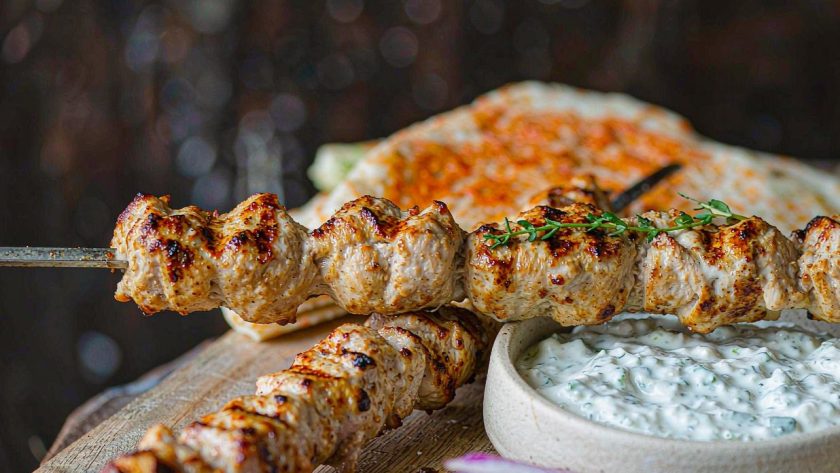
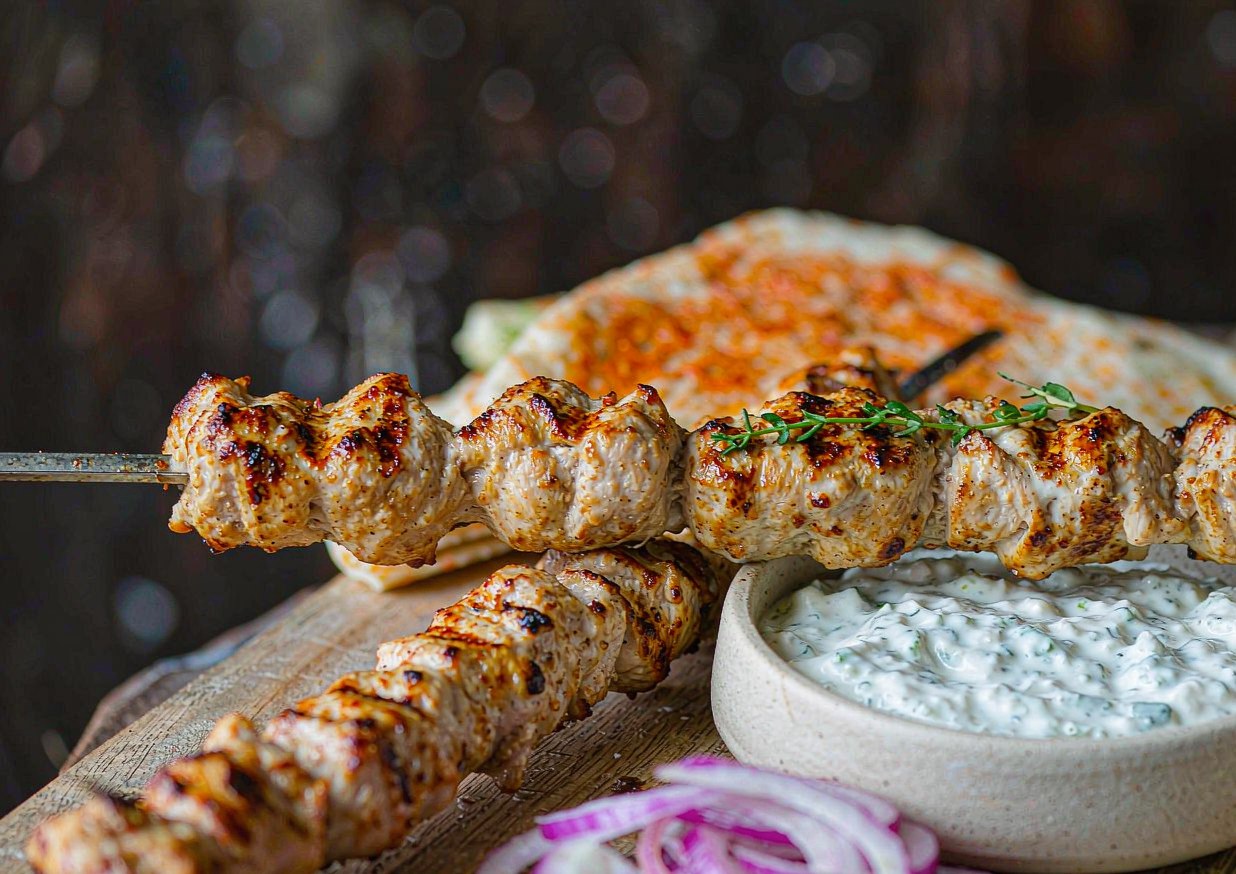
Quick answer: Cut 2 lb of boneless chicken thighs into 1.5-inch cubes and marinate them for at least 2 hours in olive oil, lemon juice, garlic, dried oregano, and salt. Grate a cucumber, squeeze it dry, and fold it into strained Greek yoghurt with garlic and dill for the tzatziki. Thread the chicken onto skewers and grill over a two-zone fire for 10 to 12 minutes, turning often, until the thickest piece reaches 74°C / 165°F. Rest 5 minutes, then serve with the tzatziki and warmed flatbread.
- Prep time: 20 minutes
- Cook time: 12 minutes
- Total time: 32 minutes
- Servings: 4
- Cuisine: Greek
- Course: Main Dishes
- Difficulty: Easy
Why this recipe works
Three things decide whether souvlaki tastes like the skewers you get in Greece or like plain grilled chicken. First, thighs, not breast: the extra fat keeps the meat juicy over a hard fire, and breast dries out in the time it takes to get char on the outside. Second, the marinade carries acid but no sugar — lemon juice seasons and slightly firms the surface, while any sugar burns before the centre is cooked. Third, and the one most home cooks skip, is a two-zone fire. Char happens over the hot side in a couple of minutes; the rest of the cooking happens on the cool side with the lid down. Searing the whole time gives you a blackened outside and a raw middle. Our temperatures follow the USDA safe-minimum guidance for poultry, and the marinating and handling steps follow USDA FSIS advice on raw chicken.
Our method follows the technique guidance published by USDA FSIS — Safe Minimum Internal Temperatures and is adapted for a standard home kitchen.
Ingredients
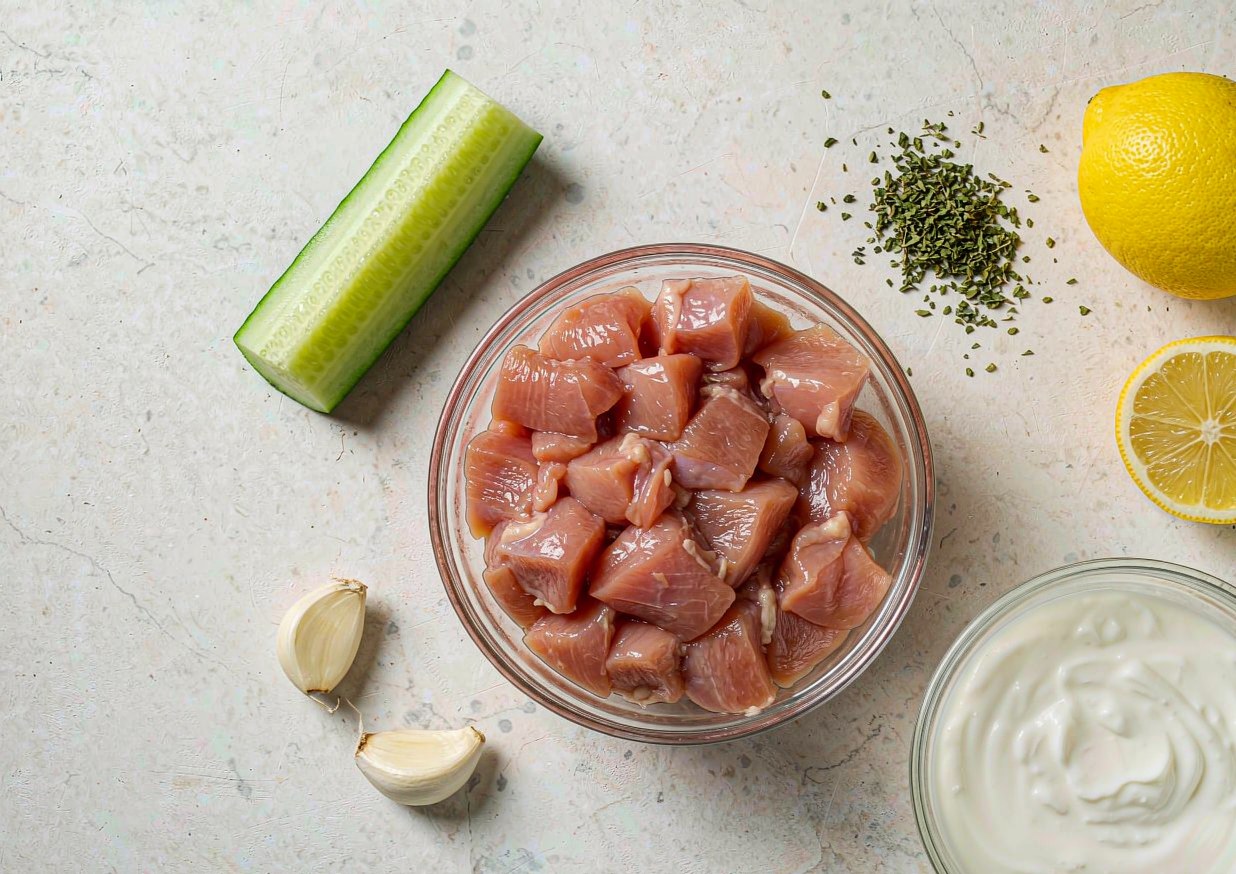
- 2 lb / 900 g boneless, skinless chicken thighs
- 1/3 cup / 80 ml extra-virgin olive oil
- 3 tbsp fresh lemon juice (from 1 to 2 lemons)
- 4 cloves garlic, 3 minced for the marinade and 1 for the tzatziki
- 2 tsp dried Greek oregano
- 2 tsp kosher salt
- 1 tsp freshly ground black pepper
- 1 cup / 240 g full-fat Greek yoghurt, strained
- 1/2 English cucumber (about 150 g), coarsely grated
- 1 tbsp chopped fresh dill
- 1 tbsp red wine vinegar
- 1 small red onion, thinly sliced
- 4 flatbreads or pitas
- Lemon wedges, for serving
Equipment
- A charcoal grill or a gas grill with at least two burners — you need a hot zone and a cool zone, which a single-burner grill cannot give you
- An instant-read digital thermometer, which is the only reliable way to confirm poultry is cooked without cutting into it
- Flat metal skewers, about 10 inches / 25 cm. Flat ones stop the meat spinning when you turn it, which round skewers do not
- A box grater for the cucumber
- A clean thin kitchen towel or cheesecloth for wringing out the grated cucumber
- Tongs and a grill brush for cleaning and oiling the grates
How to make chicken souvlaki step by step
- Make the tzatziki first. Grate the cucumber onto a clean towel, gather the corners, and wring out as much liquid as you can — this is the single step that separates thick tzatziki from watery tzatziki. In a bowl, stir together the strained yoghurt, squeezed cucumber, 1 minced garlic clove, dill, vinegar, and 1/4 tsp salt. Refrigerate, covered, for at least 30 minutes.
- Cut the chicken. Trim the thighs of any large fat pockets, then cut the meat into roughly 1.5-inch / 4 cm cubes. Uniform size matters more than neatness: pieces of different thicknesses finish at different times, and you cannot cook to a safe temperature without overcooking the small ones.
- Mix the marinade. Whisk the olive oil, lemon juice, 3 minced garlic cloves, oregano, salt, and pepper in a large bowl. Add the chicken and turn it until every piece is coated.
- Marinate in the fridge. Cover and refrigerate for at least 2 hours and up to 8. Do not marinate on the counter. If you want to baste later, set aside a few tablespoons of the marinade before the raw chicken goes in.
- Soak the skewers. If you are using wooden or bamboo skewers, submerge them in water for at least 30 minutes so they do not catch fire. Metal skewers need no soaking and conduct heat into the centre, which shaves a minute or two off the cook.
- Build a two-zone fire. For charcoal, bank the lit coals over one half of the grill and leave the other half empty. For gas, set one burner to high and the other to low, or leave it off. Scrub the grates clean and oil them with a towel held in tongs. You want the hot side to read about 230°C / 450°F.
- Thread the skewers. Put 5 to 6 pieces on each skewer, pushing them together but not compressing them — leave a sliver of space between pieces so heat circulates. Leave the last inch of each skewer empty so you have something to grab.
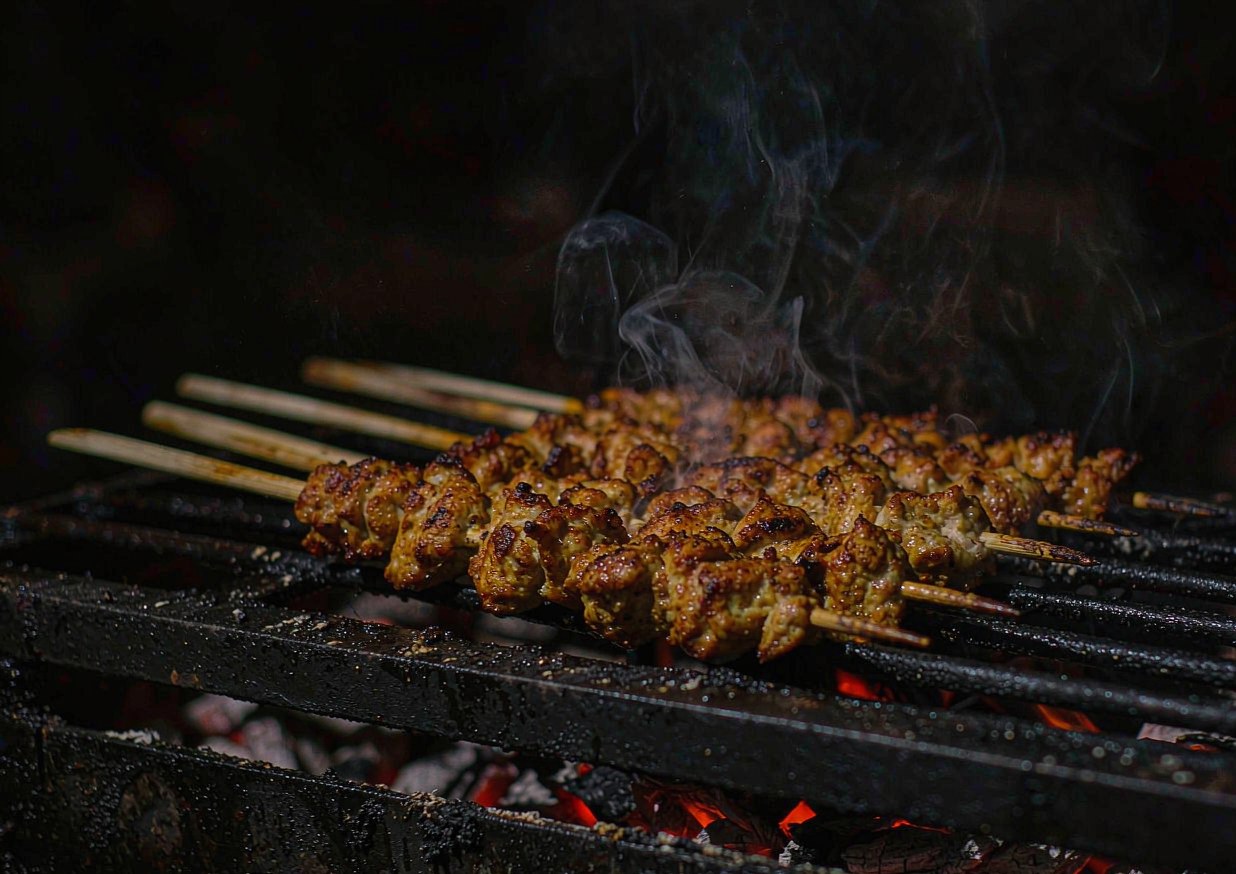
- Sear, then move. Lay the skewers over the hot side. Sear for 2 minutes per side, lid up, until you have colour. Move them to the cool side, close the lid, and cook for 6 to 8 minutes more, turning once.
- Check the temperature, not the clock. Insert an instant-read thermometer into the thickest piece of the middle skewer, avoiding metal. Pull the skewers at 74°C / 165°F. If some pieces are done before others, slide them off onto a plate and let the rest keep cooking.
- Rest. Move the skewers to a clean plate — never back onto the tray the raw chicken came from — and rest them for 5 minutes, loosely tented with foil.
- Warm the bread and serve. Toast the flatbreads directly on the cooler grate for 30 seconds a side. Serve the skewers with the tzatziki, sliced red onion, and lemon wedges.
What we learned testing this chicken souvlaki recipe
We cooked this recipe three times before publishing it. These are the things that only showed up in the kitchen, not on paper.
- We ran thighs against breast side by side on the same grill. Breast hit 74°C / 165°F two minutes earlier and was measurably drier — you could see the grain of the meat when you cut it. Thighs stayed juicy even when we left them on a minute too long, which is the margin a hot fire takes away from you. Thighs won.
- Our first batch was a genuine failure: we marinated overnight, about 14 hours, assuming more time meant more flavour. The lemon had firmed and tightened the outer few millimetres of every cube into a faintly mealy, chalky layer, and the texture was worse than the 2-hour batch. We now cap marinating at 8 hours.
- We tested threading the pieces pressed tightly together versus leaving a small gap. The tight skewers had pale, steamed patches where the cubes touched and needed three extra minutes. Leaving a sliver of space between pieces cooked more evenly and gave better colour.
- The first tzatziki was soup. We had grated the cucumber and stirred it straight in, and within an hour a pool of liquid had separated out on top. Wringing the gratings out in a towel removed roughly a third of a cup of water, and the second version was still thick the next day.
- Broiler testing was worth doing for readers without a grill. Four inches from the element gave real char in about 5 minutes a side, but the element cycled and the top of the meat dried out, so we moved the tray to a 220°C / 425°F oven to finish. That two-stage approach is what is written in the variations.
Expert tips
- Dry the chicken with paper towels before it goes into the marinade. Wet meat dilutes the marinade and steams instead of browning.
- Salt goes in the marinade, not on after. Two hours in salted acid seasons the meat all the way through, which is why the pieces taste seasoned rather than just coated.
- If the tzatziki looks loose after an hour, stir in another tablespoon of strained yoghurt rather than adding more cucumber.
- Scrape the marinade off the surface before the skewers hit the grate. Herbs left on the outside burn bitter over direct heat.
Variations and substitutions
- Pork souvlaki: swap the thighs for pork shoulder cut into the same size cubes and extend the marinade to 4 hours. Cook to 63°C / 145°F with a 3-minute rest.
- Broiler version: set the oven rack 4 inches / 10 cm from the element, broil on high for 5 minutes a side, then finish at 220°C / 425°F for 6 minutes. You lose the smoke but keep the char.
- Souvlaki in a pita: slide the meat off the skewer into a warmed flatbread, add tzatziki, tomato, and onion, and roll it up. This is how it is sold on the street in Greece, and it is the better lunch.
- Lemon-free Marinade: replace the lemon juice with 2 tbsp red wine vinegar plus 1 tsp honey if you want a little more browning; watch it closely, because honey burns fast.
Troubleshooting
| What went wrong | Why it happens | How to fix it |
|---|---|---|
| Outside is charred, inside is raw | The skewers sat over direct high heat for the whole cook. | Sear 2 minutes a side over the hot zone, then move to the cool side, close the lid, and finish there. Verify with a thermometer rather than by colour. |
| Chicken is dry and stringy | Breast meat, or the skewers were pulled well past 74°C / 165°F. | Use thighs next time. If you have breast, pull it 1°C early and rest it 5 minutes; slicing it thinly against the grain also helps. |
| Tzatziki is watery | The grated cucumber went in without being squeezed dry. | Wring the gratings out in a clean towel until they stop dripping. To rescue a thin batch, stir in another tablespoon of strained yoghurt instead of more cucumber. |
| Meat sticks to the grate | The grates were not clean, not oiled, or the fire was not hot enough when the skewers went down. | Preheat until the hot side reads about 230°C / 450°F, scrub the grates, then oil them with a towel held in tongs. If a skewer still sticks, give it another minute — it releases once the crust forms. |
Storage, food safety and make-ahead
Cooked souvlaki keeps for 3 days refrigerated in an airtight container, and the tzatziki for 3 days on its own — store them separately or the bread and meat go soggy. Reheat the chicken in a 180°C / 350°F oven for 8 minutes rather than the microwave, which turns it rubbery. Raw marinated chicken can be frozen for up to 3 months; thaw it in the fridge, never at room temperature.
For safe cooling, storage times, and reheating, follow the USDA FSIS food safety guidance.
Nutrition information
Per serving (2 skewers with tzatziki and one flatbread): approximately 520 kcal, 41 g protein, 26 g fat, 30 g carbohydrates, 3 g fibre, 890 mg sodium. Values are estimates derived from USDA FoodData Central and will vary with the cut of chicken, the fat content of the yoghurt, and portion size.
Figures are calculated from the USDA FoodData Central database and are estimates only. Values vary with ingredient brands and portion size.
Frequently asked questions
Can I use chicken breast instead of thighs?
You can, but it dries out. Breast needs to come off the grill the moment it hits 74°C / 165°F, which leaves no margin for error over a hot fire. If you do use breast, cut the pieces slightly larger, pull them 1°C early, and rest them 5 minutes.
How long should the chicken marinate?
Two hours is the floor and 8 hours is the ceiling. Beyond about 8 hours the acid in the lemon juice starts to firm and tighten the surface of the meat — the same reaction that turns ceviche opaque — and the texture turns mealy rather than tender.
Why is my tzatziki watery?
The cucumber was not squeezed dry enough. Grating produces a lot of liquid, and even a few tablespoons will loosen a cup of yoghurt noticeably. Wring it out in a towel until it stops dripping.
Do I have to soak wooden skewers?
Yes, for at least 30 minutes. A dry wooden skewer over a 230°C / 450°F fire will char through and drop your chicken into the coals. Metal skewers are worth buying if you grill often.
Sources and further reading
- USDA FoodData Central
- USDA FSIS — Safe Minimum Internal Temperatures
- Serious Eats — The Food Lab
- Epicurious — Recipe Archive & Technique Guides
Nutrition figures on this page are calculated from the USDA FoodData Central database and are estimates only. They are not a substitute for advice from a qualified dietitian or physician.
Last updated: September 7, 2026. Recipe tested three times in a standard home kitchen by the named author above. Corrections are welcome and are noted on the page when published.