
 Old Kitchen Stories
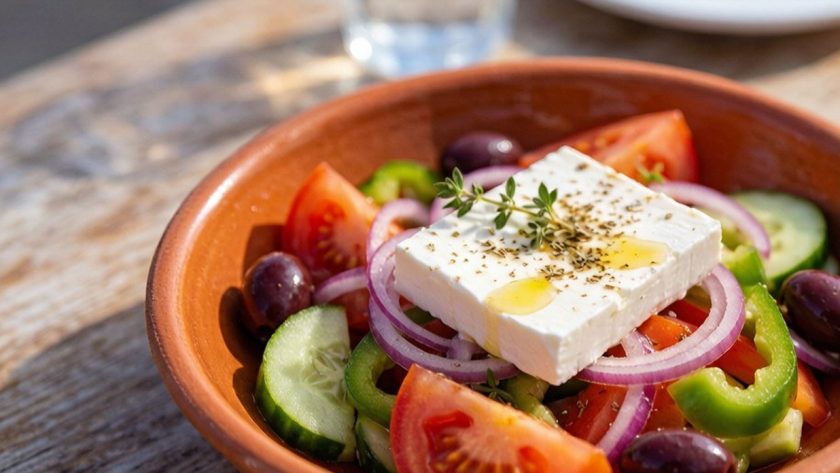
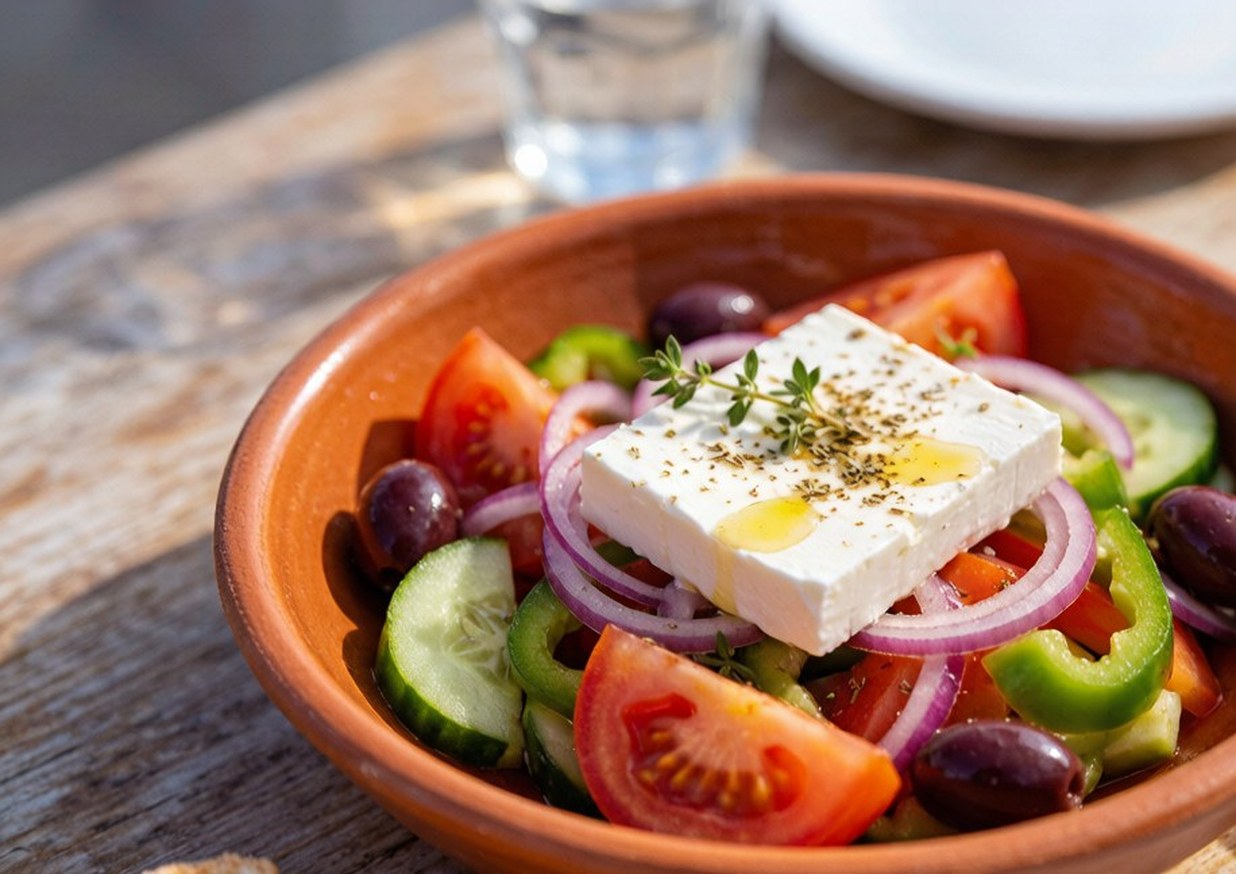
Quick answer: Cut ripe tomatoes into thick wedges and cucumber into half-moons. Add thinly sliced red onion, green pepper rings, and Kalamata olives. Dress with 1/4 cup of good olive oil and a splash of red wine vinegar, season with salt and dried oregano, and lay a single thick slab of feta on top. Do not toss.
- Prep time: 15 minutes
- Cook time: 0 minutes
- Total time: 15 minutes
- Servings: 4
- Cuisine: Greek
- Course: Sides & Salads
- Difficulty: Easy
Why this recipe works
The village salad is defined as much by what it leaves out as by what it puts in. There is no lettuce, no vinegar-heavy dressing, and nothing is chopped small. The vegetables are cut large so they keep their structure and release their juices slowly, and those juices mix with the olive oil to make the dressing in the bowl. Three details matter. Feta goes on top as one slab, never crumbled, so it does not dissolve into the salt. Oregano is crumbled between your fingers at the table, which wakes up the oils in a way that shaking from a jar does not. And the salad is never tossed before serving; each person takes what they want. Salting the tomatoes ten minutes ahead is the one addition we make, because it draws out the juice that becomes the dressing.
Our method follows the technique guidance published by BBC Food — Recipes & Techniques and is adapted for a standard home kitchen.
Ingredients
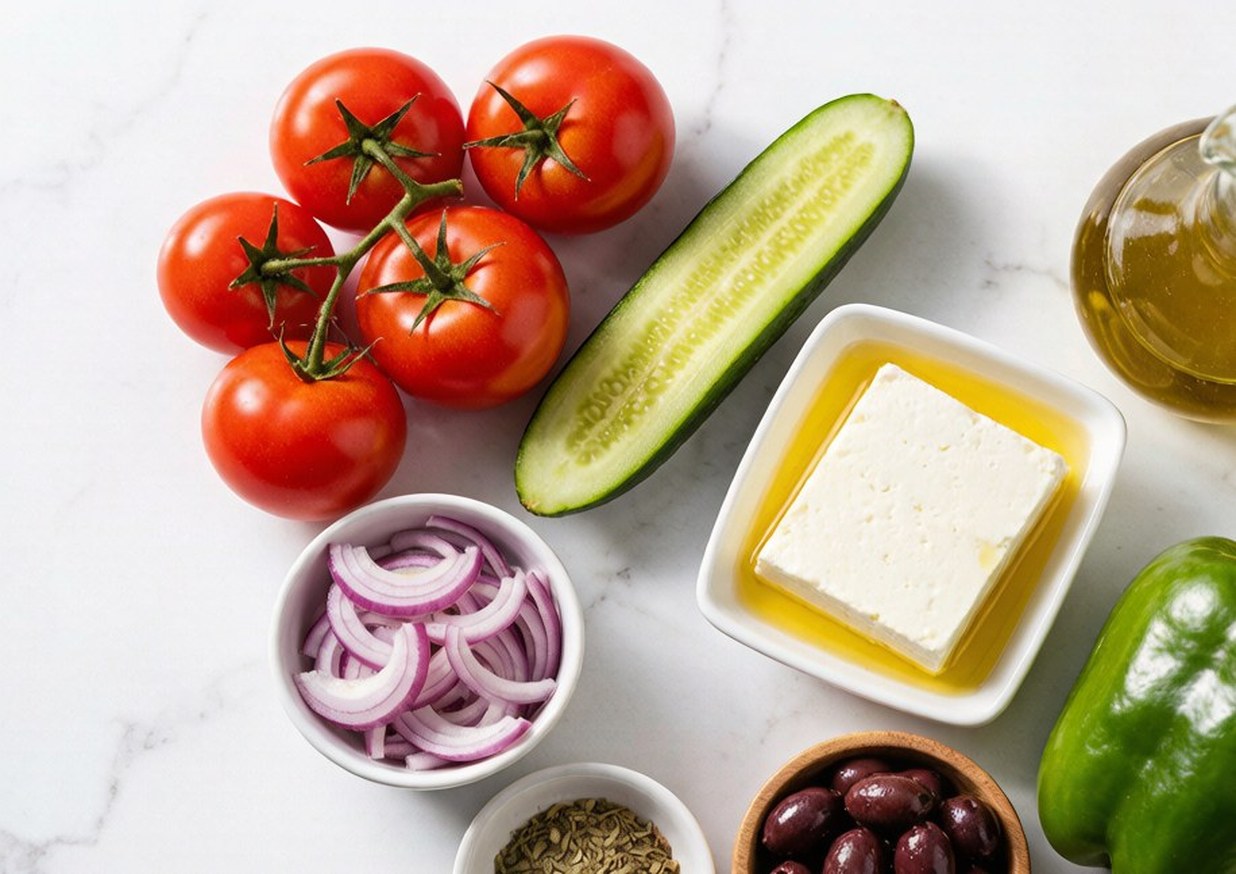
- 1 1/2 lb / 700 g ripe tomatoes, cut into thick wedges
- 1/2 English cucumber, cut into 1 cm half-moons
- 1/2 small red onion, very thinly sliced
- 1/2 green bell pepper, cut into thin rings
- 12 Kalamata olives, lightly cracked
- 7 oz / 200 g feta, in one slab about 1.5 cm thick
- 1/4 cup / 60 ml extra-virgin olive oil, plus more for serving
- 1 tbsp red wine vinegar (optional; traditional versions often omit it)
- 1 tsp dried Greek oregano
- 1/2 tsp flaky sea salt
- 1 tbsp capers, rinsed (optional)
- Freshly ground black pepper, to taste
Equipment
- A wide, shallow bowl — the salad should sit in a single layer, not pile up
- A sharp serrated knife for the tomatoes, which keeps the wedges clean instead of crushed
- A mandoline or a very sharp knife for the onion
- A small bowl for salting the tomatoes
- Bread, for the plate. There is no other way to finish the oil at the bottom
How to make greek salad step by step
- Salt the tomatoes. Put the tomato wedges in a bowl with a generous pinch of salt and let them sit for 10 minutes. They will release a surprising amount of juice, which becomes the base of the dressing.
- Soften the onion. While the tomatoes sit, slice the red onion as thinly as you can and rinse it under cold water for 30 seconds. This takes away the harsh bite without removing the crunch.
- Build the base. Arrange the tomatoes with their juice, cucumber, onion, green pepper, and olives in the wide bowl. Scatter the capers over if using.
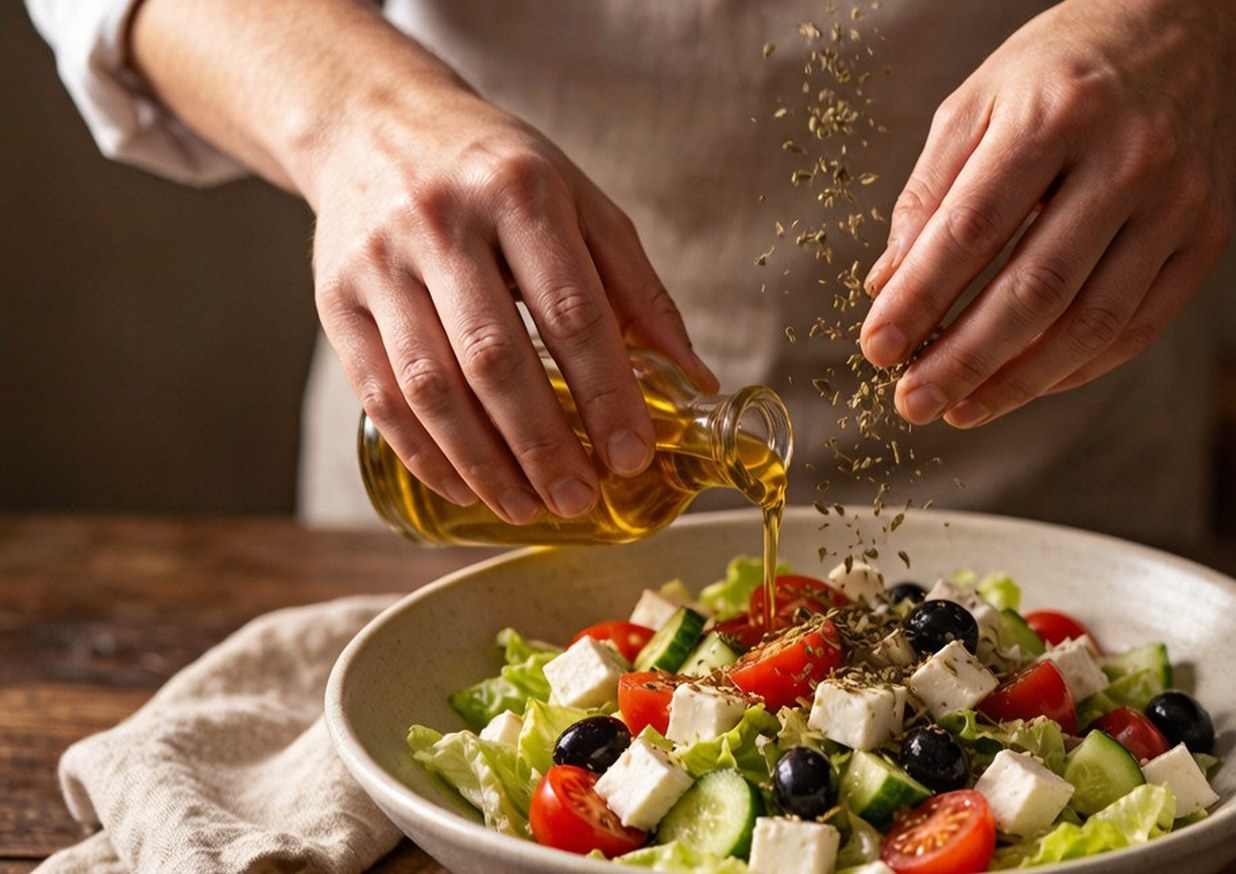
- Dress. Pour the olive oil over the vegetables. Add the vinegar only if your tomatoes are very sweet and need the edge. Season with the flaky salt and a grinding of pepper.
- Add the feta. Lay the slab of feta on top of the salad, not buried in it. Drizzle it with a little more olive oil.
- Oregano last. Crumble the dried oregano between your fingers directly over the feta so the oils release as it falls.
- Serve without tossing. Bring the bowl to the table as it is. Everyone takes a portion and mixes it on their own plate.
What we learned testing this greek salad recipe
We cooked this recipe three times before publishing it. These are the things that only showed up in the kitchen, not on paper.
- We made one batch with refrigerated tomatoes and one with tomatoes kept on the counter. The cold batch was noticeably flatter. Tomatoes lose aroma compounds in the fridge, and this salad has almost nothing else to carry it.
- Salting the tomatoes for ten minutes before assembling produced enough juice to make a dressing in the bowl. We also tried an hour, and the result was a watery puddle with collapsed tomato wedges, so ten minutes is the limit.
- Crumbled feta was a mistake: it dispersed through the salt and you lost the clean, sharp bite of a single mouthful of cheese. One slab on top is both traditional and better eating.
- We tested adding lettuce, the way it is often served abroad. It wilted within minutes and watered down everything. It confirmed why the genuine article has no lettuce in it.
- Rinsing the sliced red onion under cold water for 30 seconds removed the harsh sulphur bite without softening it. Skipping that step left an onion flavour that outlasted everything else on the plate.
Expert tips
- Use the ripest tomatoes you can find and never refrigerate them. Cold storage destroys the aroma compounds and flattens the whole salad.
- Buy feta in brine, in one piece, and keep it in its brine. Pre-crumbled feta is drier and saltier and will not hold a slab.
- If your tomatoes are out of season, use cherry tomatoes halved. They hold more flavour than a bland supermarket beefsteak.
- The leftover dressing at the bottom of the bowl is the point. Serve bread alongside and do not rinse the bowl before everyone has had some.
Variations and substitutions
- With Dakos: add a layer of soaked barley rusk at the bottom of the bowl to catch the juices, as they do in Crete.
- Spicy: add a few slices of pickled green pepper for heat.
- With purslane or caper leaves: both are traditional additions and give a peppery, slightly sour note.
- Grilled version: grill the pepper and thick tomato slices for 3 minutes before assembling for a smoky summer variant.
Troubleshooting
| What went wrong | Why it happens | How to fix it |
|---|---|---|
| Salad is swimming in liquid | The tomatoes were salted for too long, or too much vinegar went in. | Salt for ten minutes only, drain off any excess before assembling, and treat the vinegar as optional. |
| Feta has dissolved into the salad | It was crumbled and tossed through, and the salt drew out its moisture. | Use one slab on top, and crumble only at the table if you must. |
| Tomatoes taste bland | They were refrigerated, or they are out of season. | Store tomatoes at room temperature and switch to ripe cherry tomatoes in winter. |
| Onion overpowers everything | It was sliced too thick and not rinsed. | Slice paper thin with a mandoline and rinse for 30 seconds under cold water. |
Storage, food safety and make-ahead
This salad is best eaten within 30 minutes of assembly. If you need to prepare ahead, cut the vegetables and keep them in separate containers in the fridge for up to a day, then assemble and dress just before serving. Leftovers keep for a day but the cucumber softens; drain off the liquid before eating.
For safe cooling, storage times, and reheating, follow the USDA FSIS food safety guidance.
Nutrition information
Per serving: approximately 320 kcal, 9 g protein, 26 g fat, 12 g carbohydrates, 3 g fibre, 890 mg sodium. Values are estimates derived from USDA FoodData Central and will vary with brands and portion size.
Figures are calculated from the USDA FoodData Central database and are estimates only. Values vary with ingredient brands and portion size.
Frequently asked questions
Should Greek salad have lettuce?
No. A true horiatiki has no lettuce at all. Lettuce was added in tourist restaurants to bulk the plate out; it wilts in the salt and dilutes the dressing.
Do you use vinegar?
Traditionally the acid comes from the tomatoes and the olives, and many Greek cooks use no vinegar at all. A small splash of red wine vinegar is a matter of taste, not a rule.
Why is my salad watery?
The tomatoes were salted too far in advance, or the cucumber was peeled and seeded too aggressively. Salt for ten minutes, not an hour, and leave some of the cucumber skin on.
Can I use a different cheese?
Feta is the definition of the dish. If you cannot get it, a firm sheep’s-milk cheese in brine is the closest substitute; cow’s-milk feta is milder and softer.
Sources and further reading
- USDA FoodData Central
- BBC Food — Recipes & Techniques
- Serious Eats — The Food Lab
- Epicurious — Recipe Archive & Technique Guides
Nutrition figures on this page are calculated from the USDA FoodData Central database and are estimates only. They are not a substitute for advice from a qualified dietitian or physician.
Last updated: September 7, 2026. Recipe tested three times in a standard home kitchen by the named author above. Corrections are welcome and are noted on the page when published.