 Old Kitchen Stories
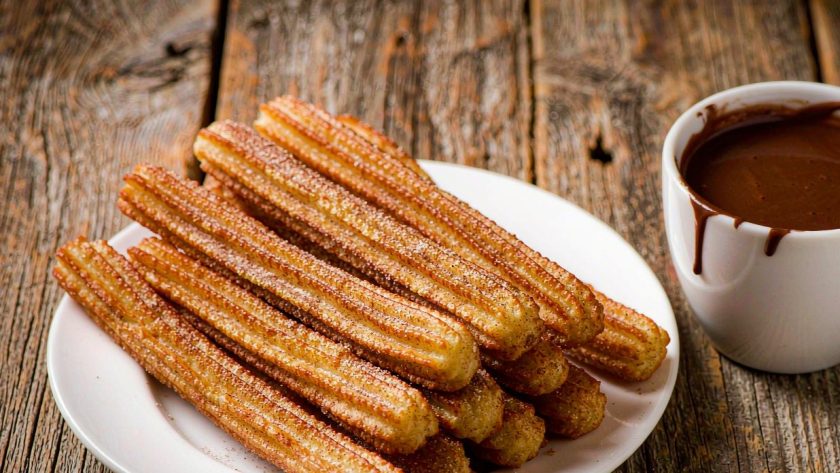
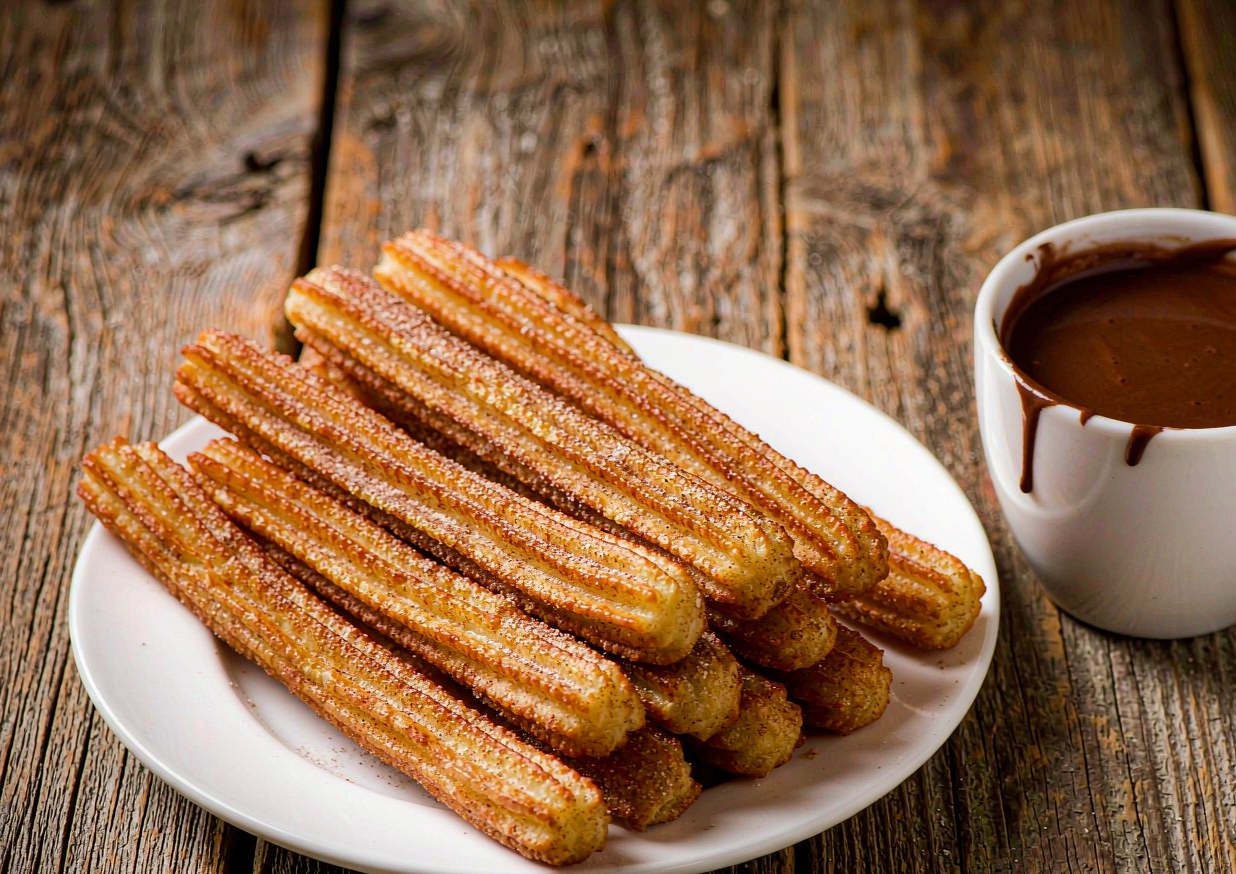
Quick answer: Churros are a flour-and-water dough cooked in the pan, beaten with egg, piped into hot oil and fried until the ridges are deep gold, then rolled in cinnamon sugar and dipped into thick drinking chocolate. Bring 250 ml of water to a rolling boil with 60 g of butter, 1 tbsp of sugar and a pinch of salt, take it off the heat, tip in 150 g of flour all at once and beat hard until it forms a ball that films the pan. Cool 5 minutes, then beat in 2 eggs one at a time until glossy. Heat 1 litre of neutral oil to 180°C / 355°F, pipe 12 cm lengths straight into it, and fry 2 to 3 minutes a side. Drain on a rack, roll in cinnamon sugar, and serve with chocolate made from 300 ml of milk and 200 g of dark chocolate thickened with 1 tsp of cornflour.
- Prep time: 25 minutes
- Cook time: 25 minutes
- Total time: 50 minutes
- Servings: 4
- Cuisine: Spanish
- Course: Desserts
- Difficulty: Medium
Why this recipe works
Churros dough is a panade: flour cooked with water and fat before any egg goes in. Boiling water gelatinises the starch, which is what lets the dough hold a piped ridge instead of slumping smooth in the oil, and it means the flour is cooked before it is fried. The eggs go in off the heat, one at a time, once the dough has cooled below the point where it would scramble them; they thin it to pipeable, and their water turns to steam in the oil, which hollows out the centre. Oil temperature does the rest. At 180°C / 355°F the surface sets fast enough to hold the ridges while the inside steams; cooler and the dough drinks oil, hotter and the ridges scorch before the middle is done. A star nozzle gives surface area, and surface is where the crunch and the sugar live. Cornflour in the chocolate sets the cup thick enough for a churro to stand up in.
Our method follows the technique guidance published by Serious Eats — The Food Lab and is adapted for a standard home kitchen.
Ingredients
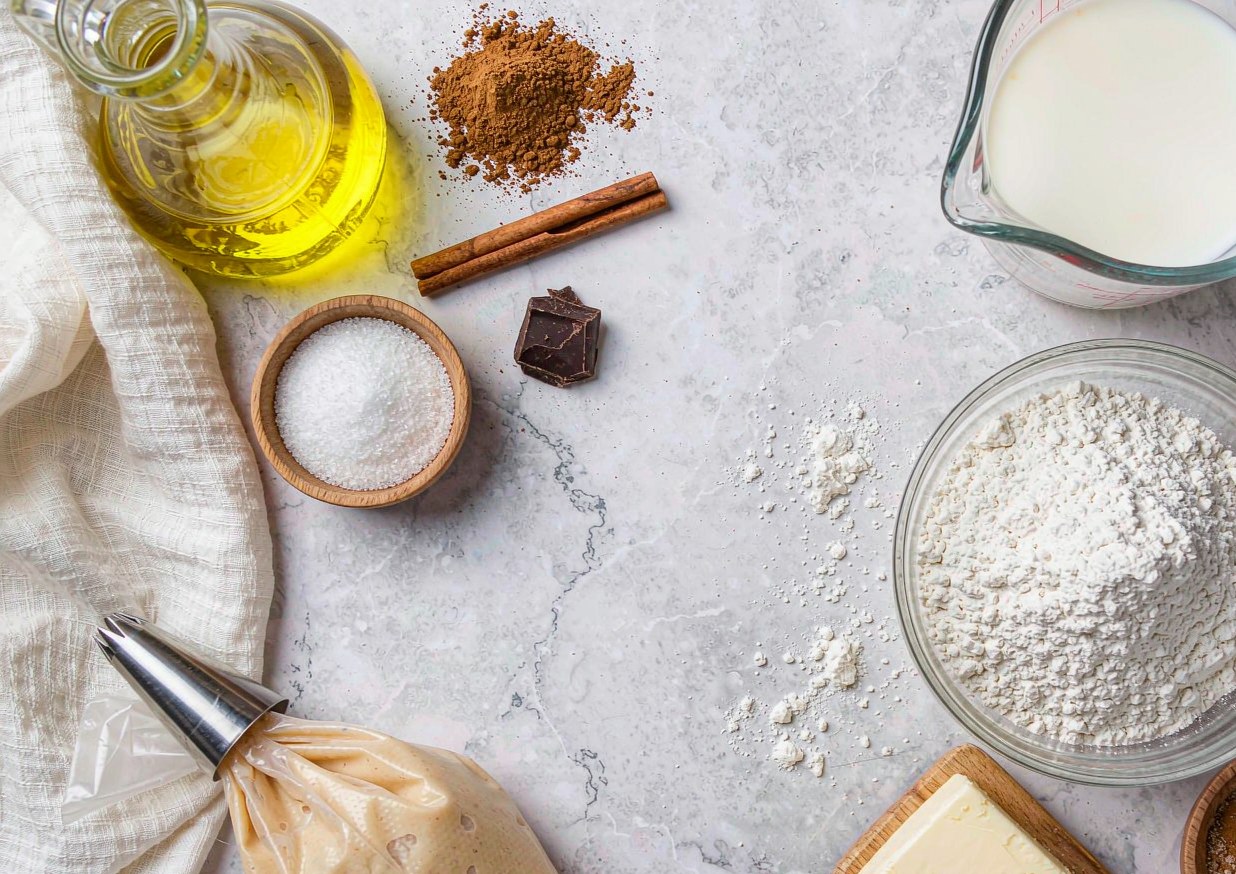
- 150 g / 1 1/4 cups plain (all-purpose) flour
- 250 ml / 1 cup water
- 60 g / 4 tbsp butter, cut into pieces
- 1 tbsp caster sugar and 1/2 tsp fine sea salt, for the dough
- 2 large eggs, at room temperature
- 1 litre / 4 cups neutral oil for frying — sunflower or groundnut
- For the cinnamon sugar: 100 g / 1/2 cup caster sugar and 2 tsp ground cinnamon
- For the chocolate: 300 ml / 1 1/4 cups whole milk
- 200 g / 7 oz dark chocolate, 60 to 70 percent, chopped
- 1 tbsp caster sugar and a pinch of salt, for the chocolate
- 1 tsp cornflour (cornstarch) slaked in 1 tbsp cold milk
- 1/4 tsp ground cinnamon, for the chocolate, optional
Equipment
- A deep, heavy saucepan or Dutch oven, deep enough to hold 1 litre of oil with 8 cm of clearance above it
- A digital or candy thermometer reading to 200°C / 400°F — oil temperature is the whole game here
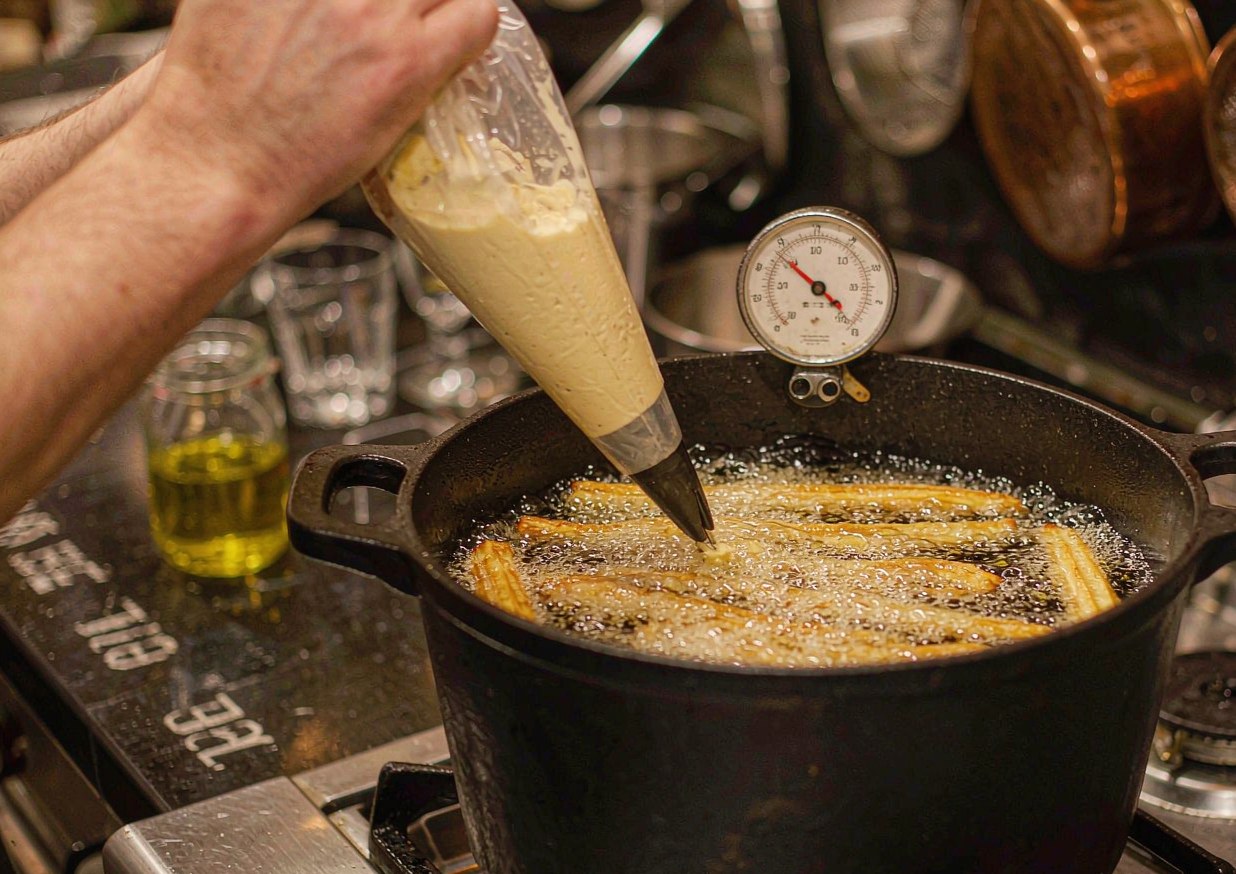
- A piping bag with a large open star nozzle, about 1.5 cm, which is what makes the ridges
- A spider strainer or long tongs, and a wire rack set over a tray for draining
- A digital kitchen scale and a measuring jug, since the dough is a ratio by weight
- A sturdy wooden spoon for the panade, and kitchen scissors to cut the lengths
How to make churros step by step
- Make the chocolate first. Warm the milk with the sugar and salt until it just steams, take it off the heat, add the chocolate, and leave it 2 minutes before stirring to a smooth ganache. Stir in the slaked cornflour, return it to low heat, and cook 2 to 3 minutes until it coats the back of a spoon. Keep it warm.
- Boil the panade. Put the water, butter, sugar and salt in a saucepan and bring it to a full rolling boil. Take it off the heat, tip in all the flour at once, and beat hard with a wooden spoon. It will look like a lumpy mess for about thirty seconds and then come together into a smooth ball.
- Cook it out. Put the pan back over low heat and keep beating for 1 to 2 minutes, until the dough pulls away from the sides and leaves a thin film on the base. That film tells you the flour is cooked. Tip it into a bowl and leave it 5 minutes.
- Beat in the eggs. Add the first egg and beat until it is fully absorbed before adding the second. The dough will look separated and glossy for a moment each time; keep going. It is ready when it is smooth, shiny and falls from the spoon in a thick V-shaped ribbon.
- Heat the oil. Put the oil in the deep pan over medium-high heat and bring it to 180°C / 355°F on the thermometer. Meanwhile load the piping bag and mix the cinnamon sugar in a wide dish.
- Pipe and fry in batches. Holding the nozzle 2 cm above the oil, pipe a 12 cm length and cut it off with scissors. Fry three or four at a time, turning once, for 2 to 3 minutes a side, until deep gold and rigid.
- Drain and check the temperature. Lift them onto the wire rack and let them drain for 30 seconds. Check the oil before the next batch: it must come back to 180°C / 355°F, and if it is running hot take the pan off for a minute.
- Roll and serve. Toss them in the cinnamon sugar while they are still hot, pile them on a warm plate, and serve with the chocolate in cups for dipping.
What we learned testing this churros recipe
We cooked this recipe three times before publishing it. These are the things that only showed up in the kitchen, not on paper.
- Our first batch was a genuine failure. We guessed the oil temperature by watching for a shimmer, piped six at a time, and beat both eggs into the dough while it was still too hot. The dough was slack and would not hold a ridge, the oil dropped to roughly 150°C under the load, and we pulled out pale, oil-logged sticks raw in the middle. A thermometer, three at a time, and eggs beaten in after a 5-minute cool fixed it.
- Oil temperature, measured at 160, 180 and 195°C / 320, 355 and 385°F with the same dough: at 160 the crust never set and the churros drank oil; at 180 they were deep gold, hollow and crisp for about ten minutes; at 195 the ridges scorched in 90 seconds while the centre was still raw. One hundred and eighty is the window.
- Egg temperature, three bowls: both eggs beaten in straight off the boil gave a dough that piped ragged; after 2 minutes of cooling it was still loose; after 5 minutes it took both eggs smoothly and fell from the spoon in a thick V.
- Nozzle, plain round against open star: the round nozzle gave a smooth baton that browned unevenly and held almost no sugar; the star gave four crisp ridges per length and carried roughly twice as much cinnamon sugar.
- Batch size, six against three: with six, the oil fell from 180°C to 152°C / 355°F to 306°F and took nearly two minutes to recover, and the first ones out were greasy. With three it dipped 12 degrees and recovered in under 30 seconds.
Expert tips
- Weigh the flour. A cup scooped from the bag can be a fifth heavier than one spooned in, and at this ratio the dough goes from pipeable to stiff.
- Fry three or four at a time and watch the thermometer, not the clock. Every batch pulls the oil down 10 to 15 degrees, and oil that has not recovered gives pale, greasy churros.
- Roll them in the sugar while they are hot. Once the surface cools and the oil sets, the cinnamon sugar just slides off.
Variations and substitutions
- Churros con azúcar only: skip the chocolate and serve them with strong coffee; this is the fairground version and it is what most Spaniards eat for breakfast.
- Thicker porras: pipe one long coil rather than separate lengths and cut it into thick batons. Same dough, softer centre.
- Filled: pipe the dough slightly thicker and push dulce de leche into the hollow centre once they have cooled a minute.
- Orange and aniseed: add the zest of half an orange and 1/4 tsp of ground aniseed to the panade with the flour.
Troubleshooting
| What went wrong | Why it happens | How to fix it |
|---|---|---|
| Raw, doughy centre with a dark outside | The oil was too hot, so the crust set before the steam inside could cook the middle. | Hold the oil at 180°C / 355°F with a thermometer, fry three or four at a time, and give them 2 to 3 minutes a side. If the ridges brown in under a minute, it is too hot. |
| Pale, greasy churros that taste of oil | The oil was below about 165°C / 330°F, usually because too many went in at once and the temperature collapsed. | Wait for 180°C / 355°F before each batch, fry three or four at most, and let the oil recover in between. Drain on a rack, not on paper, so steam can escape. |
| Dough will not hold a ridge, or the lengths merge into a blob | The dough was too loose: either the eggs went in while it was hot, or the flour was scooped rather than weighed. | Weigh the flour, cool the dough a full 5 minutes before beating in the eggs one at a time, and stop when it falls from the spoon in a thick V. |
| Cinnamon sugar will not stick | The churros cooled before they were rolled, so the film of oil on the surface had set. | Toss them in the sugar the moment they come off the rack, while they are still hot. Warm the plate too, and serve within ten minutes. |
Storage, food safety and make-ahead
Churros are a fry-and-eat-now food, at their best within ten minutes of leaving the oil and noticeably soft by the next morning, because the crisp shell takes up moisture from the centre. Hold them uncovered on a rack in a warm oven for up to 30 minutes; never cover or refrigerate them. The dough can be made a few hours ahead and kept covered at room temperature, though it stiffens as it sits. The chocolate keeps 3 days refrigerated and reheats over low heat with a splash of milk.
For safe cooling, storage times, and reheating, follow the USDA FSIS food safety guidance.
Nutrition information
Per serving (one of four, with chocolate): approximately 620 kcal, 9 g protein, 34 g fat, 68 g carbohydrates, 4 g fibre, 330 mg sodium. Values are estimates derived from the USDA FoodData Central database and change with how much oil the dough takes up and how thickly you cut them.
Figures are calculated from the USDA FoodData Central database and are estimates only. Values vary with ingredient brands and portion size.
Frequently asked questions
Why are my churros raw or doughy inside?
The oil was too hot, so the outside set before the steam could cook the middle. Hold it at 180°C / 355°F with a thermometer — guessing by the shimmer is how this goes wrong — and give them 2 to 3 minutes a side, a few at a time.
Why are they greasy and pale?
The oil was not hot enough, or the pan was crowded and the temperature collapsed when the dough went in. Below about 165°C the crust never sets and the dough simply drinks oil. Fry three or four at a time and let the oil come back to temperature between batches.
Can I bake them instead of frying?
Not really. The structure depends on the water in the dough flashing to steam in very hot oil; an oven gives you a dry, hollow stick with no crunch. If you want to avoid a pan of oil, an air fryer at 200°C / 400°F gets closest, but the crust is closer to a breadstick than to a churro.
What oil and what nozzle?
A neutral oil with a high smoke point — sunflower or groundnut — not olive oil, which will taste bitter at this temperature. For the nozzle, a large open star of about 1.5 cm: the points cut the ridges, and the ridges are where the crunch and the cinnamon sugar sit.
Sources and further reading
- USDA FoodData Central
- Serious Eats — The Food Lab
- USDA FSIS — Safe Minimum Internal Temperatures
- King Arthur Baking Company — Baking Resources
Nutrition figures on this page are calculated from the USDA FoodData Central database and are estimates only. They are not a substitute for advice from a qualified dietitian or physician.
Last updated: September 7, 2026. Recipe tested three times in a standard home kitchen by the named author above. Corrections are welcome and are noted on the page when published.