 Old Kitchen Stories
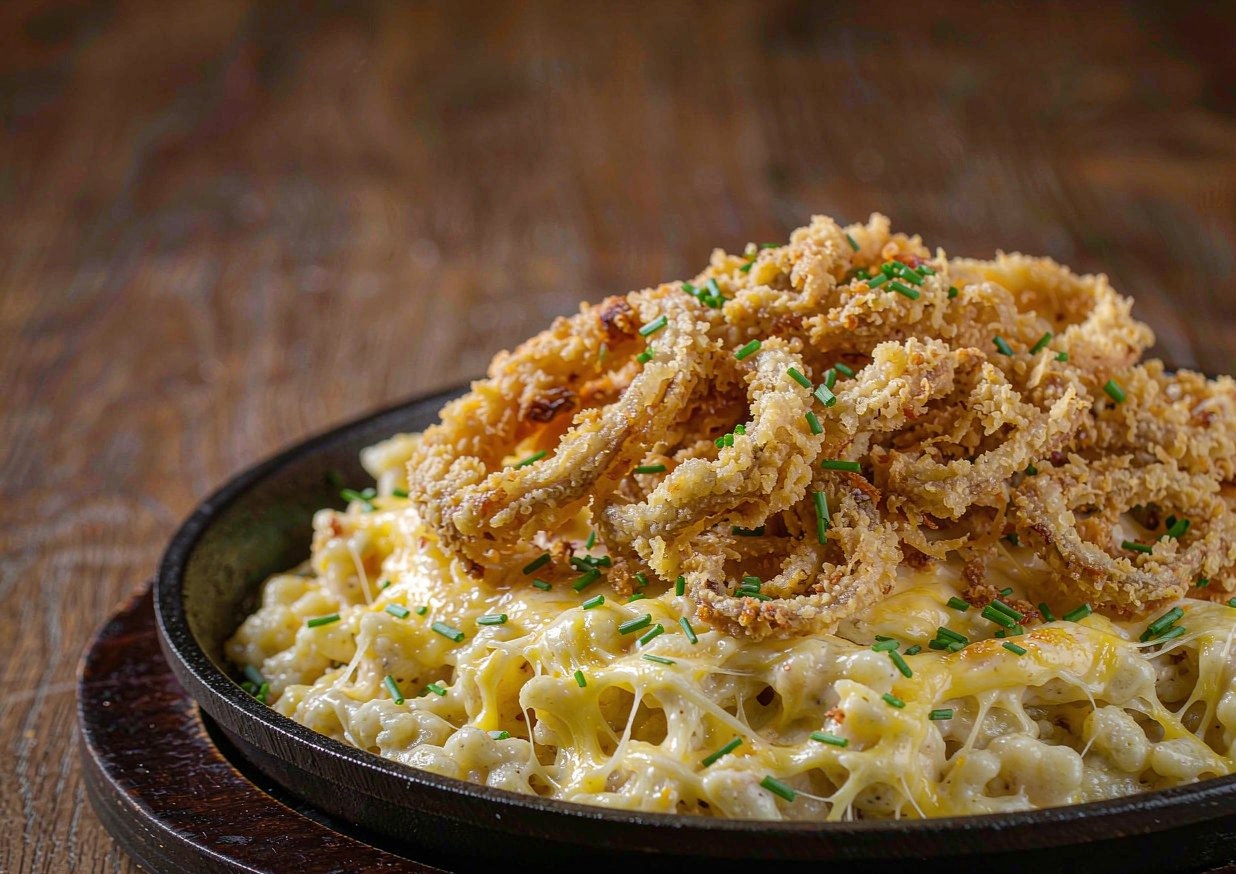
Quick answer: Beat 300 g of plain flour with 3 eggs, 70 ml of milk, salt and nutmeg until the dough is thick, glossy and falls from the spoon in a slow ribbon. Rest it 30 minutes. Bring a wide pot of salted water to a rolling boil, press a third of the dough through a spaetzle maker, boil 2 to 3 minutes until they float, and lift them out; repeat in batches. Meanwhile fry 2 sliced onions in 40 g of butter over medium heat for 15 minutes until deep gold. Put the drained noodles into a buttered skillet with 200 g of grated mountain cheese in alternating layers over low heat, fold twice, and serve the moment the cheese pulls, with the onions and chives heaped on top.
- Prep time: 25 minutes
- Cook time: 20 minutes
- Total time: 45 minutes
- Servings: 4
- Cuisine: German
- Course: Pasta & Noodles
- Difficulty: Medium
Why this recipe works
Spätzle dough is not pasta dough. It is a wet, slack batter with egg in it, worked rather than kneaded, and it goes straight from the bowl into water without ever being rolled or cut. An unworked dough gives a noodle with a rough, pitted surface, and that roughness is what the melted cheese clings to; knead it smooth and the cheese slides off. Three things decide the texture. First, hydration: the dough has to be thick enough to sit on the spoon and fall slowly, around 300 g of flour to three eggs and 70 ml of milk, or the noodles come out as pale, gummy ropes. Second, resting: 30 minutes lets the flour drink the liquid and the gluten relax, so the dough extrudes cleanly. Third, water: the pot has to be wide and at a full rolling boil, and the noodles go in two or three batches, or the temperature drops and they turn gluey. The cheese goes in over low heat in layers, never all at once, because Bergkäse breaks to oil if you rush it.
Our method follows the technique guidance published by Serious Eats — The Food Lab and is adapted for a standard home kitchen.
Ingredients
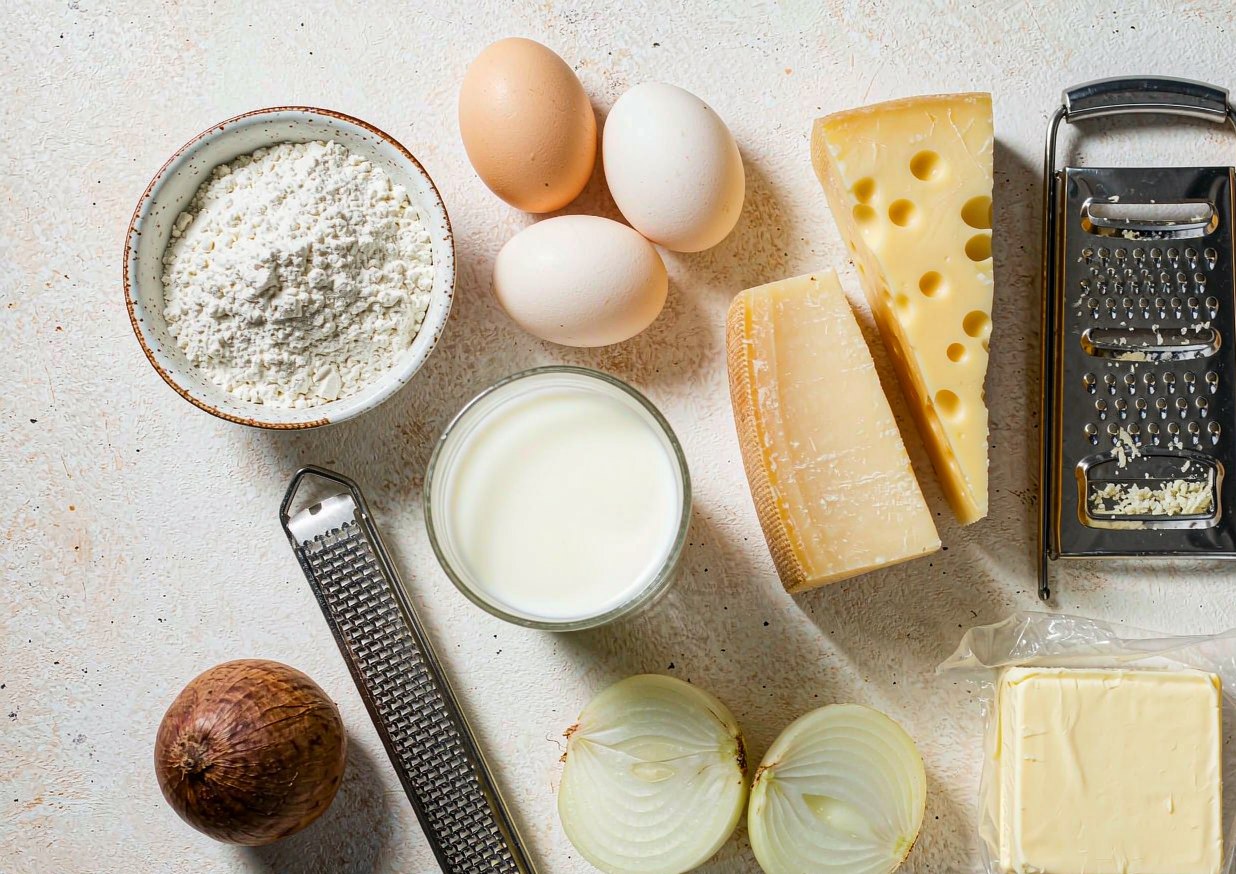
- 300 g / 2 1/2 cups plain (all-purpose) flour, plus a little more if the dough is slack
- 3 large eggs, at room temperature
- 70 ml / 1/3 cup whole milk, plus 1 tbsp more only if needed
- 1 tsp fine sea salt, plus 2 tbsp for the boiling water
- 1/4 tsp freshly grated nutmeg
- 200 g / 7 oz mountain cheese — Bergkäse, aged Gouda or Gruyère — coarsely grated
- 50 g / 2 oz Emmentaler, grated, for a softer melt
- 2 large onions, about 350 g / 12 oz, halved and sliced into thin rings
- 40 g / 3 tbsp butter for the onions, plus 20 g / 1 1/2 tbsp for the pan
- 1 tbsp neutral oil, to keep the butter from browning too fast
- 2 tbsp chopped chives, to finish
- Freshly ground black pepper
Equipment
- A spaetzle maker — a hopper with a sliding basket, or a Spätzlehobel board and scraper; a wide-holed colander works in a pinch
- A wide, deep pot of at least 5 litres, so three batches can boil without the water temperature collapsing
- A 28 cm cast-iron or stainless skillet for the cheese and the onions — cast iron holds the heat that keeps the cheese moving
- A digital kitchen scale, because the dough is a ratio and a cup of flour varies by a fifth
- A box grater for the cheese, and a spider or slotted spoon to lift the noodles out
- A bench scraper for working the dough, and a microplane for the nutmeg
How to make käsespätzle step by step
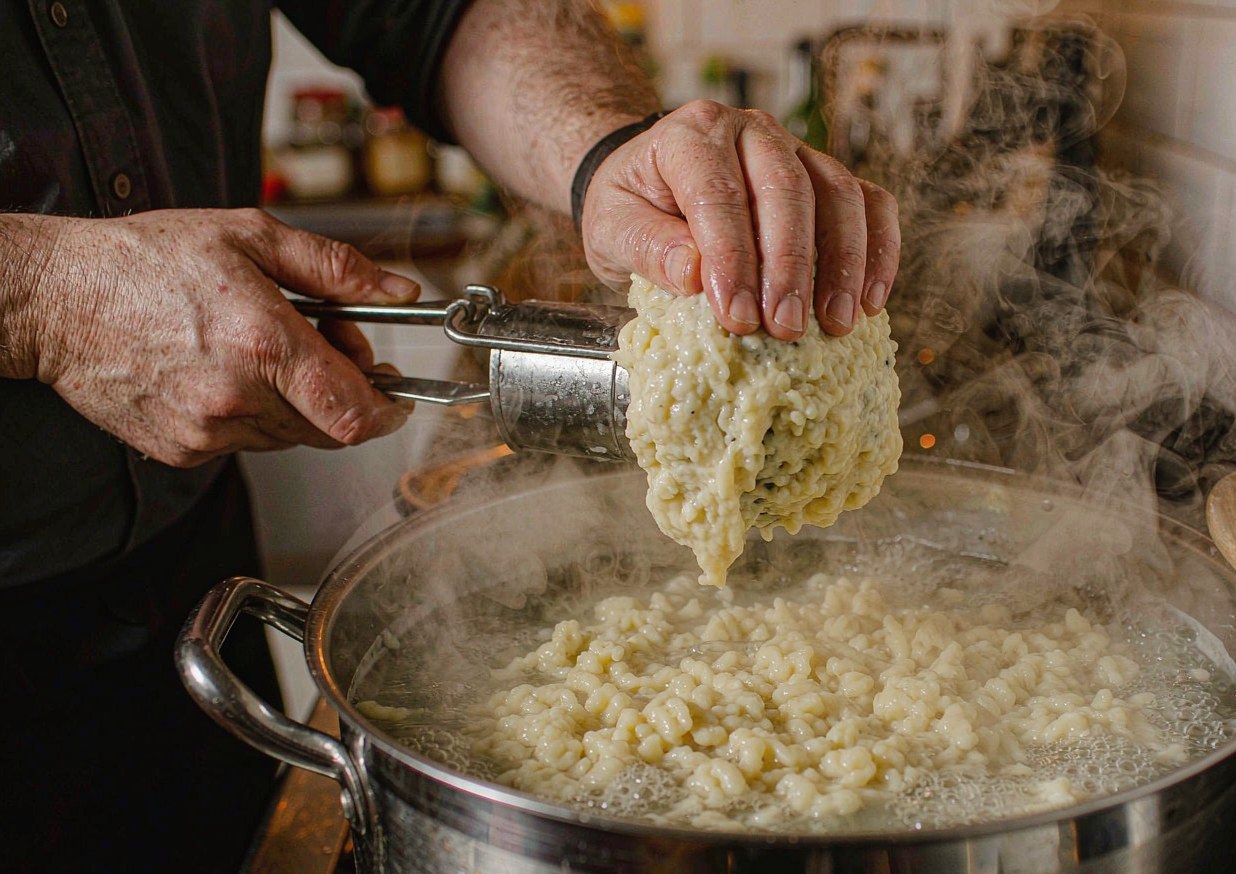
- Mix the dough. Put the flour, salt and nutmeg in a bowl, make a well, and crack in the eggs. Add the milk and beat with a wooden spoon, drawing the flour in from the sides. Keep going for 3 or 4 minutes until the dough is smooth, glossy and full of bubbles, and pulls away from the bowl in a thick ribbon.
- Judge the texture, not the clock. Lift the spoon: the dough should cling to it, stretch, and fall in a slow heavy ribbon rather than run off. Too stiff? Beat in a tablespoon of milk. Too loose to hold a shape? Beat in flour a tablespoon at a time.
- Rest it. Cover and leave at room temperature for 30 minutes. The flour hydrates and the gluten relaxes, so the dough extrudes cleanly. Do not refrigerate it; cold dough tears as it goes through the press.
- Fry the onions. Heat the 40 g of butter with the oil in the skillet over medium heat, add the onions with a pinch of salt, and cook for 14 to 16 minutes, stirring every few minutes, until deep gold and crisp at the edges. Tip them out onto a plate and wipe the pan.
- Boil the noodles in batches. Bring the wide pot of water to a full rolling boil and salt it with the 2 tablespoons. Fill the spaetzle maker with a third of the dough and slide it back and forth over the pot until it is all in. Boil 2 to 3 minutes — about 30 seconds after they float — then lift them out with the spider into a warm bowl. Bring the water back to a rolling boil before the next batch.
- Start the cheese. Melt the remaining 20 g of butter in the skillet over low heat. Add a third of the drained noodles, scatter over a third of the cheese, and repeat twice, finishing with cheese on top. Do not stir yet: the layers are what give you strings rather than a clump.
- Melt and fold. Leave it over low heat for 2 to 3 minutes until the cheese has visibly slumped, then fold it over on itself twice with a spatula. The cheese should pull in short strings. If it looks tight or grainy, add a splash of the noodle water and fold again. Take it off the heat the moment it is glossy.
- Season and serve. Grind over plenty of black pepper, pile the fried onions on top, and scatter with chives. Serve at once, with a sharply dressed green salad if you want the traditional plate.
What we learned testing this käsespätzle recipe
We cooked this recipe three times before publishing it. These are the things that only showed up in the kitchen, not on paper.
- Our first bowl was a genuine failure. We used 150 ml of milk instead of 70, and the batter ran through the press in long pale ropes that welded together. Then we tipped the whole lot in at once, the water dropped off the boil, and we fished out a single gluey lump. Halving the liquid and boiling in three batches gave proper short noodles.
- Hydration, tested at 60 ml, 70 ml and 90 ml of milk against 300 g of flour and three eggs: at 60 the dough tore going through the press and the noodles were dense; at 70 it fell from the spoon in a slow ribbon and cooked tender; at 90 it extruded easily but gave soft, pale strands. Seventy is the number.
- Batch size, the same dough cooked all at once against cooked in three: one batch dropped the water to roughly 88°C and the noodles fused in the pot; three batches held a rolling boil and every noodle stayed separate.
- Resting, three bowls from one dough: no rest gave a stiff dough that tore and left ragged tails; 30 minutes gave a clean extrusion; a 2-hour rest gave no further improvement. Half an hour is enough.
- Cheese, side by side: Bergkäse gave the strongest flavour and pulled in long strings; Gruyère melted just as well and was milder; a bag of pre-shredded mozzarella blend turned grainy and released oil within a minute. We grate our own now, and cut the Bergkäse with a little Emmentaler to soften the melt.
Expert tips
- Boil in at least three batches. The whole quantity at once drops the water below a boil and the noodles go gluey before they set.
- Grate the cheese yourself. Bagged shredded cheese is coated to stop it caking and melts grainy instead of smooth.
- Keep a mug of the noodle water back. A splash loosens a cheese that has tightened up.
Variations and substitutions
- With ham: fold 100 g of diced Black Forest ham through the finished noodles with the last of the cheese.
- Baked version: layer the noodles and cheese in a buttered dish, top with the onions, and bake at 200°C / 400°F for 12 minutes until blistered.
- Onion gravy: deglaze the onion pan with 150 ml of stock and pour it over.
- Spinach spätzle: beat 100 g of well-drained cooked spinach into the dough and drop the milk to 40 ml.
Troubleshooting
| What went wrong | Why it happens | How to fix it |
|---|---|---|
| Noodles came apart or dissolved in the water | The dough was too wet to hold a shape, or the water was below a rolling boil when they went in, so the starch never set. | Beat flour into the dough a tablespoon at a time until it falls from the spoon in a slow ribbon, and let the water come back to a full rolling boil between batches. Cloudy water means the dough needs more flour. |
| Noodles are dense, tough or stuck together in a lump | Too much dough went into the pot at once, which dropped the water temperature, or they were left in long after they floated. | Cook in at least three batches in a wide pot and lift them out about 30 seconds after they rise to the surface. Toss the drained noodles with a little butter if they have to wait. |
| The cheese turned oily, grainy or clumped into a ball | The heat was too high, or the cheese was pre-grated and coated with anti-caking starch, which will not melt smoothly. | Grate a block yourself, cut a strong mountain cheese with some Emmentaler, and keep the pan on low heat. Add a splash of the noodle water and fold once to bring a tightened cheese back together. |
| The fried onions are soft and pale instead of crisp | The pan was crowded so they steamed in their own liquid, or they were salted at the start, which draws water out. | Use a wide skillet over steady medium heat, add a little oil to the butter to raise its smoke point, and give them 15 minutes. Salt them lightly at the end, and dry them on a plate before they go on top. |
Storage, food safety and make-ahead
Käsespätzle is at its best the moment the cheese melts and does not improve with holding, because the noodles go on drinking the fat. Refrigerate leftovers in a shallow covered container for up to 2 days and reheat in a covered skillet over low heat with a splash of water. Plain boiled spätzle keep 2 days refrigerated and freeze for up to 2 months: spread them on a tray, freeze solid, then bag them, and drop them straight into boiling water.
For safe cooling, storage times, and reheating, follow the USDA FSIS food safety guidance.
Nutrition information
Per serving (one of four): approximately 640 kcal, 26 g protein, 33 g fat, 60 g carbohydrates, 3 g fibre, 1,090 mg sodium. Values are estimates derived from the USDA FoodData Central database and will move with the cheese you use.
Figures are calculated from the USDA FoodData Central database and are estimates only. Values vary with ingredient brands and portion size.
Frequently asked questions
Do I need a spaetzle maker?
No. A Spätzlehobel board with a scraper, a wide-holed colander, or a potato ricer all work, and a knife against a wet board gives the traditional longer noodle. What matters is the dough texture: it must be thick enough to hold a shape, or it runs through any tool into long ropes.
Why did my spaetzle dissolve in the water?
The dough was too wet, or the water was not at a full rolling boil when they went in. Beat in flour a tablespoon at a time until it falls from the spoon in a slow ribbon, and let the water come back to a rolling boil between batches.
What cheese is the right one?
A Swiss or Austrian mountain cheese: Bergkäse, aged Gouda, Gruyère or Appenzeller. They melt smoothly and carry a plate of plain egg noodles. Cut one with a little Emmentaler to soften the melt, and avoid pre-grated cheese, which melts grainy.
Can I make the noodles ahead?
Yes, and it is the practical way to serve this for a crowd. Boil the spätzle up to a day ahead, toss with a little oil, refrigerate, then reheat in a covered pan with a splash of water before adding the cheese. The dough is best used within the hour.
Sources and further reading
- USDA FoodData Central
- Serious Eats — The Food Lab
- USDA FSIS — Safe Minimum Internal Temperatures
- Epicurious — Recipe Archive & Technique Guides
Nutrition figures on this page are calculated from the USDA FoodData Central database and are estimates only. They are not a substitute for advice from a qualified dietitian or physician.
Last updated: September 7, 2026. Recipe tested three times in a standard home kitchen by the named author above. Corrections are welcome and are noted on the page when published.