
 Old Kitchen Stories
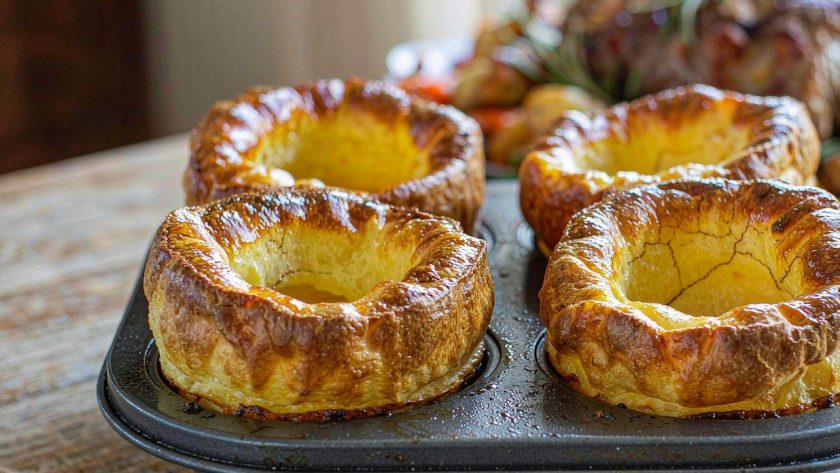
Quick answer: Whisk 115 g of plain flour with a good pinch of salt, make a well, crack in 2 eggs, and beat in 150 ml of whole milk and 75 ml of water until the batter is smooth and pours like single cream. Rest it in the fridge for at least 2 hours, or overnight. Put a scant teaspoon of beef dripping into each hollow of a four-hole tin, slide it into an oven at 220°C / 425°F, and wait until the fat is smoking, about 8 minutes. Fill each hollow two-thirds with batter, straight back into the oven, and bake 22 to 25 minutes without opening the door, until deep brown and well risen. Serve immediately.
- Prep time: 15 minutes
- Cook time: 25 minutes
- Total time: 40 minutes
- Servings: 4
- Cuisine: British
- Course: Breads & Pizza
- Difficulty: Medium
Why this recipe works
A Yorkshire pudding is a batter with no raising agent in it at all, which means every millimetre of height comes from steam. The water and egg flash to vapour in the hot fat, the vapour pushes the batter up, and the heat sets the starch and the egg around the bubble before it can collapse. Four things decide whether that happens. First, the fat has to be genuinely smoking when the batter hits it, or you get a slow rise and a dense, greasy pudding. Second, the batter has to be thin — about 115 g of flour to 225 ml of liquid for two eggs, far looser than most people expect, because a thick batter is too heavy to lift. Third, it has to rest. Two hours in the fridge lets the flour hydrate and the gluten relax, so the batter stretches instead of tearing as it climbs. Fourth, the oven door stays shut: every peek drops the temperature, the steam contracts, and the puddings sink. Resting is the step people skip, and it is the one that costs the most height.
Our method follows the technique guidance published by King Arthur Baking Company — Baking Resources and is adapted for a standard home kitchen.
Ingredients
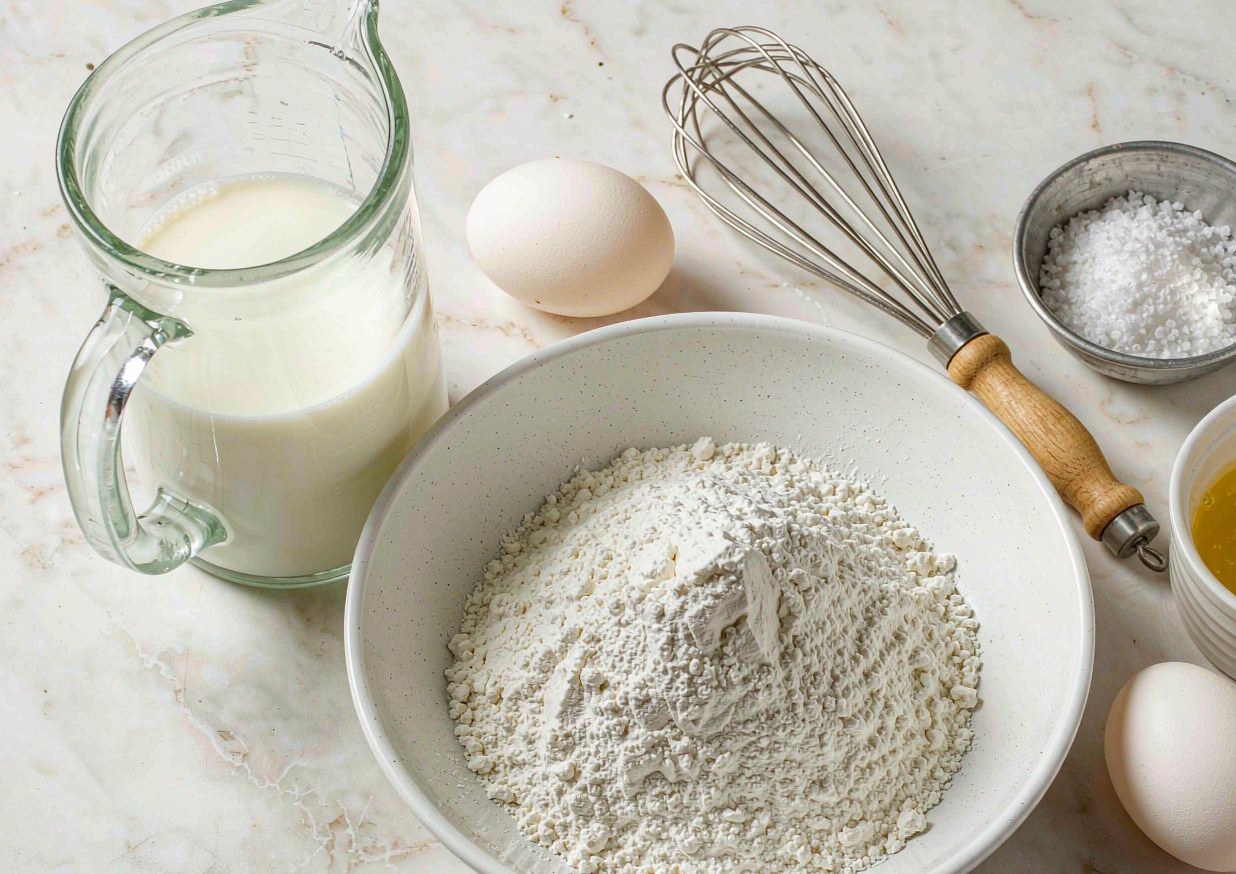
- 115 g / 1 cup plain (all-purpose) flour
- 2 large eggs, at room temperature
- 150 ml / 2/3 cup whole milk
- 75 ml / 1/3 cup cold water
- 1/2 tsp fine sea salt
- 4 tsp beef dripping, or neutral oil plus 1/2 tsp dripping for flavour
Equipment
- A metal Yorkshire pudding tin or a heavy muffin tin — metal, not silicone, because the batter has to set against something that conducts heat fast
- A digital kitchen scale, since the batter is a ratio by weight and a cup of flour varies by a fifth
- A balloon whisk and a jug with a spout, so you can pour fast and get the oven shut again
- An oven thermometer — domestic ovens routinely sit 20°C below the dial, and this recipe fails on that gap alone
- A ladle or a measuring jug for the batter, and a wire rack
- A roasting tin and rack if you are cooking a joint alongside, so you can catch the dripping
How to make yorkshire pudding step by step
- Mix the batter first. Sift the flour and salt into a bowl and make a well in the middle. Crack in the eggs, add half the milk, and whisk from the centre outwards, drawing the flour in a little at a time. Beat until smooth, then whisk in the rest of the milk and the water. It should coat a spoon thinly and pour like single cream.
- Beat it hard, then strain it. Whisk vigorously for a full minute, then pour the batter through a sieve into a jug. Lumps caught now would bake into pale flecks of raw flour.
- Rest, and rest properly. Cover and refrigerate for at least 2 hours, overnight if you can. The flour hydrates, the gluten relaxes, and the whisking bubbles dissipate. Take it out 30 minutes before baking and stir.
- Heat the oven and the tin. Put a shelf in the upper third and heat the oven to 220°C / 425°F for a good 20 minutes after the light goes out. Divide the dripping between the four hollows and slide the tin in to heat through.
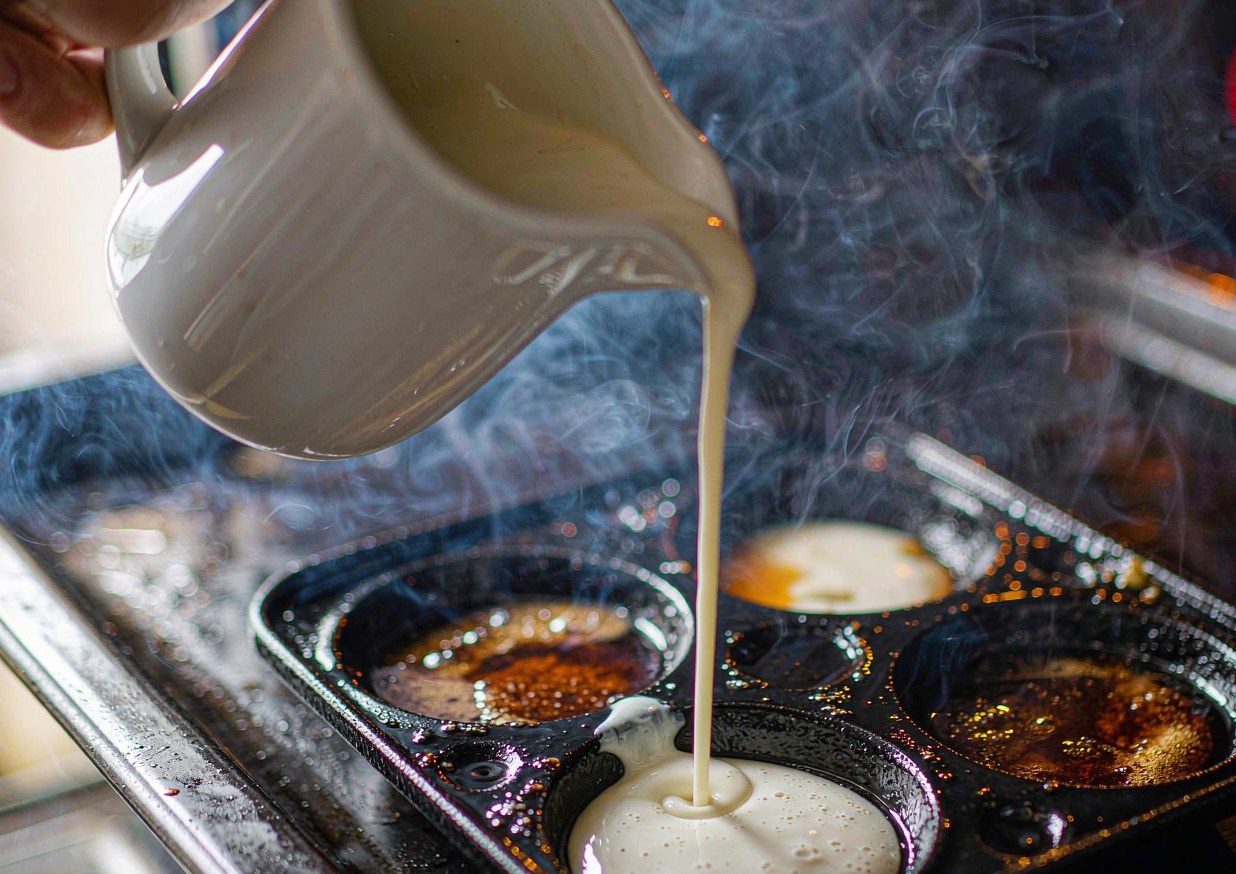
- Wait for smoke. Give it 6 to 8 minutes. You are waiting for a thin blue haze off the fat and a faint nutty smell, which tells you the tin is above the temperature at which batter sets on contact. This is the step that separates a pudding that climbs from one that sits.
- Pour and shut the door. Working fast, pull the shelf out, fill each hollow about two-thirds, and get the tin back in, in under ten seconds. The oven loses a surprising amount of heat with the door open.
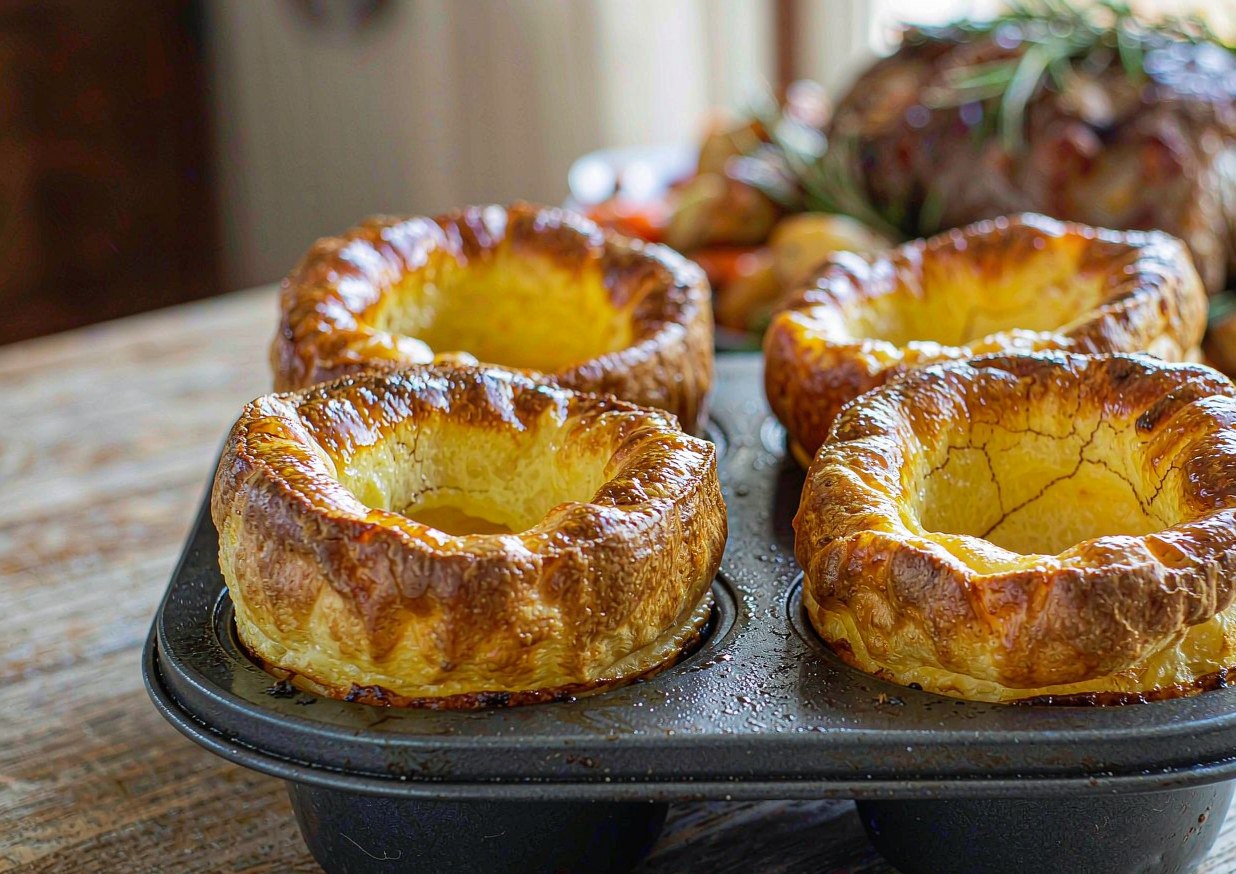
- Bake untouched. Bake for 22 to 25 minutes and do not open the oven for the first 20. They should be deep golden, risen well above the rim, and sound hollow when tapped. Still pale at 25 minutes? Give them 3 more: pale means wet, and wet means they will collapse.
- Check and serve. Lift one out and tap the base; it should sound dry and hollow. If it feels heavy, put them back for 3 minutes. Serve straight away, or on a wire rack for 2 minutes so the bases do not steam.
What we learned testing this yorkshire pudding recipe
We cooked this recipe three times before publishing it. These are the things that only showed up in the kitchen, not on paper.
- Our first tray was a genuine failure. Cold eggs and cold milk, no resting time, fat warmed rather than smoking, and we opened the door at twelve minutes to check. They came out as flat, greasy discs about 1 cm high with a dense, wet layer at the base. Resting the batter overnight, getting the fat to a blue haze, and leaving the door shut took them to well above the rim.
- Resting time, three batches from one batter: no rest gave 2 cm of rise and a dense base; 2 hours gave 4 cm and a hollow centre; overnight gave close to 5 cm with a fragile, shattering crust. The overnight batter was also noticeably easier to pour.
- Fat, side by side: beef dripping gave the deepest colour and the savoury note that goes with a roast; sunflower oil rose just as well but tasted neutral; butter browned fast, smoked early, and left a slightly greasy base. We use dripping where we can.
- Fat temperature: poured into warm fat the batter set slowly and reached 2.5 cm; poured into fat that was already smoking it hissed on contact and hit 4.5 cm. The sizzle is the measurement.
- We opened the oven at 12 minutes on one batch out of curiosity. The four puddings dropped about 1 cm in the ten seconds the door was open and never recovered, and the centres stayed damp. The door stays shut now until minute 20.
Expert tips
- Room-temperature eggs and milk combine far more easily than cold, and a cold batter shocks the hot fat into setting before it can rise.
- Believe an oven thermometer over the dial. Twenty degrees low is the difference between a rise and a puddle.
- More fat is not better. A scant teaspoon per hollow; a flooded tin fries the base greasy.
- One big pudding in a 22 cm tin needs 30 to 35 minutes and roughly triple the fat.
Variations and substitutions
- One giant pudding: pour all the batter into a hot 22 cm tin with 1 tbsp of dripping and bake 30 to 35 minutes, then cut into wedges.
- Toad in the hole: brown 8 pork sausages in the tin first, arrange them in the batter, and bake 30 to 35 minutes until cooked through.
- Herb and mustard: add 1 tsp of English mustard powder and 2 tbsp of chopped thyme or sage to the flour. Good with lamb rather than beef.
- Vegetable-oil version: for a meat-free table, use a neutral oil with a smoke point above 230°C / 450°F and add an extra pinch of salt to the batter.
Troubleshooting
| What went wrong | Why it happens | How to fix it |
|---|---|---|
| Puddings are flat and greasy | The fat was not hot enough when the batter went in, so the batter set before the steam could lift it. | Wait for a thin blue haze off the fat, about 6 to 8 minutes in a properly preheated oven, and pour quickly. A flat batch is salvageable as the base for toad in the hole the next day. |
| They rose, then collapsed into a dip | The oven door was opened during the bake, or they came out underdone and still wet in the centre. | Leave the door shut for the first 20 minutes and bake until deep brown. If they sink coming out of the oven, put them straight back for 3 minutes. |
| Soggy, wet base | Not enough total bake time, too much fat in the tin, or they were left to cool in the tin and steamed in their own heat. | Turn them out onto a wire rack the moment they leave the oven, and use a scant teaspoon of fat per hollow. A wet pudding needs another 3 to 4 minutes. |
| Batter is lumpy, or bakes with pale flour flecks | The flour went in all at once instead of being drawn in from the centre, or the batter was never sieved. | Whisk from the middle outwards, adding liquid a little at a time, then pour the batter through a sieve into a jug before resting it. |
Storage, food safety and make-ahead
Yorkshire puddings are at their best within about 10 minutes of coming out of the oven. Cooked puddings keep in an airtight container at room temperature for a day, though they lose their crunch; reheat at 200°C / 400°F for 5 minutes, never in a microwave, which turns them rubbery. Freeze baked puddings, well wrapped, for up to 2 months and reheat from frozen at 200°C / 400°F for 8 to 10 minutes. The batter is the better make-ahead: keep it covered in the fridge for up to 2 days and stir before using.
For safe cooling, storage times, and reheating, follow the USDA FSIS food safety guidance.
Nutrition information
Per pudding (one of four): approximately 245 kcal, 7 g protein, 14 g fat, 22 g carbohydrates, 1 g fibre, 340 mg sodium. Values are estimates derived from the USDA FoodData Central database and change with how much fat you use and whether you make them with dripping or oil.
Figures are calculated from the USDA FoodData Central database and are estimates only. Values vary with ingredient brands and portion size.
Frequently asked questions
Why did my Yorkshire puddings not rise?
Almost always one of three things: the fat was not hot enough when the batter went in, the oven door was opened during the bake, or the batter was too thick. It should pour like single cream, and the fat should be giving off a thin blue haze.
Do I have to use beef dripping?
No. A neutral oil with a smoke point above 230°C / 450°F works, such as sunflower or rapeseed. Dripping gives the savoury note that goes with roast beef and browns a shade better, but the rise comes from the heat, not the fat.
Can I make the batter the night before?
Yes, and it is better for it. An overnight rest lets the flour hydrate completely and the gluten relax, which is worth a centimetre or two of extra height. Stir it and let it sit at room temperature for 30 minutes before baking.
Can I cook them ahead and reheat?
You can, and it is the practical answer for a roast dinner with one oven. Bake them earlier in the day, cool completely on a rack, and reheat at 200°C / 400°F for 5 minutes while the meat rests. Undercook them by 2 minutes the first time so the second bake does not dry them out.
Sources and further reading
- USDA FoodData Central
- King Arthur Baking Company — Baking Resources
- USDA FSIS — Safe Minimum Internal Temperatures
- BBC Food — Recipes & Techniques
Nutrition figures on this page are calculated from the USDA FoodData Central database and are estimates only. They are not a substitute for advice from a qualified dietitian or physician.
Last updated: September 7, 2026. Recipe tested three times in a standard home kitchen by the named author above. Corrections are welcome and are noted on the page when published.